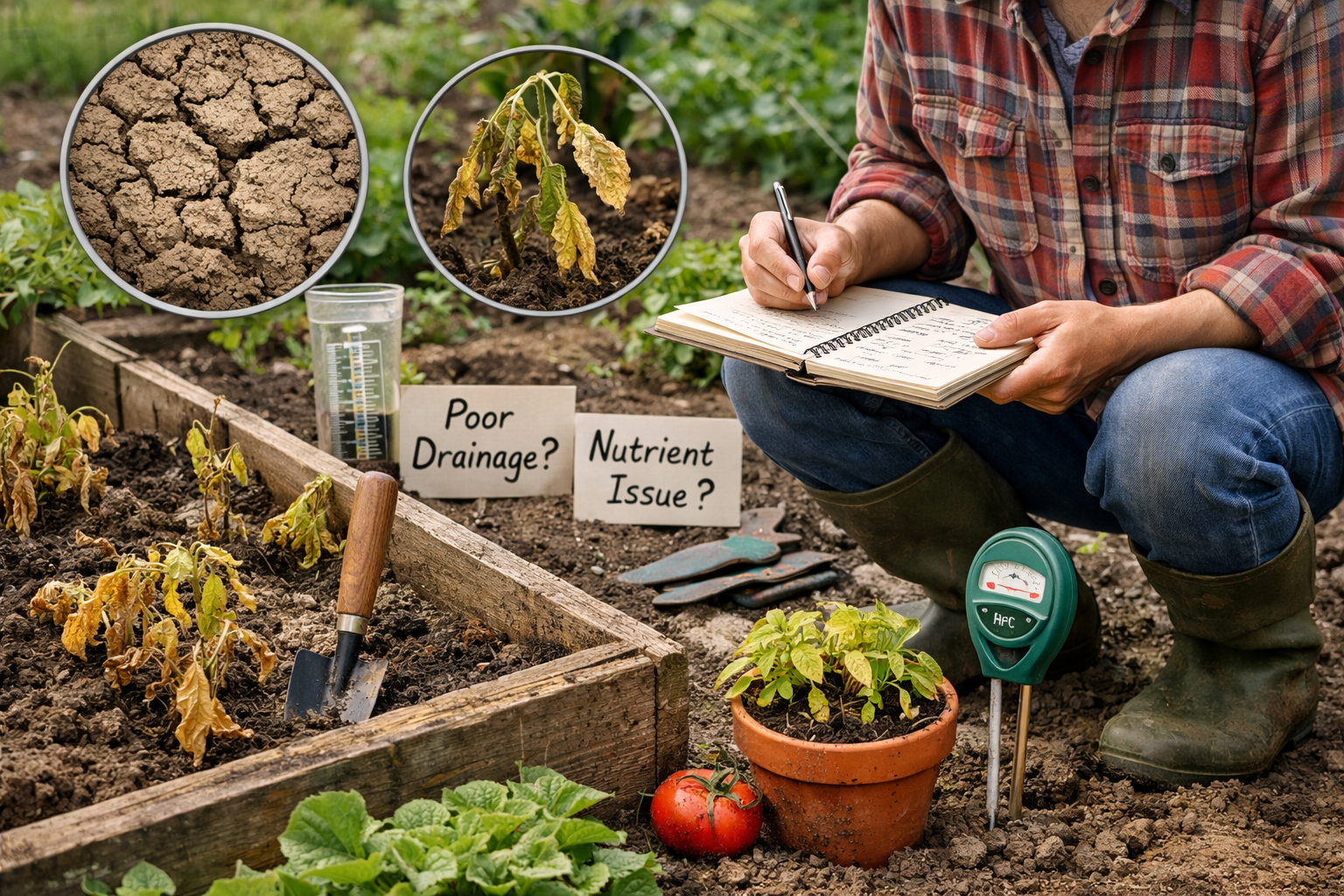
| Gardening has a habit of humbling even the most experienced grower. A bed that thrived last year sulks this season. Seeds fail to germinate. A plant that “should” work simply doesn’t. These moments are often framed as mistakes or losses, but in reality, they are one of the most valuable tools a gardener has. Failure, when viewed correctly, is not an endpoint. It is data. Treating gardening setbacks as information rather than personal shortcomings transforms how we learn, plan, and grow. It moves gardening away from rigid rules and towards a responsive, site-specific understanding. Gardening Is an Ongoing Experiment Every garden is a living system influenced by soil structure, microclimate, water movement, wildlife, timing, and human intervention. No two gardens behave the same, even on the same street. When something fails, it is rarely because the gardener “did it wrong” in a simple sense. More often, the conditions were mismatched to the plant, or the timing was slightly off. Seen through this lens, each planting is a small experiment. Some experiments succeed immediately. Others produce unexpected results. Both outcomes are useful. Failure Reveals Hidden Conditions Plants are excellent messengers. When they struggle, they are often highlighting something we cannot easily see. Yellowing leaves may point to a nutrient imbalance. Wilting despite regular watering can indicate poor root development or compacted soil. A plant that bolts early may be telling you the site is hotter or drier than assumed. These signals are not failures of effort. They are feedback from the environment. By paying attention to what went wrong, you begin to map the true conditions of your garden rather than the conditions you assumed were there. Separating Emotion from Observation One of the hardest parts of using failure as data is emotional detachment. It is natural to feel frustrated when time, money, and hope are invested in a plant that doesn’t survive. However, emotional reactions often stop learning. A useful habit is to shift from judgment to description. Instead of thinking “this didn’t work,” ask “what exactly happened?” Note the timing, weather patterns, soil moisture, and plant behaviour. This subtle shift turns disappointment into curiosity, which is where useful insight lives. Patterns Matter More Than Single Events One failed plant can be a chance. Repeated failures form a pattern. If three different species struggle in the same bed, the issue is likely structural rather than botanical. Poor drainage, shallow soil, or wind exposure may be the real limiting factors. Gardening data becomes meaningful when patterns emerge over time. Keeping even simple notes can help. You do not need complex charts. A few observations across seasons will often reveal more than any generic planting guide. Timing Is a Common Teacher Many garden failures are not about plant choice but timing. Sowing too early into cold soil, planting too late into drying ground, or pruning at the wrong point in a growth cycle can all lead to disappointing results. When timing goes wrong, the failure teaches you about the rhythm of your garden. Over time, gardeners who observe rather than react learn to work with local seasonal cues rather than calendar dates. This knowledge is deeply personal to each site and cannot be copied from elsewhere. Adjusting Systems, Not Just Plants A common response to failure is to replace the plant. While sometimes appropriate, this can miss the deeper lesson. If a plant fails due to compacted soil, replacing it without addressing the compaction simply repeats the experiment under the same flawed conditions. Using failure as data encourages system-level thinking. Instead of asking “what plant should I try next?”, the better question is often “what needs to change in the environment?” Improving soil structure, altering water flow, or adjusting light exposure often unlocks success across many plants at once. Building Resilience Through Iteration Gardens that evolve through observation tend to become more resilient over time. Each failure refines decision-making. Each adjustment increases alignment between plants and place. This iterative process mirrors how natural systems adapt. Nothing is wasted. Even plants that die contribute organic matter, microbial activity, and information. Over seasons, the garden becomes less about control and more about collaboration. Teaching Without Words For new gardeners, especially, failure is often the fastest teacher. Books and advice provide frameworks, but lived experience creates understanding. A gardener who has lost plants to frost once rarely forgets the signs again. When failure is accepted as part of the process, confidence grows rather than shrinks. You stop needing perfect outcomes and start trusting your ability to respond. A Quiet Shift in Mindset Using failure as data changes the emotional tone of gardening. It replaces anxiety with attentiveness and perfectionism with patience. The garden becomes a place of learning rather than performance. In the long run, this mindset produces healthier gardens and more grounded gardeners. Nothing truly fails if it teaches you how your land works. |
Using Failure as Data in Gardening
 Earthly Comforts