
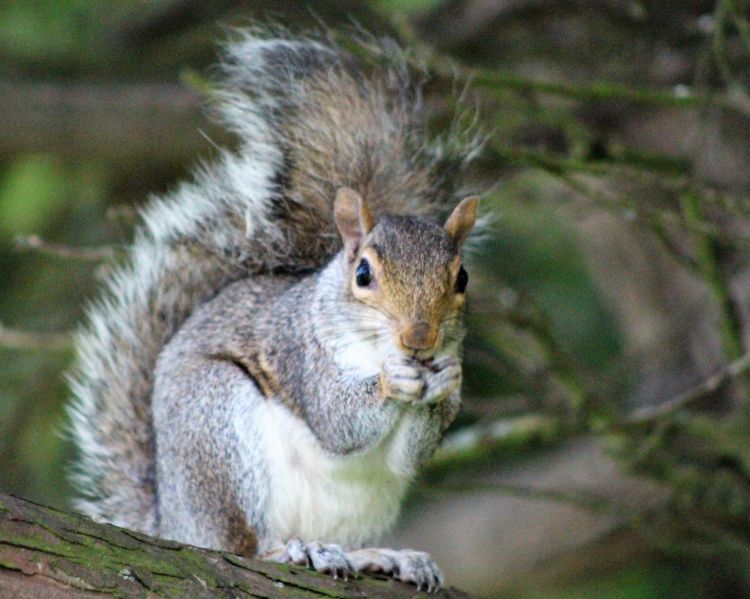
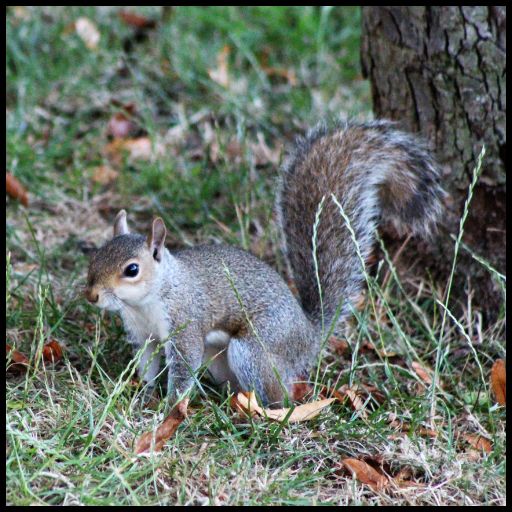
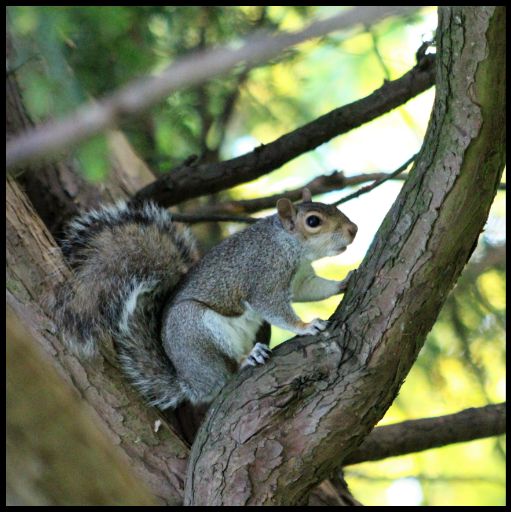
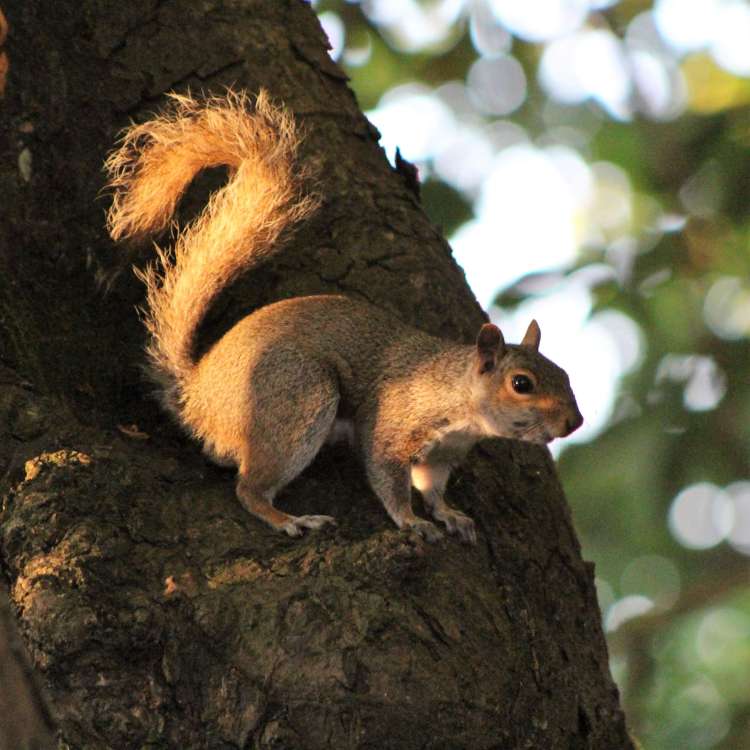
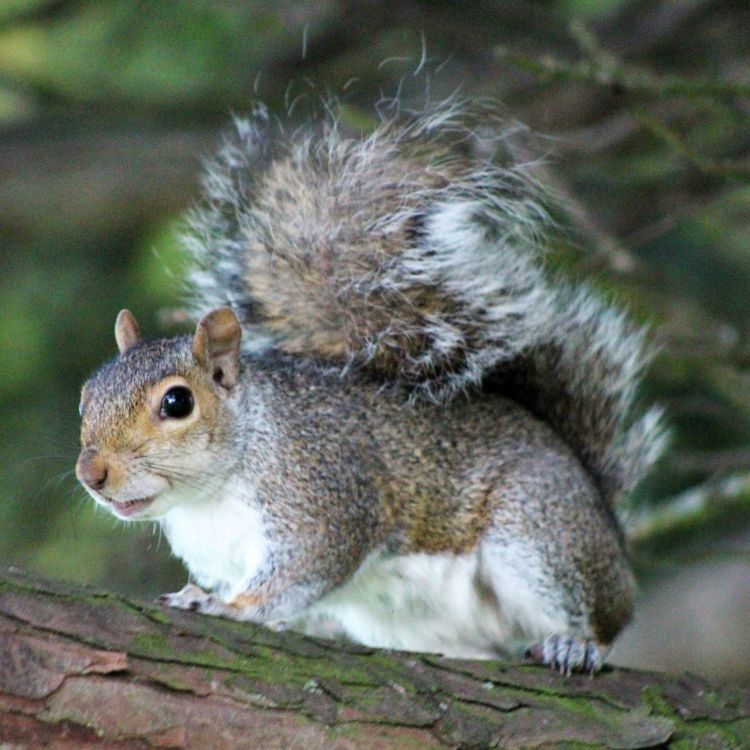
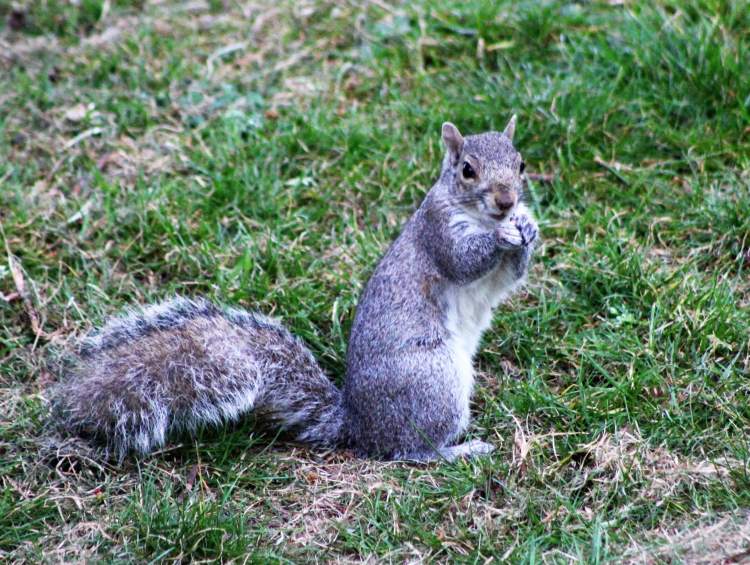
| The Familiar Acrobat of Parks and Trees The grey squirrel is one of the most instantly recognisable wild mammals in the UK. Seen leaping between branches, racing along fences, or sitting upright with a nut clasped in its paws, it feels woven into everyday life. For many people, it is the first wild animal they truly notice—bold, visible, and seemingly unbothered by human presence. Yet the grey squirrel’s story in Britain is complex. It is admired for its intelligence and agility, criticised for its impact on native wildlife, and often misunderstood in both directions. To understand the grey squirrel in the UK is to look beyond familiarity and explore how adaptability, competition, and human influence shape the natural world. |
| What Is a Grey Squirrel? The grey squirrel is a medium-sized tree-dwelling mammal with a sleek grey coat, pale underside, and a long, expressive tail used for balance, communication, and warmth. Its large dark eyes, rounded ears, and nimble hands give it a highly alert, almost inquisitive appearance. It is larger and more robust than the native red squirrel, with a broader head and stronger build. This physical advantage plays a key role in how grey squirrels interact with their environment and with other species. Built for climbing, jumping, and problem-solving, the grey squirrel is an athlete of the canopy. A Life in the Trees Grey squirrels are arboreal specialists. They spend most of their time in trees, using branches, trunks, and connected canopies to travel, forage, and escape predators. Their powerful hind legs allow long leaps, while sharp claws and flexible ankles let them descend tree trunks headfirst—something many mammals cannot do. They build nests called dreys, made from twigs, leaves, and bark, usually high in tree forks or dense foliage. These dreys provide shelter, warmth, and a place to raise young. Squirrels may use several dreys within a home range, moving between them as needed. Trees are not just a habitat for grey squirrels—they are infrastructure. Highly Intelligent and Adaptable One of the grey squirrel’s defining traits is intelligence. They are excellent problem-solvers, capable of learning routes, remembering food locations, and adapting quickly to new challenges. This intelligence allows them to thrive in a wide range of environments: woodland, parkland, farmland edges, suburban gardens, and city centres. They learn how to access bird feeders, exploit seasonal food sources, and avoid threats with impressive speed. What some see as cheeky behaviour is, in reality, flexible survival. Diet: Opportunistic and Seasonal Grey squirrels are omnivores, though their diet is dominated by plant material. Nuts, seeds, acorns, hazelnuts, buds, shoots, bark, fruit, and fungi all play a role. They will also eat insects, eggs, and, when the opportunity arises, occasionally young birds. One of their most notable behaviours is food caching. In autumn, grey squirrels bury thousands of nuts in shallow soil, leaf litter, or turf. They rely on memory and scent to recover these stores during winter. Not all cached food is retrieved. Forgotten nuts can germinate, meaning squirrels play a role—however unintended—in tree regeneration. Seasonal Rhythm and Winter Survival Grey squirrels do not hibernate. Instead, they remain active throughout winter, though activity decreases during extreme cold or wet conditions. Their autumn fat reserves and cached food stores are crucial for winter survival. During harsh weather, squirrels may remain in their dreys for extended periods, sharing space to conserve warmth. Spring brings renewed activity, with increased foraging, breeding, and territorial movement. Breeding and Family Life Grey squirrels typically breed twice a year—once in late winter and again in summer if conditions allow. Females give birth to litters of two to four young, born blind and hairless in a well-lined den. Young squirrels grow rapidly, remaining in the nest for several weeks before venturing out under supervision. Mothers are attentive and protective, moving young between dreys if disturbed. Juveniles disperse to find their own territories, a risky phase during which many fall prey to predators or traffickers. Communication and Behaviour Grey squirrels communicate using a mix of vocalisations, body language, and tail movements. Alarm calls warn others of danger, while tail flicking can signal agitation or assert dominance. They are territorial but tolerant, with overlapping home ranges rather than rigid boundaries. Disputes are usually brief and involve chasing rather than physical fighting. Their behaviour is highly expressive, which is part of what makes them so engaging to watch. Grey Squirrels in Gardens Gardens provide ideal conditions for grey squirrels: trees, shrubs, feeders, compost heaps, and relative safety from predators. As a result, they are common garden visitors. They do not intentionally “destroy” gardens, but their strength and curiosity can cause feeders to be damaged, soil to be dug up, or bark to be stripped from young trees. These behaviours are not malicious—they are natural expressions of foraging, caching, and nest-building instincts. The Impact on Native Wildlife The most controversial aspect of the grey squirrel’s presence in the UK is its impact on the native red squirrel. Grey squirrels are better adapted to broadleaf woodland, can digest a wider range of food, and carry a disease that is fatal to red squirrels but harmless to themselves. As a result, grey squirrels have replaced reds across much of England and Wales, with red squirrels now largely confined to parts of Scotland, northern England, and isolated strongholds. This is not due to aggression alone, but to competition amplified by human landscape change. Bark Stripping and Trees Grey squirrels sometimes strip bark from trees, particularly in late spring and early summer. This behaviour is linked to feeding, nesting material collection, and possibly mineral intake. In areas with high squirrel density, bark stripping can damage young trees and affect forestry operations. In more balanced landscapes, it is usually limited and localised. This behaviour highlights how population levels and habitat structure influence impact. Predators and Position in the Ecosystem Grey squirrels are prey for birds of prey such as goshawks and buzzards, as well as foxes and pine martens. In areas where pine martens have recovered, grey squirrel numbers tend to be lower, while red squirrels fare better. This demonstrates how predator presence can help rebalance ecosystems altered by human intervention. Grey squirrels sit in the middle of the food web—both consumer and prey. Why Grey Squirrels Thrive Grey squirrels thrive because they are adaptable generalists. They tolerate human presence, exploit fragmented habitats, and adjust quickly to change. Urbanisation, loss of large predators, and the spread of broadleaf trees have all favoured their success. Their story is not one of villainy, but of fit—an animal well matched to the modern landscape we have created. Public Perception: Love, Frustration, and Confusion Public opinion on grey squirrels is deeply divided. Some see them as charming and entertaining; others see them as destructive and unwelcome. Both views contain truth, but neither tells the whole story. Grey squirrels are neither heroes nor villains. They are animals responding to opportunity, shaped by ecological conditions beyond their control. Understanding reduces polarisation. Simplifying rarely helps. Why Grey Squirrels Matter Grey squirrels matter because they reveal how ecosystems respond to change. They show what happens when adaptable species meet altered landscapes and reduced checks and balances. They also remind us that conservation decisions are rarely simple. Protecting native species, managing non-native ones, and respecting animal welfare all intersect here. The grey squirrel sits at the heart of this complexity. Learning to Look Beyond Familiarity Because grey squirrels are so common, it is easy to stop noticing them. Yet close observation reveals remarkable behaviour: memory, planning, agility, and social nuance. They are not background noise. They are active participants in the environments we share. Seeing them clearly—without sentimentality or blame—is the first step toward meaningful understanding. A Mirror of the Modern Landscape The grey squirrel did not create its own success in isolation. It benefited from changes in woodland, predator loss, and human movement of species. In this sense, the grey squirrel is a mirror. It reflects how landscapes function when the balance shifts—and how difficult it can be to reverse those shifts once they are established. Living with the Familiar Grey squirrels are not going anywhere. They are now a permanent feature of much of the UK. Coexistence means managing expectations, protecting vulnerable species where possible, and recognising that wildlife does not always align neatly with human preferences. It also means appreciating the intelligence and resilience of an animal that has learned, remarkably well, how to live among us. |
 Earthly Comforts