
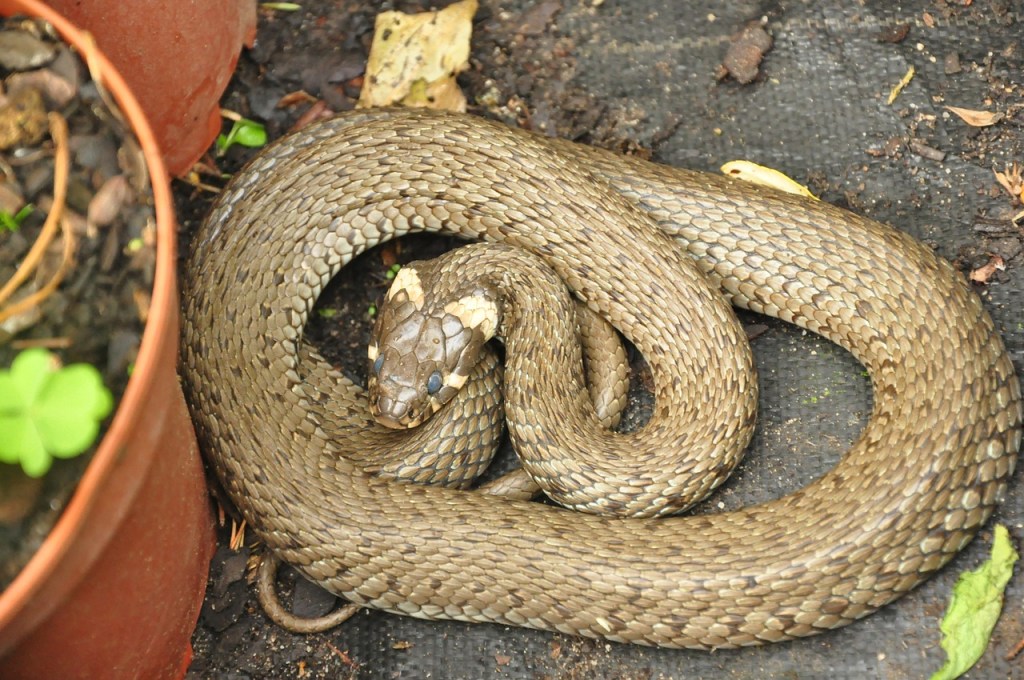
| The Silent Swimmer of Ponds and Meadows The grass snake is the UK’s largest native snake and, for many people, the first wild snake they ever encounter. Long, graceful, and entirely non-venomous, it is a reptile that thrives quietly alongside water, tall vegetation, and warm open ground. When seen unexpectedly, it can cause alarm—but in truth, the grass snake is one of Britain’s most peaceful and beneficial reptiles. To understand the grass snake is to understand wetlands, warmth, and the subtle interactions between land and water. This is not a creature of threat or confrontation, but one of patience, camouflage, and retreat. |
| What Is a Grass Snake? The grass snake is a long, slender reptile that can grow well over a metre in length. Its colour varies from olive green to grey or brown, often with dark vertical markings along the sides. The most recognisable feature is the pale yellow or cream collar behind the head, bordered by dark markings—though this can fade or be absent in older individuals. The head is narrow, the eyes round, and the body smooth and flexible. Despite its size, the grass snake moves with surprising elegance, slipping easily through grass, reeds, and water. It is completely harmless to humans. A Snake Shaped by Water Unlike the UK’s other native snakes, the grass snake is strongly associated with water. Ponds, lakes, rivers, canals, ditches, marshes, and wet meadows form the heart of its habitat. It is also found in gardens and grassland if water is nearby. Grass snakes are excellent swimmers. They move confidently through water with smooth, side-to-side motion, often with just the head visible above the surface. Seeing one swim can be startling, but it is simply part of this species’s daily life. Water is not optional—it is essential. Grass snakes rely on it for food, temperature regulation, and safety. Diet: Specialists in Amphibians Grass snakes feed primarily on amphibians, especially frogs and toads. Newts, tadpoles, and occasionally fish also feature in their diet. Unlike constricting snakes, grass snakes swallow their prey whole, usually headfirst. They hunt by stealth, moving slowly through vegetation or water margins until they can strike. Prey is seized and swallowed alive, without venom or crushing force. Because of this diet, grass snakes are closely tied to healthy amphibian populations. Where ponds disappear or become polluted, grass snakes often vanish soon after. Behaviour: Flight Before Fight Grass snakes are shy and cautious. Their first response to disturbance is almost always to flee—either into water, dense vegetation, or underground cover. They do not stand their ground or behave aggressively. If cornered, a grass snake may hiss, flatten its head slightly, or perform an unusual defence: playing dead. This can include rolling onto its back, going limp, and even releasing a foul-smelling fluid. This dramatic act is designed to convince predators that the snake is already dead and not worth eating. It is an effective strategy—and one that shows just how far grass snakes go to avoid conflict. Basking and Body Heat Like all reptiles in the UK, grass snakes rely on external heat to regulate their body temperature. Basking is a vital daily activity, especially in spring and early summer. They choose sunny, sheltered spots near water—log piles, compost heaps, pond edges, long grass, or south-facing banks. From these locations, they can warm up quickly and retreat to safety if needed. This reliance on warmth makes them vulnerable to overtidying of their habitat. Removing cover, flattening vegetation, or over-managing ponds can eliminate essential basking and refuge sites. Breeding and Egg-Laying Grass snakes mate in spring, sometimes forming loose gatherings where several males follow a female. Unlike adders, grass snakes lay eggs rather than giving birth to live young. Eggs are laid in warm, rotting vegetation—compost heaps, manure piles, leaf litter, or decaying plant material. The heat generated by decomposition naturally incubates the eggs. This reliance on compost and organic matter means grass snakes sometimes choose garden compost heaps, making them quietly dependent on human habits. Removing or disturbing compost during summer can unintentionally destroy nests. Young grass snakes hatch in late summer and are independent from birth. Seasonal Rhythm and Winter Dormancy Grass snakes are active from spring through early autumn. During this time, they feed, bask, breed, and grow. As temperatures drop, they retreat to hibernation sites—often underground in frost-free places such as old burrows, rubble piles, tree roots, or foundations. These winter refuges may be used by several snakes at once and returned to year after year. Disturbance or destruction of hibernation sites can have serious consequences, as suitable alternatives may not be available nearby. Emerging in spring, grass snakes often bask for long periods to regain strength after months of inactivity. Grass Snakes in Gardens Gardens near water can be an excellent habitat for grass snakes. Wildlife ponds, long grass, compost heaps, log piles, and minimal chemical use all increase suitability. Grass snakes do not damage plants, dig lawns, or harm pets. Their presence is usually fleeting and quiet, often going unnoticed unless one is seen basking or swimming. A grass snake in the garden is a sign of a functioning ecosystem—one with amphibians, insects, shelter, and connectivity to the surrounding habitat. Myths, Fear, and Misidentification Grass snakes are frequently mistaken for adders or assumed to be dangerous simply because they are snakes. This misunderstanding has led to unnecessary fear and persecution. In reality, grass snakes pose no threat to people. They do not bite defensively unless handled, and even then, bites are rare and harmless. Learning to recognise the grass snake—particularly the collar and its association with water—goes a long way toward replacing fear with understanding. Threats and Decline Despite their adaptability, grass snakes are declining in parts of the UK. Habitat loss, pond drainage, road mortality, intensive gardening, and the decline of amphibians all contribute. Fragmentation is a major issue. Grass snakes need connected networks of wetland, rough grass, and shelter. Isolated ponds without a surrounding habitat are often unsuitable in the long term. Their decline is often quiet and unnoticed—until they are gone. Why Grass Snakes Matter Grass snakes play an important role in regulating amphibian populations and form part of the food web for birds of prey, mammals, and other predators. They are also indicators of wetland health. Where grass snakes thrive, water quality, habitat structure, and biodiversity are usually well balanced. Protecting grass snakes means protecting ponds, damp meadows, and the overlooked edges of landscapes. Learning to Live Alongside the Silent Swimmer Encountering a grass snake is often a surprise—but it does not need to be a shock. Pausing, stepping back, and allowing the snake space is all that is required. They will almost always move away on their own, slipping back into water or cover with quiet efficiency. When we learn to share space with animals that challenge instinctive reactions, we grow more confident, more observant, and more connected to the places we live. A Gentle Giant of the Reptile World The grass snake is the UK’s largest snake, yet also its gentlest. It asks for little: clean water, warmth, cover, and time. In return, it offers balance, beauty, and a reminder that wildness does not always roar or strike—sometimes it swims silently past, barely leaving a ripple behind. |
 Earthly Comforts