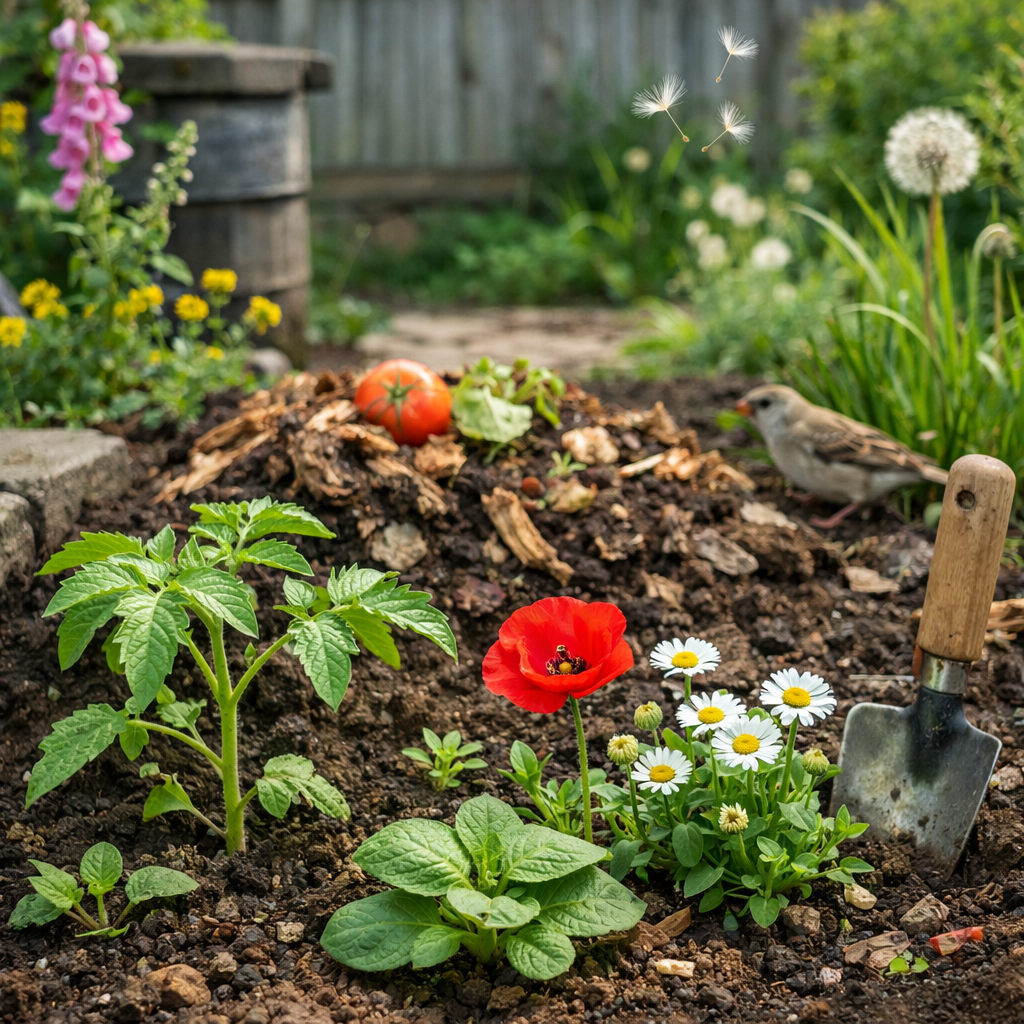
| Unexpected Helpers or Hidden Trouble? Every gardener encounters them sooner or later: plants that appear seemingly out of nowhere. They sprout between paving slabs, rise uninvited in borders, or pop up beneath bird feeders and compost heaps. These are known as volunteer plants, and while some gardeners see them as weeds to be removed immediately, others learn to work with them rather than against them. Understanding volunteer plants is not about deciding whether they are “good” or “bad”. It is about learning how they behave, why they appear, and when they are worth keeping. In many cases, volunteer plants can provide insight into soil health, biodiversity, and even future planting decisions. What Are Volunteer Plants? Volunteer plants are self-sown plants that grow without deliberate planting. Their seeds are dispersed by wind, birds, animals, compost, garden waste, or by previous crops left to flower and set seed. Unlike weeds, which are usually defined as unwanted plants in the wrong place, volunteer plants sit in a grey area. Some are genuinely useful. Others simply need managing. A self-seeded foxglove in a quiet corner, a tomato plant emerging from last year’s compost, or a surprise poppy in a gravel path are all examples of volunteers. The key difference is intent: volunteers were not planned, but they were not necessarily harmful either. Where Volunteer Plants Come From Seeds travel far more efficiently than many gardeners realise. Birds drop seeds after feeding, especially beneath hedges and fences. Wind carries fine seed into open soil. Compost piles often contain viable seed from kitchen scraps or pulled plants that were not fully decomposed. Soil disturbance, such as digging or clearing, can also bring dormant seeds to the surface where light and moisture allow them to germinate. Some plants are naturally prolific self-seeders. Others rely on specific conditions to appear. When volunteer plants emerge, they often reflect what the garden environment currently favours, whether that is compacted soil, bare ground, high nitrogen levels, or reduced competition. The Benefits of Volunteer Plants One of the biggest advantages of volunteer plants is resilience. These plants germinated where conditions suited them, meaning they often cope better with local soil, moisture levels, and climate than carefully planted nursery stock. In a changing climate, this adaptability is increasingly valuable. Volunteer plants can also support wildlife. Self-seeded flowers provide nectar at unexpected times, while volunteer herbs and greens can feed insects, birds, and soil organisms. Some act as living mulch, shading soil and reducing moisture loss during warmer months. In productive gardens, volunteers can be surprisingly useful. Self-seeded salad leaves, herbs, potatoes, or tomatoes often grow with minimal input. Allowing a few to mature can reduce planting effort while increasing harvest diversity. Indicators of Soil and Garden Health Volunteer plants often act as messengers. Their presence can hint at underlying soil conditions. Certain plants thrive in compacted ground, others in disturbed soil, and some prefer nutrient-rich areas. Observing which volunteers appear repeatedly can help gardeners understand what their soil is encouraging. For example, an abundance of fast-growing leafy volunteers may suggest high nitrogen levels, while deep-rooted volunteers can indicate compacted layers that benefit from aeration. Rather than immediately removing everything, a pause to observe can reveal valuable information. When Volunteer Plants Become a Problem Not all volunteer plants deserve a free pass. Some spread aggressively, outcompete established plants, or disrupt carefully planned designs. Others may host pests or diseases, particularly when volunteers are related to crops already growing nearby. The main risk comes from letting volunteers seed unchecked. One unexpected plant can quickly turn into dozens if allowed to flower and set seed freely. In smaller gardens or formal spaces, this can lead to overcrowding and increased maintenance. Volunteers growing in the wrong place can also cause structural issues. Seedlings in walls, paths, or foundations should be removed early before roots become established. Managing Volunteer Plants Thoughtfully Good management is not about elimination but selection. The first step is identifying what the plant is likely to become. A seedling that looks harmless at first may grow tall, wide, or invasive. Early decisions save time later. Thinning is often more effective than removal. Leaving the strongest or best-positioned volunteers while removing the rest maintains balance without waste. Relocating young volunteers can also work well, especially before deep roots develop. Timing matters. Removing unwanted volunteers before they flower prevents future spread. Allowing desirable ones to seed intentionally can help fill gaps naturally the following year. Volunteer Plants and Sustainable Gardening From a sustainability perspective, volunteer plants are a gift. They require no packaging, transport, or artificial propagation. They support local ecosystems and reduce reliance on bought plants. In wildlife-friendly gardens, volunteers often form the backbone of a self-sustaining planting scheme. Accepting a degree of spontaneity is part of working with nature rather than against it. Gardens that allow some volunteer growth often appear more relaxed and resilient, responding naturally to seasonal shifts. That said, sustainability still requires boundaries. Thoughtful editing ensures that volunteer plants contribute positively rather than creating an imbalance. Changing the Way We View Control Modern gardening often focuses on control: neat lines, exact spacing, predictable outcomes. Volunteer plants challenge this mindset. They introduce uncertainty, but also opportunity. By learning when to step back and when to intervene, gardeners can reduce workload while increasing ecological value. This does not mean abandoning structure or intention. It means recognising that not every plant needs to be chosen from a catalogue to earn its place. Sometimes, the garden already knows what will grow well. A Balanced Approach Volunteer plants are neither heroes nor villains. They are responses to conditions, shaped by weather, soil, wildlife, and human activity. The most successful gardens tend to be those where volunteers are assessed individually, not automatically removed or blindly encouraged. By observing, selecting, and managing with intention, volunteer plants can become part of a garden’s rhythm rather than a source of frustration. Over time, they often reveal patterns that help gardeners make better long-term decisions. In the end, volunteer plants remind us that gardening is a partnership. When we listen as much as we plant, the garden often becomes more resilient, expressive, and alive. |
Volunteer Plants in Gardening
 Earthly Comforts
Good information, Rory. I like the term, volunteer plants, and the fact they can be useful, rather than thinking of them as annoying weeds.
LikeLiked by 1 person
Well as they say Eugenia, even for weeds, it is just a misunderstood flower in the wrong place 🙂
LikeLiked by 1 person
Exactly!
LikeLiked by 1 person