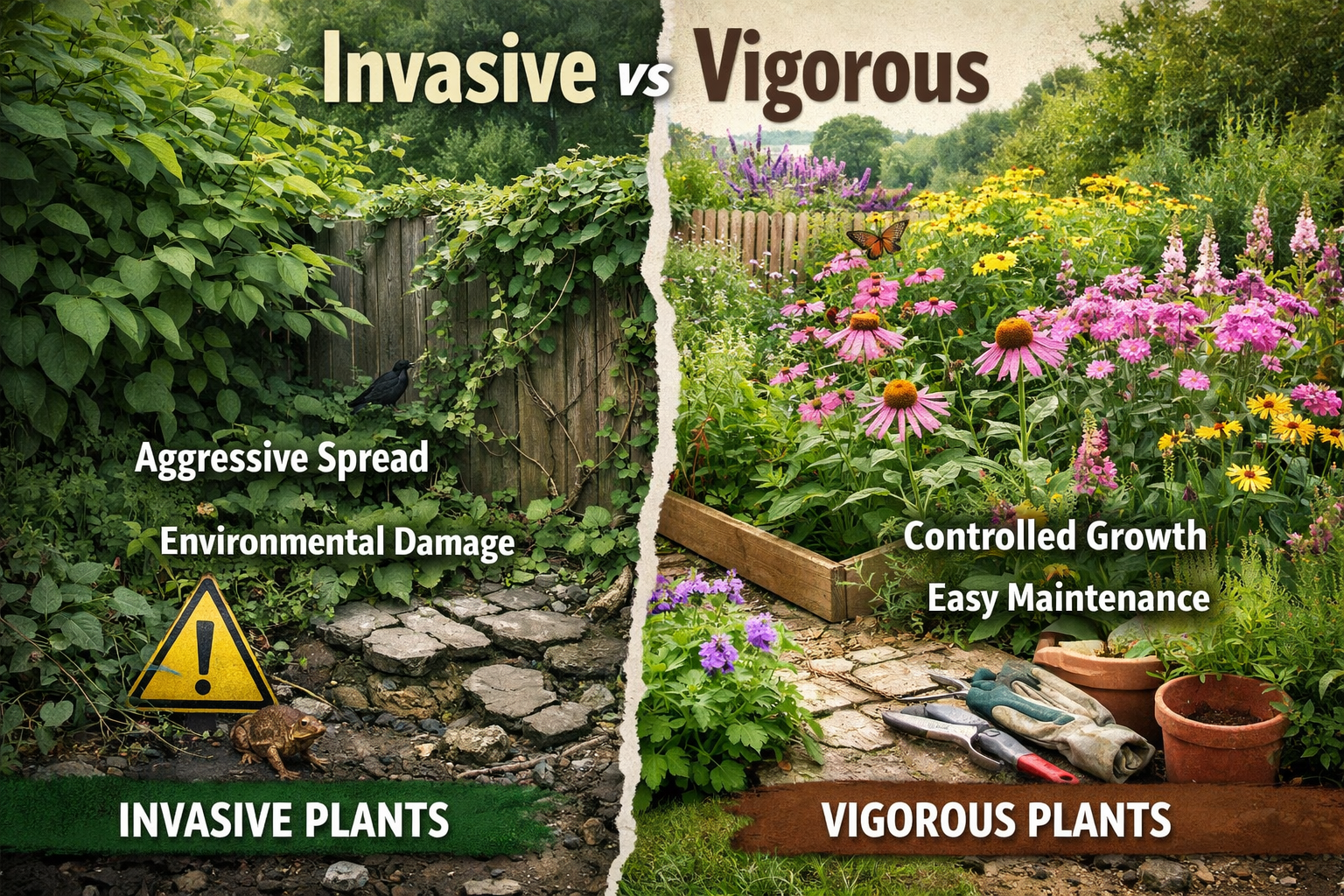
| Understanding the Difference in Gardening One of the most common sources of confusion in gardening is the difference between a vigorous plant and an invasive one. At first glance, they can look the same. Both grow quickly, both spread enthusiastically, and both can overwhelm a border if left unchecked. But despite these similarities, the difference between them matters greatly—not just for your garden, but for the wider environment too. Understanding this distinction helps gardeners make better planting choices, avoid long-term problems, and garden more responsibly. It also removes a lot of unnecessary guilt around energetic plants that are simply doing what they were bred or evolved to do. A vigorous plant is one that grows strongly and readily in the conditions provided. It may spread, self-seed, or bulk up quickly, but it does so within a framework that can be managed by normal gardening practices. Vigorous plants respond to pruning, division, containment, and competition from neighbouring plants. They don’t typically escape into surrounding habitats, and they don’t cause ecological harm beyond the garden fence. An invasive plant, on the other hand, is one that spreads aggressively beyond its planting site and causes damage to ecosystems, infrastructure, or biodiversity. Invasive plants outcompete native species, alter soil chemistry, disrupt wildlife habitats, and are extremely difficult—or sometimes impossible—to eradicate once established. Their impact goes far beyond being “a bit too lively. The key difference, then, isn’t speed of growth. Its impact and control. Vigorous plants often earn an unfair reputation. Many cottage-garden favourites fall into this category: plants that fill space quickly, suppress weeds, and yield generous foliage or flowers. In the right place, these plants are incredibly useful. They’re often resilient, tolerant of poor soils, and forgiving of missed watering or pruning. What they need is management, not avoidance. Problems arise when vigorous plants are placed thoughtlessly. A plant that behaves beautifully in a large border can feel oppressive in a small urban garden. Without space, competition, or regular cutting back, vigour can turn into domination. This doesn’t make the plant invasive—it simply means the gardener and the setting weren’t well matched. Invasive plants are a different story altogether. These are often introduced species that evolved elsewhere and arrived without the natural predators, diseases, or competition that kept them in balance in their native environment. Once established, they spread rapidly through seeds, runners, fragments, or underground systems. Even small pieces left behind after removal can regenerate. What makes invasives particularly dangerous is that they don’t stay put. They move into neighbouring land, waterways, roadsides, and wild spaces. They crowd out native plants that local insects, birds, and mammals rely on. Over time, this reduces biodiversity and weakens entire ecosystems. In some cases, invasive plants can also damage buildings, paths, drainage systems, and flood defences. From a gardener’s perspective, invasive plants are not just hard work—they are a long-term liability. Removing them often requires repeated intervention over many years, and disposal must be handled carefully to avoid further spread. Some are controlled by law because of the damage they cause. The confusion between vigorous and invasive is understandable because both can feel “out of control” when first encountered. A fast-growing groundcover, a rampant climber, or a self-seeding perennial can all create panic if a garden suddenly looks different from how it was imagined. But this is where observation and knowledge come in. A good rule of thumb is to ask three questions. Does the plant stay within the garden boundary without extraordinary effort? Does it respond predictably to pruning, cutting back, or division? Does it coexist with other plants when given reasonable space? If the answer is yes, you’re likely dealing with vigour, not invasion. Vigorous plants can often be tamed through thoughtful design. Giving them defined edges, pairing them with equally robust neighbours, or using them in areas where you want coverage can turn a perceived problem into an asset. Regular maintenance—rather than emergency intervention—is usually enough to keep them in check. Invasive plants rarely respond this way. Cutting them back often stimulates more growth. Digging them out incompletely can make the problem worse. They don’t respect boundaries, and they don’t play well with others. Their success comes at the expense of everything around them. There is also an ethical dimension to this distinction. Gardening doesn’t happen in isolation. What we plant has consequences beyond our own fences, especially in connected landscapes like towns, villages, and countryside edges. Choosing not to plant known invasive species is one of the simplest ways gardeners can protect local biodiversity. At the same time, being overly cautious and avoiding all vigorous plants can lead to sterile, underperforming gardens that rely heavily on inputs like weed membranes, chemicals, or constant replacement planting. Nature favours energy and resilience. A healthy garden usually includes plants that want to grow. The goal, then, isn’t to eliminate vigour—it’s to work with it. Gardening is, at its heart, a relationship between human intention and plant behaviour. When we understand how plants grow, spread, and compete, we can guide that energy rather than fight it. Vigorous plants reward engagement. They ask you to edit, shape, divide, and sometimes say “not there. Invasive plants demand containment, restriction, and often regret. Learning the difference early saves time, money, and frustration later. In an age where ecological awareness matters more than ever, gardeners play a quiet but powerful role. Knowing the difference between invasive and vigorous plants allows us to create gardens that are abundant without being destructive, lively without being harmful, and generous without unintended consequences. A well-managed garden doesn’t suppress life—it channels it. And understanding this distinction is one of the most important steps toward gardening with confidence, responsibility, and long-term success. |
Invasive vs Vigorous
 Earthly Comforts