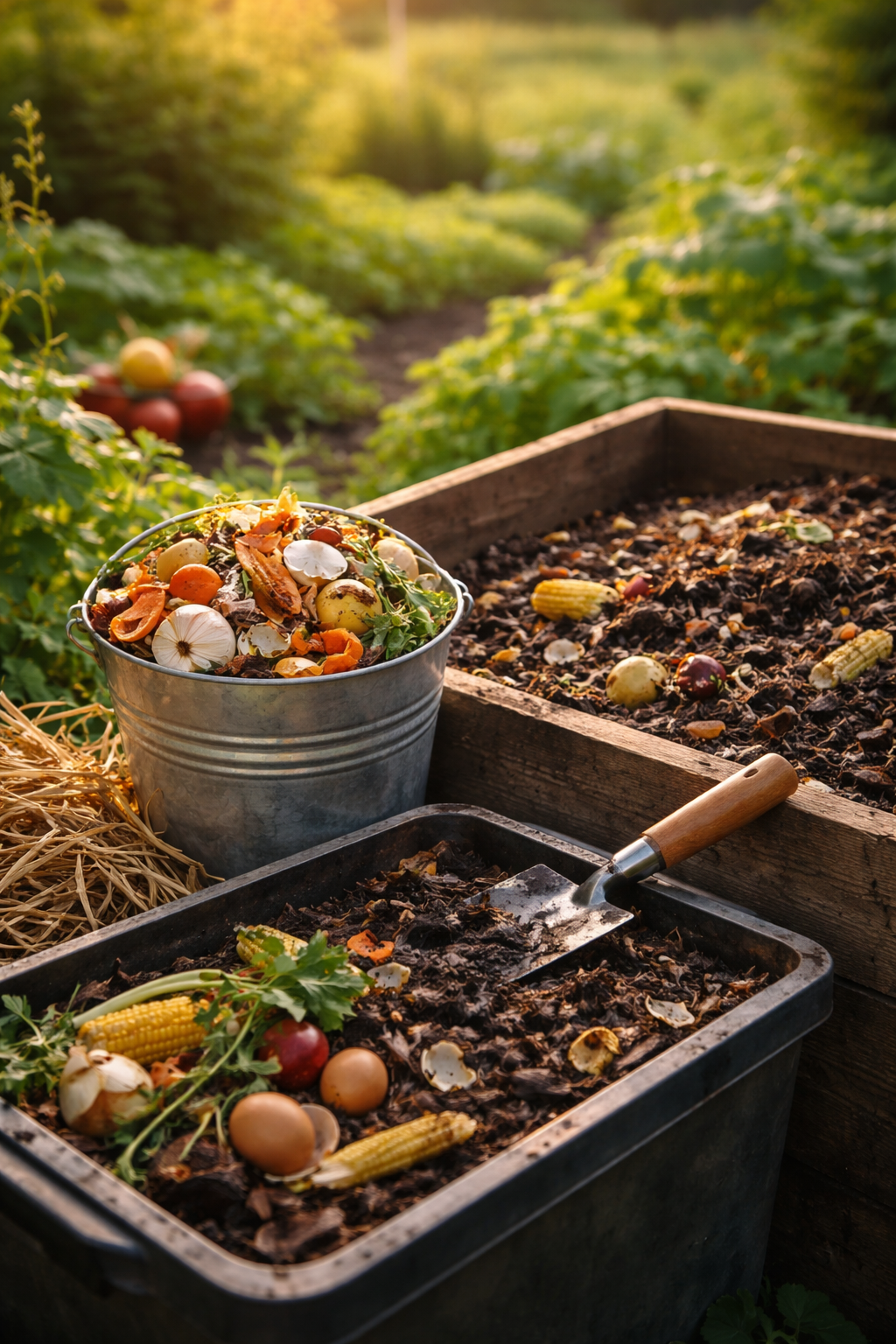
| Kitchen compost is often presented as the golden key to sustainable gardening. Peel a carrot, toss it in a bin, and somehow, rich, black soil magic appears. The reality is more nuanced. Kitchen compost can be powerful, but only when gardeners understand what it truly is, what it isn’t, and how it fits into a wider soil system rather than acting as a standalone solution. At its core, kitchen compost is recycled organic matter. Vegetable peelings, coffee grounds, eggshells, and similar waste are broken down by microorganisms into simpler compounds that plants can use. This process mirrors what happens naturally on a forest floor, but a domestic compost heap is a highly managed version of that ecosystem, and management matters far more than most people expect. One of the biggest misconceptions is that kitchen compost is “plant food” in the direct sense. Plants do not eat compost. They absorb nutrients released into the soil after compost has fully broken down and been processed by soil life. Fresh or poorly decomposed compost can actually compete with plants for nitrogen as microbes work to break it down. This is why gardens sometimes show yellowing growth after heavy compost applications made too early. Another reality check is volume. A typical household produces far less compostable material than most gardeners imagine. Even a family cooking daily may only generate enough finished compost to lightly top a few square metres of soil each year. Kitchen compost is best viewed as a soil conditioner and microbial booster rather than a bulk fertiliser. It improves structure, moisture retention, and biological activity, but it does not replace mulching, green manures, or broader soil inputs. The balance of materials inside a kitchen compost system is also critical. Food waste is usually “green” material, high in nitrogen and moisture. Without enough “brown” material such as cardboard, paper, dry leaves, or wood fibre, compost becomes wet, compacted, and anaerobic. This leads to unpleasant smells, slow breakdown, and nutrient loss. Successful composting is less about what you add and more about how you balance it. Time is another overlooked factor. Compost is not ready when it looks dark. True maturity comes when the original materials are no longer recognisable, the texture is crumbly, and the smell is neutral and earthy. Immature compost may still contain organic acids that can stress plant roots. In practical terms, this means compost made in spring is often best used the following autumn or winter, rather than being rushed straight into beds. Kitchen compost also has limitations in nutrient range. While it adds organic matter and trace elements, it is generally low in potassium and phosphorus compared to plant needs, especially for fruiting crops. This is why gardeners relying solely on compost may see healthy leaves but poor flowers or fruit. Compost works best as part of a layered soil strategy rather than the only input. There is also the question of what not to compost. Cooked food, fats, and animal products are frequently blamed for compost failure, but the real issue is scale and system type. Small domestic bins struggle with these materials because they attract pests and break down unevenly. In larger, hotter systems, they can be managed, but most household setups benefit from keeping compost inputs simple and plant-based. From a gardening perspective, the greatest value of kitchen compost lies in its impact on soil biology. Compost introduces fungi, bacteria, protozoa, and beneficial organisms that help unlock nutrients already present in the soil. These organisms improve soil aggregation, reduce compaction, and increase resilience during drought or heavy rain. In this sense, compost supports the soil ecosystem rather than feeding plants directly. Application method matters just as much as production. Spreading compost thinly on the soil surface and letting worms and microbes draw it down is far more effective than aggressively digging it in. Surface application mimics natural processes and protects soil structure. Overworking the soil to incorporate compost can undo many of the benefits it provides. Seasonal timing also plays a role. Applying compost in autumn allows nutrients to stabilise over winter and integrates organic matter ahead of spring growth. Spring applications are best kept light and mature, supporting soil life without disrupting early plant development. Compost used as a mulch layer also helps regulate temperature and moisture through the growing season. There is an environmental reality worth acknowledging as well. Composting kitchen waste is valuable, but it should not create guilt or pressure. Not all households can compost effectively, and poorly managed compost can release methane or leach nutrients. In some cases, municipal green waste systems or shared composting schemes are more efficient. Sustainability is about systems that work in real life, not idealised versions that cause frustration. For gardeners, the healthiest mindset is to see kitchen compost as one tool among many. Combined with mulching, leaf mould, green manures, reduced digging, and thoughtful planting, compost becomes part of a living soil approach rather than a miracle cure. When used with realistic expectations, it quietly improves gardens year after year. Ultimately, kitchen compost is less about waste disposal and more about a relationship. It connects daily household habits to the soil beneath our feet. When gardeners understand its limits as well as its strengths, composting stops being a chore or a trend and becomes a steady, practical contribution to long-term garden health. |
Kitchen Compost Reality in Gardening
 Earthly Comforts