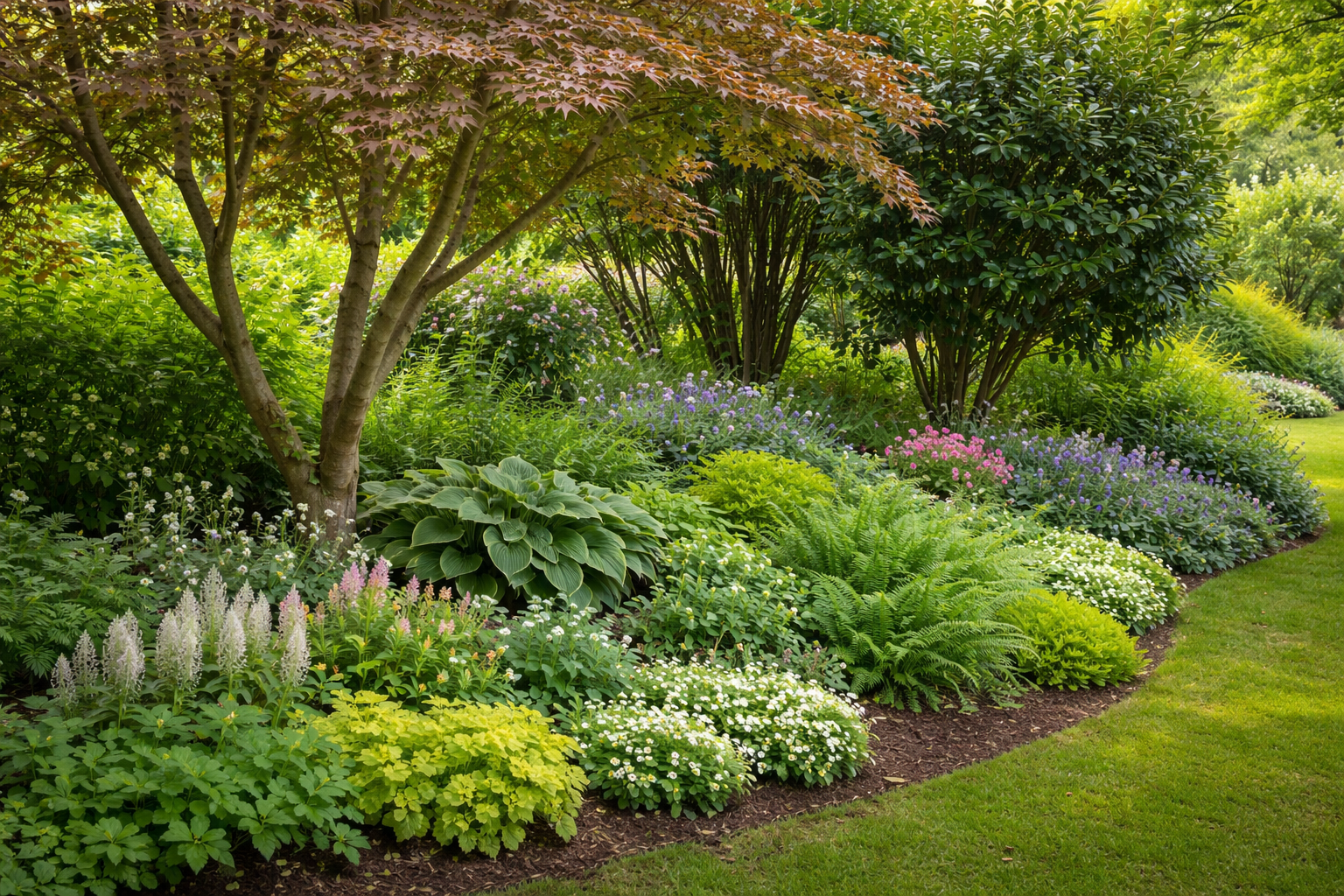
| The Quiet Art of Making Gardens Work Harder Underplanting is one of the most understated yet powerful techniques in garden design. It is the practice of planting smaller, often complementary plants beneath larger ones—trees, shrubs, climbers, or structural perennials—to create layered planting that mimics how plants naturally grow together in the wild. When done well, underplanting improves soil health, suppresses weeds, extends the season of interest, and makes a garden feel richer and more complete without increasing maintenance. At its core, underplanting is about using space intelligently. Bare soil is an invitation for weeds, erosion, and moisture loss. By covering that soil with living plants, the garden becomes more stable, resilient, and visually harmonious. Rather than seeing the ground beneath shrubs or trees as “dead space,” underplanting turns it into a working layer of the garden. Why Underplanting Matters In natural landscapes, soil is rarely left uncovered. Forest floors are layered with leaf litter, mosses, groundcovers, bulbs, and self-seeded plants, all interacting quietly beneath the canopy above. Underplanting brings that same principle into managed gardens, offering both ecological and practical benefits. One of the biggest advantages is weed suppression. Dense, well-chosen underplanting shades the soil, making it difficult for weed seeds to germinate. This reduces the need for constant hand weeding or chemical control. Over time, the underplanting becomes a living mulch, protecting the soil surface and stabilising it through roots. Underplanting also improves moisture retention. Shaded soil loses water more slowly, which is particularly valuable during dry spells or hosepipe restrictions. The plants themselves help regulate temperature at ground level, preventing soil from baking in summer or becoming compacted and lifeless. Understanding the Conditions Beneath Successful underplanting begins with observation. The area beneath a tree or shrub is not the same as an open border. Light levels are lower, rainfall is intercepted by foliage, and root competition can be intense. These conditions should guide plant choice, not fight against it. Dry shade is one of the most challenging environments, especially under established trees. Here, plants must cope with limited water, reduced light, and competition from woody roots. In contrast, areas beneath deciduous trees may receive plenty of light in spring before leaves fully emerge, making them ideal for bulbs and early-flowering plants. Soil type also matters. Under heavily shedding shrubs, soil may be rich in organic matter but acidic. Evergreen shrubs can create drier, more compacted soil over time. Understanding these nuances helps avoid planting failures and ensures the underplanting thrives rather than struggles. Choosing the Right Plants Underplanting works best when plants are chosen for both function and appearance. Groundcovers form the backbone, knitting the soil together and creating a continuous layer. These may be evergreen or deciduous, depending on the desired effect and site conditions. Bulbs are particularly valuable in underplanting schemes. They emerge early, flower before overhead plants fully leaf out, then retreat quietly underground. This allows interest without competition. Herbaceous perennials add seasonal movement and texture, while low grasses can soften edges and add subtle structure. Plant size is crucial. Underplanting should not compete aggressively with the main plant but support it visually and ecologically. Slow-spreading or clump-forming plants are often more appropriate than rampant spreaders, especially in smaller gardens where balance matters. Underplanting for Year-Round Interest A well-designed underplanting scheme considers the full calendar year. Spring interest might come from bulbs and early foliage. Summer brings leaf texture and groundcover coverage. Autumn can offer seed heads, colour shifts, or berries. Winter relies on evergreen structure, leaf shape, and ground-hugging forms that help protect the soil. Even in minimalist or low-maintenance gardens, underplanting can quietly carry the design through the dull months. Evergreen groundcovers, winter-green perennials, and plants with strong form ensure the garden never feels empty or unfinished. Soil Health and Long-Term Benefits Underplanting does more than look good—it actively improves the soil. Living roots feed soil organisms, increasing biological activity below ground. Fallen leaves and dying back growth return organic matter to the soil, naturally improving structure and fertility. Over time, this creates looser, more resilient soil that drains better yet holds moisture more effectively. This is particularly valuable in gardens that are compacted, where repeated foot traffic or heavy rainfall has compressed the soil. Underplanting reduces the need for frequent soil disturbance, allowing natural processes to do the work. Maintenance: Less Work, Not More A common misconception is that underplanting increases maintenance. In reality, thoughtful underplanting usually reduces it. Once established, dense planting limits weed growth, protects soil, and reduces watering needs. The key is patience. Underplanting often looks sparse in its first year. Plants need time to settle, spread, and knit together. During this phase, light mulching and occasional weeding may be needed. By year two or three, the system begins to look after itself. Maintenance then becomes about light editing rather than constant intervention—cutting back, thinning if necessary, and allowing plants to perform their roles without excessive control. When Underplanting Is Not Appropriate Underplanting is not a universal solution. Some areas, such as heavily trafficked spaces or extremely dry, root-dense zones, may struggle to support additional planting. In these cases, alternative ground protection, such as mulch, gravel, or managed leaf litter, may be more appropriate. It is also important not to overcrowd. Underplanting should enhance the main structure, not obscure it. Thoughtful spacing and restraint are as important as plant choice. A More Natural Way to Garden Underplanting encourages a shift in mindset—from managing individual plants to supporting a living system. It rewards observation, patience, and respect for natural processes. Rather than forcing plants into unsuitable spaces, it works with conditions as they are, resulting in healthier gardens that feel grounded and intentional. When done well, underplanting is almost invisible in its effort. It simply makes gardens feel right—balanced, settled, and quietly alive beneath the surface. |
Underplanting
 Earthly Comforts