
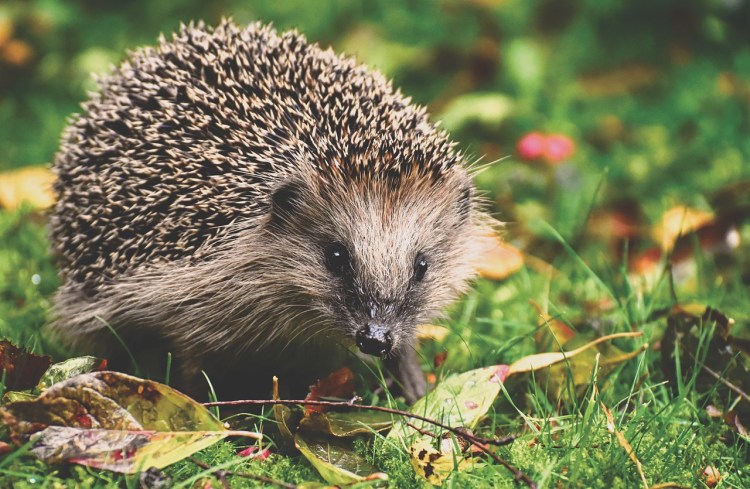
| A Quiet Companion of Gardens, Hedges, and Nightfall Few wild animals feel as familiar — or as quietly beloved — as the hedgehog. It does not soar, roar, or dominate its environment. Instead, it shuffles, sniffs, and disappears into the shadows, living a life that unfolds largely unnoticed beneath our feet and along the hedges. The hedgehog is a creature of edges and in-betweens: gardens that meet fields, hedgerows that link places, night that follows day. Its survival depends not on spectacle, but on tolerance, continuity, and a landscape that still allows small lives to move freely. To understand the hedgehog is to understand how everyday spaces shape wildlife more than grand wilderness ever could. |
| Instantly Recognisable, Often Misunderstood The hedgehog’s appearance needs little introduction. Covered in thousands of stiff spines, with a rounded body, short legs, and a pointed snout, it looks almost designed to be remembered. Those spines are not weapons — they are shields. When threatened, the hedgehog curls into a tight ball, presenting a near-impenetrable barrier to most predators. This defence has worked for a very long time, but it comes with a trade-off: when danger comes from roads, machinery, or habitat loss, curling up offers little protection. Beneath the spines is a surprisingly delicate animal, with soft fur on its face and underside, and a sensitive nose that leads almost every decision it makes. A Life Guided by Smell and Sound Hedgehogs rely heavily on their senses of smell and hearing. Their eyesight is relatively poor, but this matters little in a world navigated mostly at night. As dusk falls, hedgehogs emerge to forage, noses close to the ground, listening for faint rustles and following scent trails invisible to us. They are opportunistic feeders, guided by availability rather than preference alone. Their intelligence lies in persistence and memory — learning where food is likely to appear and returning again and again. This makes them well-suited to stable environments and vulnerable in places that change too fast. What Hedgehogs Eat Hedgehogs are insect-eaters by nature, but their diet is varied and flexible. They commonly feed on: Beetles and beetle larvae Earthworms Slugs and snails Caterpillars Earwigs and other invertebrates They may also occasionally eat fallen fruit or carrion if encountered, but insects and soil-dwelling creatures form the core of their diet. Because of this, hedgehogs are closely tied to healthy soil. Gardens and landscapes rich in organic matter, leaf litter, and invertebrate life are essential feeding grounds. A silent garden with no insects is a hungry one. Home Is Not One Place, but Many Hedgehogs do not live in a single permanent den. Instead, they use multiple resting places depending on the season and need. These may include: Leaf piles Hedge bases Log stacks Compost heaps Gaps beneath sheds or decking They build simple nests from leaves and grass, often relocating frequently. This movement helps avoid parasites and allows them to respond to changes in food and disturbance. In autumn, this behaviour becomes especially important as hedgehogs prepare for winter. Hibernation: A Risky Necessity As temperatures fall and food becomes scarce, hedgehogs enter hibernation. They build a well-insulated nest, usually hidden deep within leaf litter or vegetation, and lower their body temperature dramatically. Heart rate and breathing slow to a fraction of normal levels. Hibernation is not continuous sleep. Hedgehogs may wake briefly during warmer spells to reposition or move nests. This is a dangerous time. Disturbance, flooding, removal of nesting sites, or mild winters that interrupt hibernation can all deplete vital energy reserves. Many hedgehogs do not survive winter, and small changes in how land is managed can tip the balance. Living Alongside Humans Hedgehogs are often described as garden animals, but this is not because gardens are ideal — it is because gardens have become refuges. As farmland has intensified and hedgerows have disappeared, gardens now provide: Food sources Shelter Nesting material Relative safety from machinery However, modern gardens also introduce new hazards: fencing that blocks movement, steep-sided ponds, strimmers, netting, and roads that fragment territories. A hedgehog may travel a surprising distance each night in search of food. When that journey is broken by solid boundaries, the consequences can be severe. Why Hedgehogs Need Connected Spaces Hedgehogs are roamers. They do not defend territories, but they do rely on access. A healthy hedgehog landscape includes: Gaps under fences Continuous hedgerows Linked gardens Untidy corners Dark, quiet routes When spaces become isolated, populations fragment. Individuals struggle to find mates, food becomes scarce, and numbers quietly decline. The hedgehog’s challenge is not lack of effort — it walks and searches tirelessly — but lack of permission to move. The Hedgehog’s Gentle Role in the Ecosystem Hedgehogs help regulate invertebrate populations and contribute to soil health through their foraging. They do not eliminate pests, nor do they disrupt balance. Instead, they sit comfortably within it — neither dominant nor insignificant. Their presence often indicates: Healthy soil life Structural diversity Reduced chemical use Tolerance of natural mess They are not animals of perfection. They thrive where nature is allowed to be a little uneven. Why Hedgehogs Are Declining The hedgehog’s decline is not due to one single cause, but many small pressures acting together. These include: Loss of hedgerows and field margins Increased road traffic Garden fencing and barriers Declining insect populations Over-tidying of green spaces Each pressure narrows the hedgehog’s options. Over time, the space it can safely use becomes smaller and more fragmented. The decline is often invisible until it is advanced. What the Hedgehog Teaches Us The hedgehog is not demanding. It does not require pristine wilderness or special structures. It asks for: Space to move Food to find Shelter to rest Time to adapt It reminds us that wildlife conservation does not always happen in reserves or remote places. It happens between houses, along fences, under hedges, and in the quiet decisions made by ordinary people. A Creature of the Evening World To glimpse a hedgehog crossing a path at dusk is to witness something quietly grounding. There is no urgency, no performance — just a small life going about its business, shaped by habits older than our streets and gardens. The hedgehog survives not by dominance, but by persistence. And its future depends on whether we continue to leave room for the small, slow, and unassuming lives that share our landscapes — often without asking for anything more than passage. |
 Earthly Comforts