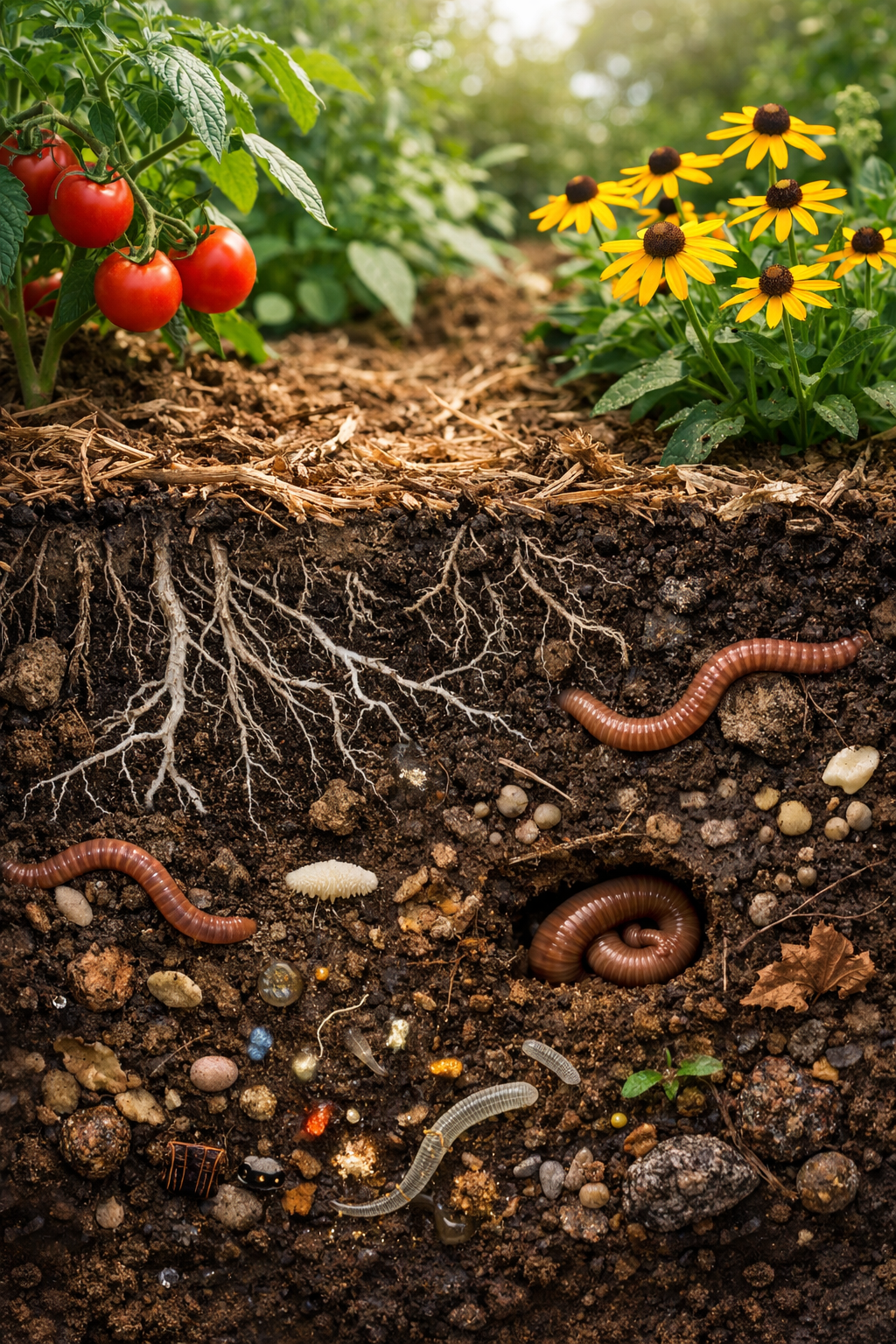
| The Quiet Labour Beneath Every Healthy Garden Most people judge a garden by what they can see: neat edges, healthy plants, fresh growth, colour, and structure. What rarely gets noticed is the slow, patient work happening below the surface. Soil does not shout for attention, yet it determines almost everything that succeeds above it. Unseen soil work is the difference between gardens that merely survive and those that quietly thrive year after year. Soil is not dirt. Dirt is what ends up under your nails. Soil is a living system made up of minerals, organic matter, air, water, and a vast network of organisms working together. When this system is supported, plants become more resilient, pests are reduced naturally, and maintenance becomes easier over time. When it is neglected, no amount of pruning, feeding, or watering will permanently fix the problems that follow. One of the most misunderstood aspects of soil is that improvement is rarely instant. Unseen soil work is cumulative. Each action builds slowly on the last, often showing no immediate visual reward. This can be frustrating in a culture that expects quick results, but soil operates on longer timelines. It rewards consistency, restraint, and respect. At the heart of healthy soil is structure. Good soil structure allows roots to move freely, water to drain without pooling, and air to circulate where microbes need it. Compacted soil suffocates roots and collapses this balance. Compaction is usually caused by repeated foot traffic, machinery, or working soil when it is too wet. Once compacted, soil does not recover on its own. The unseen work here involves careful loosening, aeration, and patience, not aggressive digging that further damages the structure. Organic matter is another unseen cornerstone. Compost, leaf mould, mulches, and decomposed plant material feed soil life rather than plants directly. Microorganisms break this material down into nutrients plants can access when needed. This slow release prevents feast-and-famine cycles that weaken plants and encourage disease. Adding organic matter is not about instant growth; it is about building a buffer against stress, drought, and nutrient imbalance. Soil life itself is often overlooked because it is invisible. Bacteria, fungi, nematodes, protozoa, worms, and insects form an underground workforce that processes nutrients, suppresses pathogens, and improves soil texture. Mycorrhizal fungi, for example, extend the effective root system of plants, helping them access water and minerals beyond their reach. When soil is repeatedly disturbed or chemically overloaded, these relationships break down. Unseen soil work involves protecting these systems by working gently and allowing natural cycles to function. Water management is another area where soil quietly does the heavy lifting. Healthy soil acts like a sponge, absorbing rainfall and releasing it gradually to plant roots. Poor soil either repels water or holds too much, leading to runoff, erosion, or rot. Improving water behaviour is not about watering more or less; it is about soil composition. Organic matter increases water retention in sandy soils and improves drainage in heavy clay. This balance cannot be rushed, but once established, it significantly reduces watering demands. Nutrients behave differently in healthy soil. Instead of being washed away or locked up, they cycle through living organisms and become available when plants signal a need for them. This is why overfeeding often causes more harm than good. Excess nutrients disrupt microbial balance, encourage weak growth, and pollute surrounding environments. Unseen soil work focuses on feeding the soil first, trusting that plants will follow. Weeds often tell the clearest story about soil conditions. Certain weeds thrive in compacted ground, while others thrive in low-fertility or disturbed soil. Instead of treating weeds as enemies, unseen soil work treats them as indicators. Repeated weeding without addressing the underlying cause leads to constant reappearance. Adjusting soil conditions gradually shifts which plants can survive there, often reducing weed pressure naturally. Seasonality plays a role, too. Soil work done at the wrong time can undo months of progress. Working wet soil collapses the structure. Leaving soil bare over winter invites erosion and nutrient loss. Mulching, cover planting, and restraint during colder months protect what has been built. Much of the most important soil care happens when the garden appears dormant. There is also a psychological element to unseen soil work. It requires trust. Trust that the effort invested below ground will reveal itself later. Trust that fewer interventions can produce stronger outcomes. This mindset moves gardening away from constant correction and towards long-term stewardship. Gardens maintained this way often feel calmer, more balanced, and easier to manage. In practical terms, unseen soil work does not require expensive products or complex techniques. It requires observation, consistency, and willingness to slow down. Simple actions repeated over time—mulching beds, avoiding unnecessary disturbance, composting green waste, rotating plant types, and protecting soil surfaces—create profound change. The soil remembers what it is given. For gardeners, landscapers, and property caretakers alike, soil work is often undervalued because it is hard to photograph. Yet it is the foundation of sustainable garden care. When soil is supported, everything else becomes lighter work. Plants grow with fewer inputs, lawns recover faster, and seasonal extremes become less damaging. Unseen soil work is quiet, unglamorous, and deeply effective. It is the long game of gardening. Those who commit to it may not receive immediate praise, but they inherit gardens that improve rather than decline. Over time, the results do surface—in healthier growth, fewer problems, and a landscape that feels resilient rather than fragile. In the end, the most successful gardens are not built from the top down, but from the ground up. What happens beneath our feet determines everything we see. When we learn to work with soil rather than on it, the garden stops fighting back and starts doing the work for us. |
Unseen Soil Work
 Earthly Comforts