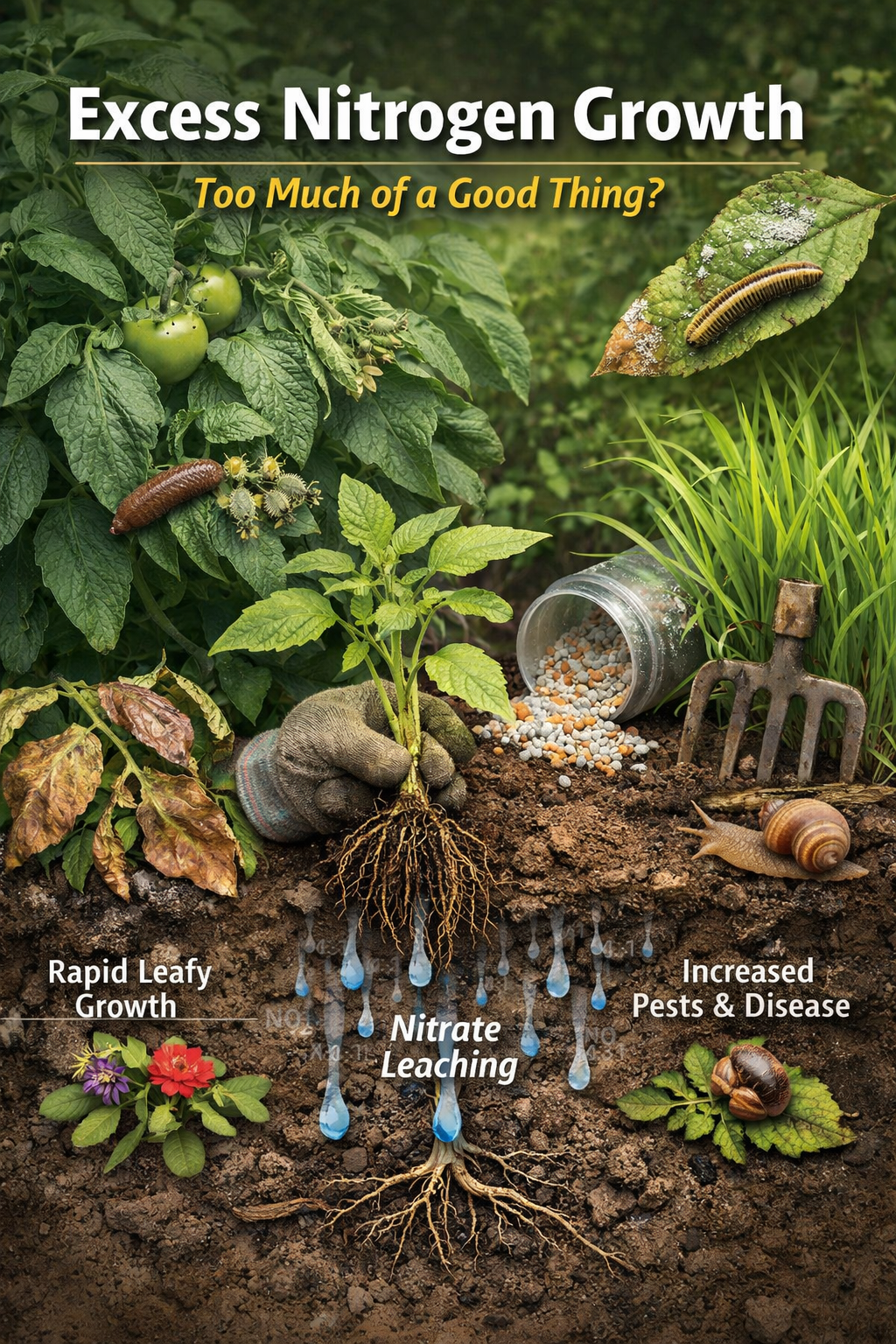
| When “Too Much of a Good Thing” Damages Your Garden Nitrogen is often described as the engine of plant growth. It fuels leafy development, rich green colour, and rapid expansion. Without it, plants struggle. With too much of it, however, growth can become distorted, unbalanced, and ultimately harmful. Excess nitrogen growth is one of the most common yet misunderstood issues in gardens, lawns, and productive plots, and it often hides behind what appears to be “success” at first glance. Understanding how excess nitrogen behaves, how to spot it, and how to correct it is essential for long-term soil health and resilient planting. What Excess Nitrogen Growth Really Means Excess nitrogen growth occurs when a plant receives more available nitrogen than it can use efficiently. Instead of balanced development, the plant prioritises soft, leafy growth at the expense of roots, flowers, fruits, and structural strength. The plant appears lush and vigorous, but beneath the surface, it is often weaker and more vulnerable. This imbalance is not limited to synthetic fertilisers. It can occur through overuse of organic feeds, fresh manure, high-nitrogen composts, grass clippings, or repeated applications of liquid feeds. The issue is not the source, but the quantity and timing. Visual Signs in Plants and Lawns One of the clearest indicators of excess nitrogen is overly rapid, floppy growth. Leaves become very dark green, large, and soft. Stems may elongate quickly but lack rigidity, causing plants to collapse, sprawl, or snap in wind and rain. Flowering and fruiting are often delayed or reduced. Plants “stay leafy” rather than switching into reproductive mode. In lawns, excess nitrogen creates fast-growing, lush grass that requires constant mowing, while shallow root systems make turf more prone to drought stress and disease. In some cases, leaf tips may scorch or curl, particularly when nitrogen levels spike suddenly. This is often mistaken for underwatering or sun damage. Hidden Consequences Below the Soil Excess nitrogen doesn’t just affect what you can see. Below ground, root development suffers. When nitrogen is freely available, plants invest less energy in exploring the soil, resulting in weaker anchorage and reduced access to water and micronutrients. Soil biology can also be disrupted. High nitrogen availability encourages fast-cycling microbes that break down organic matter quickly, reducing long-term soil structure and carbon content. Over time, soils become compacted, less resilient, and more dependent on repeated feeding. Leaching is another issue. Nitrogen that plants cannot absorb is washed deeper into the soil profile by rain, moving out of reach of roots and into groundwater. This is a loss of both nutrients and money, and it contributes to wider environmental harm. Increased Pest and Disease Pressure Soft, nitrogen-rich growth is highly attractive to pests. Aphids, slugs, caterpillars, and leaf-sucking insects thrive on nitrogen-heavy tissue. At the same time, plants with excess nitrogen tend to have thinner cell walls and weaker natural defences, making them more susceptible to fungal diseases such as mildew and rust. This often creates a cycle where gardeners respond to pest or disease outbreaks with additional feeding or treatments, further worsening the underlying imbalance. Common Causes in Everyday Gardening Excess nitrogen usually results from good intentions rather than neglect. Regular feeding “just to be safe,” applying lawn fertiliser too frequently, or topping beds with rich compost year after year without considering nutrient balance are all common contributors. Another frequent cause is treating all plants the same. Leafy crops, flowering perennials, shrubs, lawns, and trees all have different nitrogen needs at different times. A blanket approach almost always leads to excess somewhere. Timing matters as well. Applying nitrogen late in the growing season encourages soft growth that cannot harden before colder weather, increasing winter damage and dieback. How to Correct Excess Nitrogen The first step is to stop adding nitrogen. This sounds obvious, but many gardens remain stuck in a cycle of overfeeding. Pause all fertiliser applications and avoid adding fresh manures or high-nitrogen composts. Encouraging balance is key. Adding carbon-rich materials such as leaf mould, wood chip mulch, or well-rotted compost helps tie up excess nitrogen temporarily while improving soil structure. This allows soil biology to stabilise and nutrients to rebalance naturally. Watering deeply but less frequently can help flush excess nitrogen from the root zone without encouraging shallow roots. In lawns, raising mowing height and reducing cutting frequency allows grass to recover strength rather than chasing soft growth. In extreme cases, planting nitrogen-hungry plants temporarily can help draw down levels, particularly in vegetable beds. Long-Term Prevention and Better Practice Preventing excess nitrogen growth is about observation, restraint, and understanding your soil. Feed only when there is a clear need, and match the feed to the plant and season. Slow-release, balanced feeds are almost always preferable to fast-acting, high-nitrogen products. Regularly adding organic matter for structure rather than fertility helps build soil resilience without pushing nutrient levels too high. Over time, a healthy soil will supply plants steadily rather than in damaging surges. Most importantly, resist the idea that more growth is always better. Strong, steady, well-timed growth produces healthier plants, better flowers, stronger lawns, and more resilient gardens overall. Excess nitrogen growth is a quiet reminder that gardening is not about pushing nature harder, but about working in balance with it. |
Excess Nitrogen Growth
 Earthly Comforts