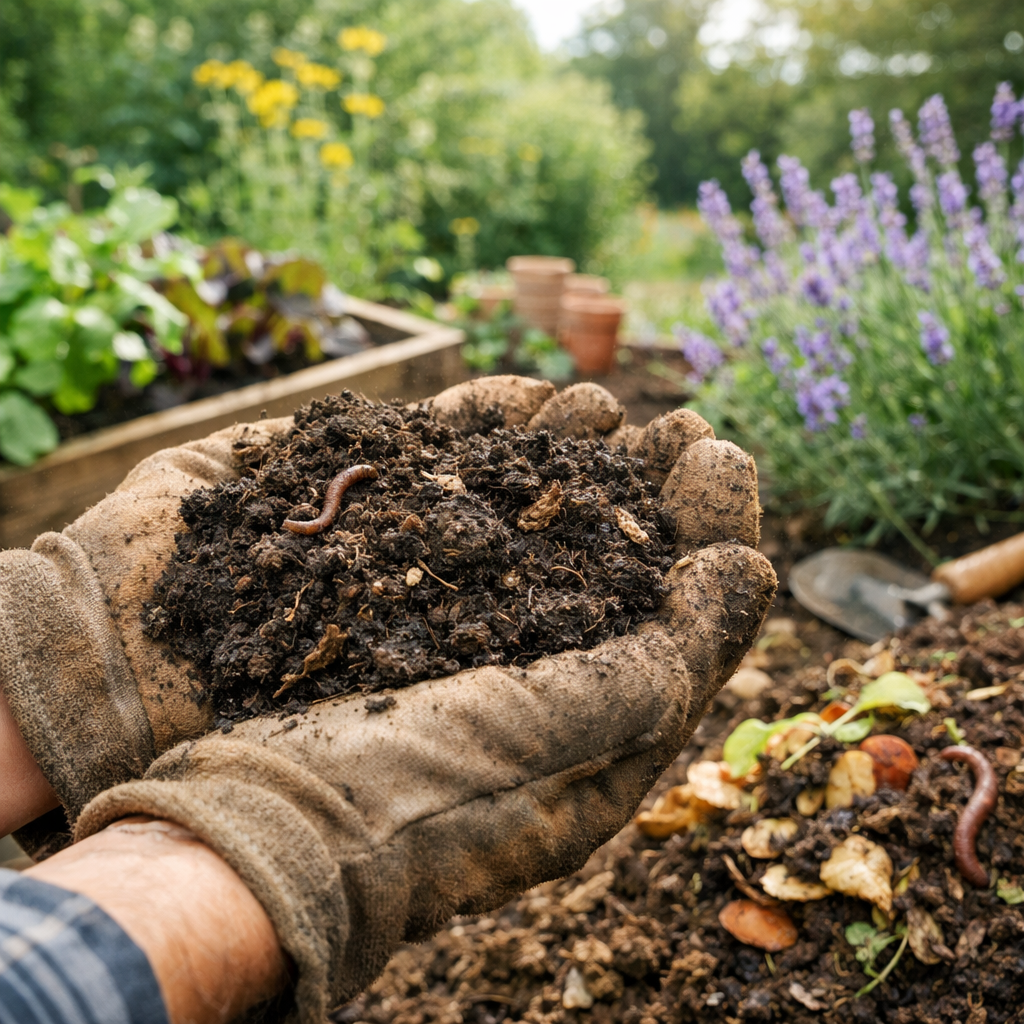
| In gardening, more is not always better. Bigger beds, deeper borders, extra compost, more fertiliser, more inputs — these are often assumed to equal better results. Yet time and experience repeatedly show the opposite. Healthy gardens are built on quality soil, not large volumes of mediocre or damaged ground. When soil is alive, balanced, and resilient, plants need less intervention, less replacement, and far less correction. The idea of quality soil over quantity is about working with what the soil already wants to do, rather than overpowering it. It asks gardeners to slow down, observe, and thoughtfully improve soil conditions instead of piling on material or constantly starting over. Soil is not just something plants sit in. It is a living system, and how well it functions determines everything above ground. Soil quality is defined by structure, biology, and balance. Good soil has stable aggregates that allow air and water to move freely. It contains organic matter in various stages of decay. It supports fungi, bacteria, insects, and microorganisms that break down nutrients and make them available to roots. Poor soil, by contrast, is compacted, lifeless, or overly disturbed, even if there is a lot of it. Adding more soil does not automatically fix poor soil. In fact, constant importation of material can dilute existing biology, introduce imbalance, and mask underlying issues such as compaction or drainage problems. A shallow layer of excellent soil will outperform a deep layer of degraded soil every time. One of the most common misconceptions is that plants need vast quantities of compost or topsoil to thrive. In reality, plants need access to nutrients, not stockpiles. When soil biology is active, nutrients are cycled continuously. When biology is weak or absent, nutrients sit unused or leach away. Quality soil feeds plants slowly and consistently. Quantity-focused soil often creates feast-or-famine conditions where plants surge briefly and then struggle. This leads to weak growth, pest issues, and the false belief that more feeding is required. Compaction is one of the biggest threats to soil quality and one of the most overlooked. Heavy foot traffic, machinery, repeated digging, and even overwatering can collapse soil structure. Once compacted, roots cannot breathe properly, water pools or runs off, and beneficial organisms decline. Adding more soil to compacted ground does not resolve the problem. Roots will still struggle to penetrate the compacted layer. Improving soil quality means gently relieving compaction, increasing organic matter, and allowing biology to rebuild structure naturally. This is where restraint becomes powerful. Minimal disturbance allows fungal networks to develop. Earthworms reopen channels. Organic matter binds particles into stable clumps. The soil heals itself when given the chance. Organic matter is often discussed in terms of quantity, but quality matters more. Fresh green waste, woody material, leaf mould, and well-finished compost all behave differently in soil. A thin layer of diverse organic matter applied regularly is more effective than a thick layer applied occasionally. Quality organic matter improves water retention without waterlogging. It buffers temperature extremes. It feeds microorganisms at different rates, creating long-term stability rather than short bursts of activity. Overapplication, however, can lead to nutrient imbalance, excessive softness, or fungal dominance where it is not wanted. Plants adapted to poor soils often suffer in over-enriched conditions. Lavenders, herbs, and many native species perform better in lean, well-structured soil than in rich but unstable ground. Quality soil supports the right plants rather than forcing unsuitable ones to survive. Soil depth is also frequently misunderstood. Deep soil is only beneficial if it is usable. Roots rarely exploit soil that lacks oxygen, structure, or biological activity. A shallow, well-aerated soil profile with active life supports stronger root systems than deep, inert layers. This is especially relevant in urban gardens, raised beds, and compact plots. Limited space does not mean limited potential. Improving soil quality allows small areas to be productive, resilient, and visually strong without constant renewal. Water behaviour is a clear indicator of soil quality. Healthy soil absorbs rainfall steadily and releases it slowly. Poor soil sheds water or holds it excessively. Increasing soil quantity rarely corrects this. Improving structure and organic balance does. Gardens managed with quality soil principles require fewer inputs over time. Weeding becomes easier as soil structure improves. Plants establish more quickly. Pests and diseases are less aggressive because plants are not under constant stress. Maintenance shifts from correction to observation. This approach also aligns with sustainability. Transporting soil and compost has a cost. Repeated soil replacement generates waste. Improving what is already present reduces disturbance, lowers emissions, and builds long-term resilience rather than short-term appearance. Quality soil supports wildlife invisibly. Fungi connect plant communities. Microbes regulate nutrient cycles. Invertebrates aerate and mix the soil. These systems cannot be rushed or substituted with bulk materials. They develop through consistent, gentle management. The temptation to “do more” in gardening is strong. Yet soil rewards patience more than force. Improving quality means fewer dramatic changes and more subtle adjustments. It means working seasonally, allowing rest periods, and accepting that soil improvement is cumulative rather than instant. Ultimately, soil is an investment. Every thoughtful improvement compounds over time. Every shortcut taken eventually demands correction. Choosing quality over quantity is not about doing less work, but about doing the right work. When soil is healthy, the garden takes care of itself. Growth looks natural rather than forced. Maintenance feels lighter. The system becomes more forgiving. This is the quiet strength of quality soil — and the foundation of gardens that last. |
Quality Soil Over Quantity
 Earthly Comforts