
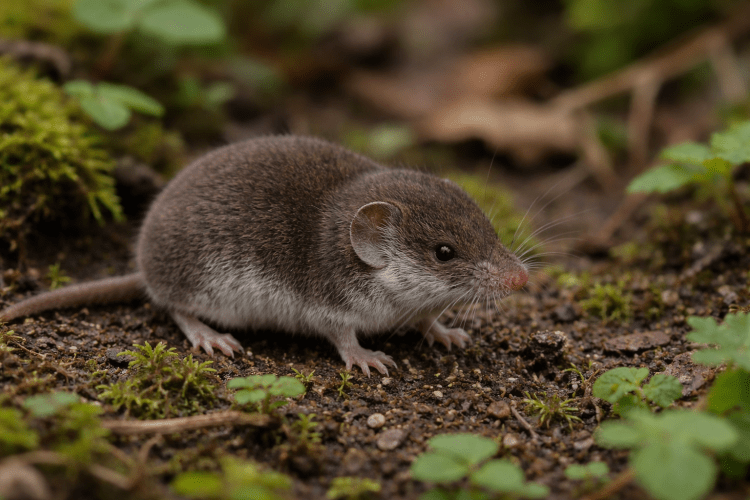
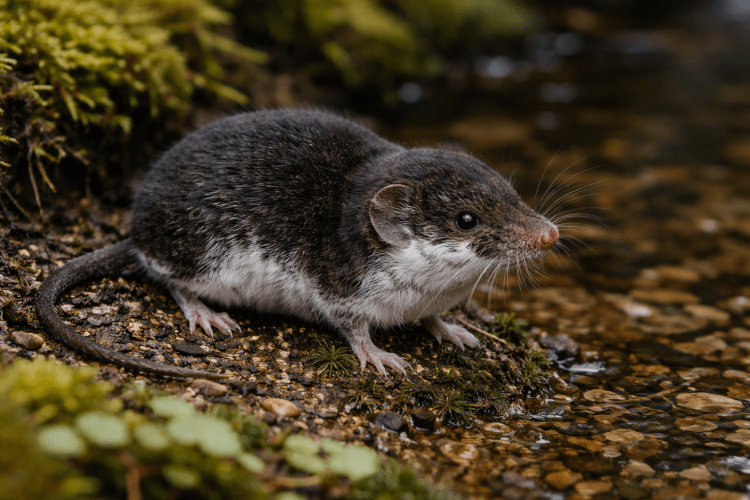
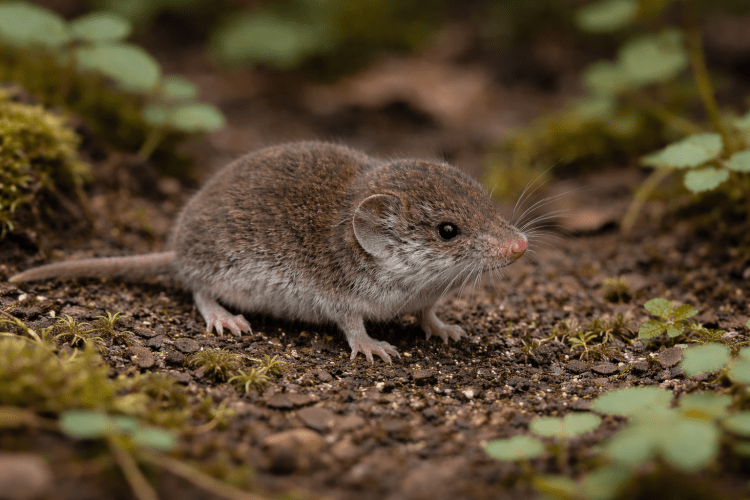
| The Relentless Pulse of the Undergrowth: Understanding Shrews in the UK Shrews are among the smallest mammals in the UK, yet they live some of the most intense lives in the natural world. Fast-moving, sharp-snouted, and almost constantly active, shrews exist at the very edge of survival—burning energy at a rate that leaves no room for rest, hesitation, or waste. Rarely seen and often mistaken for mice, shrews are neither rodents nor pests. They are insectivores, finely tuned to hunt, consume, and move almost without pause. To understand shrews is to glimpse a hidden layer of British wildlife that operates at extraordinary speed, largely unseen beneath grass, leaves, logs, and riverbanks. |
| What Is a Shrew? Shrews are tiny mammals with long, pointed snouts, small eyes, and dense velvety fur. Their ears are often barely visible, buried within the coat. Unlike mice, shrews have sharp teeth rather than gnawing incisors, reflecting their insect-eating lifestyle. Their bodies are built for relentless movement rather than climbing or digging deep burrows. They follow surface-level runways through vegetation, leaf litter, and moss, darting with urgent haste. A shrew that stops for too long risks death—not from predators, but from starvation. This is because shrews have one of the highest metabolic rates among mammals. A Life Lived at Full Speed Shrews must eat almost constantly to survive. Many species need to consume their own body weight—or more—in food every 24 hours. Even a few hours without feeding can be fatal. Their diet consists mainly of insects, spiders, worms, slugs, beetles, larvae, and other invertebrates. Some species will also take small vertebrates or scavenge carrion if the opportunity arises. This constant hunting makes shrews vital controllers of invertebrate populations. They are not casual feeders; they are precision predators, operating day and night with minimal downtime. The Main Shrew Species in the UK Common Shrew – Sorex araneus The most widespread shrew in the UK, the common shrew is found in grasslands, gardens, hedgerows, woodland edges, and rough ground. Its fur is brown on top and paler on the underside, and it has a distinct musky scent. Common shrews are fiercely territorial and highly aggressive toward rivals. They use high-pitched sounds and scent-marking to define their territory, particularly during the breeding season. Pygmy Shrew – Sorex minutus The pygmy shrew is the smallest mammal in Britain and one of the smallest in Europe. It is delicate in appearance but no less intense in behaviour. Found in habitats similar to those of the common shrew, it tends to prefer slightly damper areas with dense cover. Because of its size, the pygmy shrew’s energy demands are even more extreme. Its movements are lightning-fast, and it is exceptionally difficult to observe for more than a fleeting moment. Water Shrew – Neomys fodiens The water shrew is the UK’s largest shrew species and arguably the most remarkable. Adapted for life along streams, ponds, rivers, and wetlands, it is an excellent swimmer and diver. With water-repellent fur and stiff hairs along its feet to aid propulsion, the water shrew hunts aquatic insects, larvae, small fish, and tadpoles. It is active both above and below the waterline, often using riverbank burrows for shelter. Venomous, but Not Dangerous One of the lesser-known facts about shrews is that some species produce venom in their saliva. This venom helps immobilise prey, allowing shrews to subdue animals that might otherwise escape. The venom is not dangerous to humans or pets under normal circumstances, but it highlights just how specialised shrews are. Few mammals in the UK possess this ability, making shrews quietly exceptional. Breeding and Short Lives Shrews live fast and die young. Most survive little more than a year in the wild. Breeding usually occurs from spring through summer, with females producing several litters if conditions allow. Young shrews grow rapidly and reach independence quickly. There is no room for prolonged care in a life measured in weeks and months rather than years. This rapid turnover makes shrew populations highly sensitive to weather, habitat change, and food availability. A harsh winter or prolonged drought can dramatically reduce numbers. Shrews and Their Role in the Ecosystem Despite their size, shrews play an outsized role in ecosystem balance. By consuming vast quantities of invertebrates, they help regulate populations that could otherwise explode. They are also important prey for owls, kestrels, foxes, stoats, and snakes. Many predators rely on shrews as a fallback food source when other prey is scarce. In woodland and grassland systems, shrews contribute to nutrient cycling by breaking down organic matter indirectly through their feeding activity. Shrews in Gardens and Managed Land Shrews do visit gardens, particularly those with dense planting, log piles, compost heaps, and undisturbed corners. Their presence is usually a sign of healthy soil and a good invertebrate population. They do not damage plants, chew wiring, or create large burrows. If a shrew appears indoors, it is almost always accidental and temporary. Encouraging natural habitats—leaf litter, wild patches, and chemical-free gardening—supports shrews and the wider web of life they belong to. The Challenge of Being Seen Most people will never knowingly see a shrew. They move quickly, stay low, and avoid open ground whenever possible. Even wildlife enthusiasts often encounter them only as fleeting shadows or soft rustles. Occasionally, a shrew may be found deceased in the open, having simply run out of energy. This stark reality underlines how finely balanced their lives are. Their invisibility is not a flaw—it is a survival strategy. Why Shrews Matter Shrews remind us that not all wildlife is slow, gentle, or easily observed. Some lives are defined by urgency, precision, and constant motion. They represent the hidden intensity of nature—the endless effort happening beneath our feet while we walk, garden, and rest above. By learning about shrews, we gain a deeper appreciation for the unseen forces that sustain ecosystems. They are small, fierce, and essential. Listening for the Unheard Shrews do not sing, display, or announce themselves. Their presence is felt rather than seen—through the absence of pests, the success of predators, and the quiet continuity of life in soil and leaf litter. To value shrews is to value subtlety. And in doing so, we learn to pay attention to the quieter, faster rhythms of the natural world. |
 Earthly Comforts