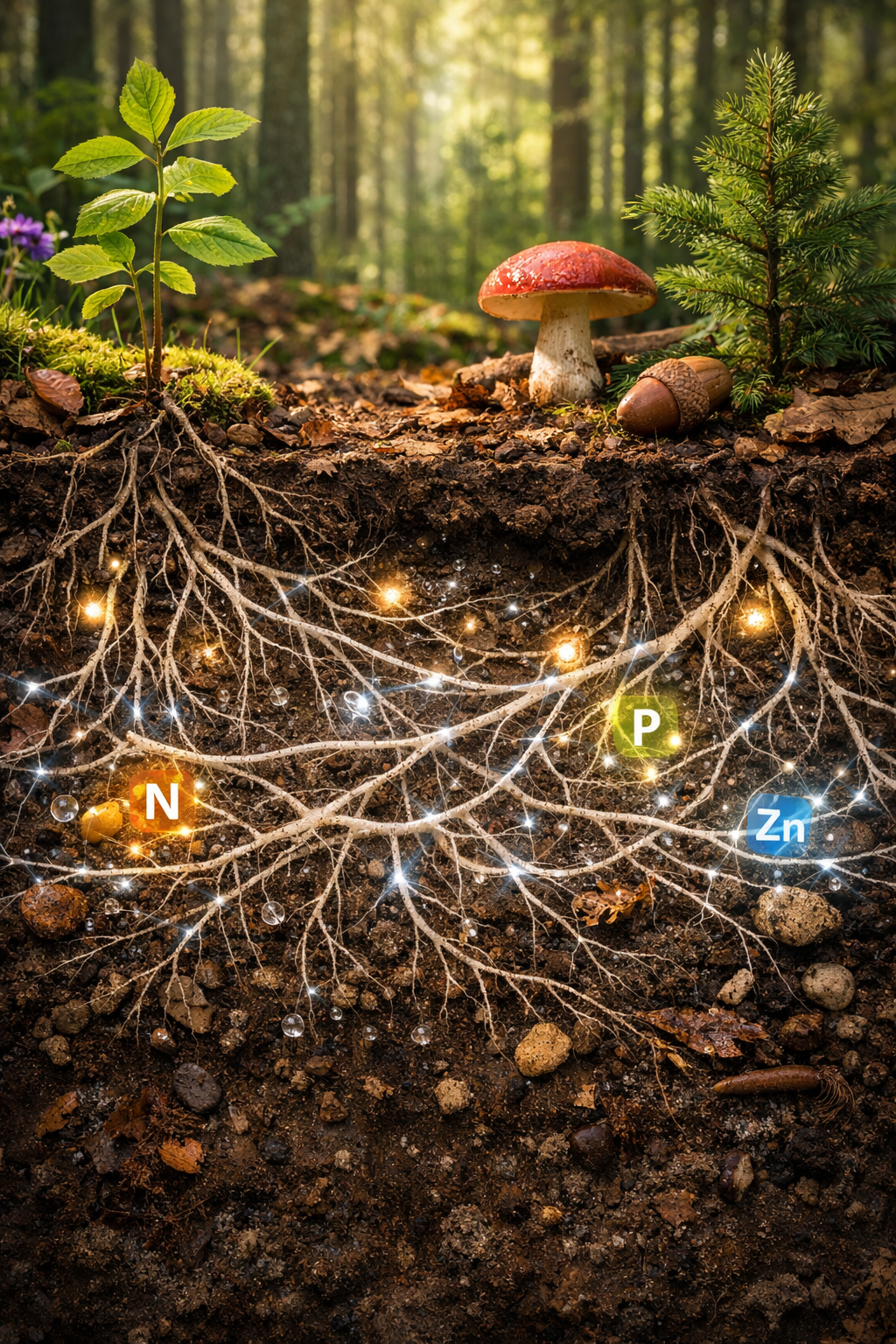
| (Mycorrhizae) The Living Infrastructure Beneath Our Feet Beneath every thriving garden, woodland, meadow, and hedgerow lies a living network so extensive and intelligent in its design that it rivals any human-built system. This network is not made of roots, pipes, or wires, but of fungi. Known as mycorrhizal networks, these underground fungal systems quietly underpin plant health, soil vitality, and ecosystem resilience. Mycorrhizae are fungi that form intimate partnerships with plant roots. Rather than competing with plants, they work with them, intertwining their fine threads, called hyphae, with root systems to create a shared exchange network. Through this partnership, plants gain access to water and nutrients far beyond the reach of their own roots, while fungi receive sugars and carbon compounds produced by the plant through photosynthesis. This relationship is ancient. Fungi helped the earliest plants colonise land over 400 million years ago, long before complex soils existed. Without mycorrhizae, terrestrial plant life as we know it may never have taken hold. Today, around 90% of plant species still rely on some form of mycorrhizal association, whether in forests, grasslands, or cultivated gardens. The real power of fungal networks lies in their scale. A single teaspoon of healthy soil can contain several metres of fungal hyphae. These microscopic threads weave through soil particles, linking plants to one another and even crossing species boundaries. In doing so, they create what is often described as a “wood wide web” — a living communication and transport system beneath the surface. Through these networks, nutrients such as phosphorus, nitrogen, zinc, and copper are moved efficiently through the soil. Fungi are especially adept at accessing nutrients locked away in soil particles that roots alone cannot reach. In exchange for sugars, fungi act as skilled miners and transporters, delivering nutrients precisely where they are needed. Water movement is another crucial function. Fungal hyphae are far thinner than plant roots, allowing them to access microscopic pores in the soil that retain moisture during dry periods. This means plants connected to healthy mycorrhizal networks are often more drought-resilient, requiring less irrigation and coping better with environmental stress. Perhaps most fascinating is the role mycorrhizae play in communication. Research shows that plants connected by fungal networks can exchange chemical signals. When a plant is attacked by pests or disease, warning signals can move through the fungal network, prompting neighbouring plants to activate their own defence mechanisms before the threat arrives. These networks also help regulate plant communities. Older, well-established plants can share nutrients with younger seedlings, improving survival rates and encouraging more stable ecosystems. In forests, this resource-sharing helps maintain diversity and resilience, allowing weaker plants to survive in shaded or nutrient-poor conditions. Soil structure itself owes much to fungi. As hyphae grow and die back, they bind soil particles together, creating stable aggregates that improve aeration, drainage, and root penetration. Some fungi produce sticky compounds that act like natural glue, preventing erosion and helping soils retain both nutrients and moisture. Healthy fungal soils are darker, crumbly, and alive with microbial activity. Modern land management has not always been kind to these networks. Intensive tillage physically breaks fungal hyphae, fragmenting networks that may have taken years to establish. Synthetic fertilisers can reduce a plant’s reliance on fungi, weakening the partnership over time. Fungicides, while sometimes necessary, can also cause unintended damage to beneficial soil fungi. Gardens and landscapes managed with fungal health in mind tend to become more self-sustaining over time. Reduced digging, organic mulches, compost additions, and diverse plantings all encourage mycorrhizal growth. Leaving roots in the ground after harvest, rather than pulling plants out, preserves underground connections and feeds soil organisms as roots decompose. Trees and perennial plants are especially dependent on fungal partnerships. In mixed plantings, mycorrhizae help link woody plants with grasses, herbs, and shrubs, creating integrated systems rather than isolated individuals. This interconnectedness explains why mature ecosystems often require less intervention and exhibit greater stability. Understanding fungal networks also reshapes how we think about competition in nature. Rather than a battlefield of individual plants fighting for resources, healthy ecosystems operate more like cooperative communities. Fungi act as mediators, redistributing resources, buffering stress, and maintaining balance below ground while life flourishes above it. For gardeners, land stewards, and anyone working with soil, recognising the value of mycorrhizae invites a shift in mindset. The goal becomes less about control and more about support — creating conditions where these ancient networks can do what they have always done best. When fungal networks thrive, plants grow stronger, soils regenerate, and ecosystems gain the resilience needed to face a changing climate. In many ways, mycorrhizae remind us that the most important systems are often invisible. By respecting and nurturing the fungal infrastructure beneath our feet, we align ourselves with processes refined over hundreds of millions of years. The reward is healthier soil, healthier plants, and landscapes that work with nature rather than against it. |
Fungal Networks
 Earthly Comforts