| Learning to Build Systems That Can Wait |
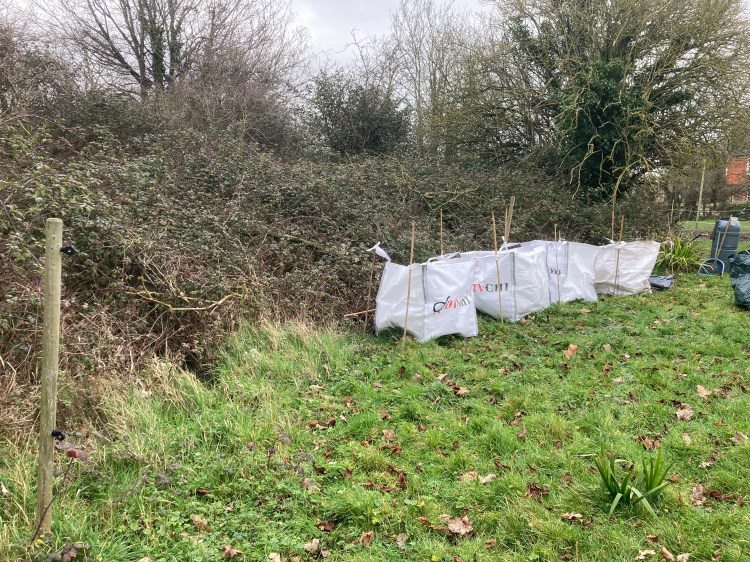
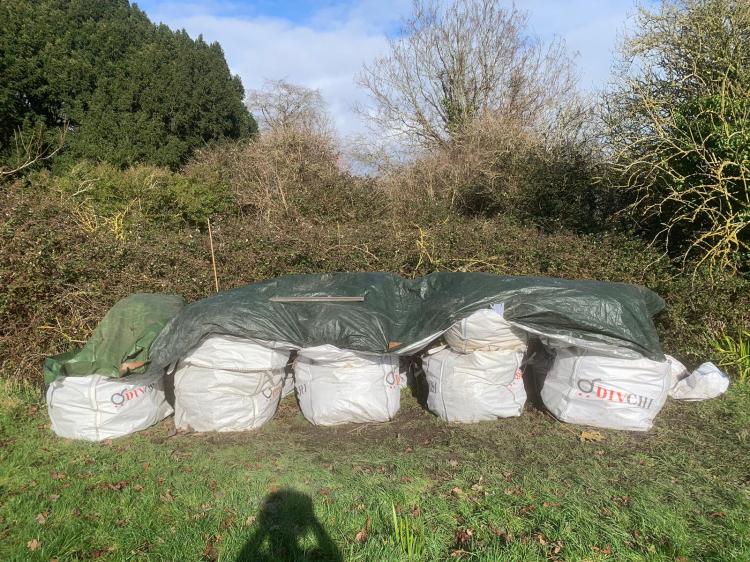
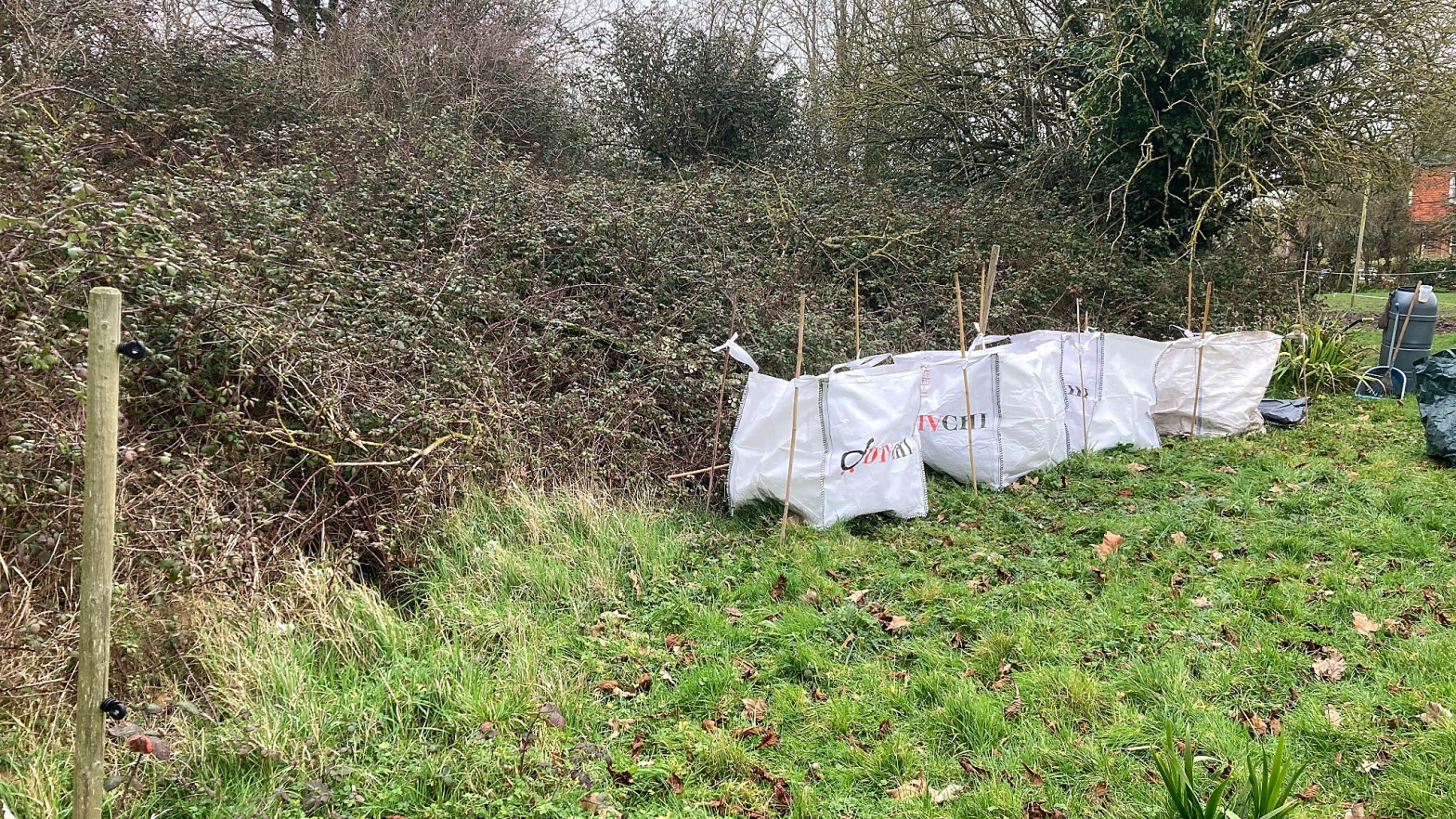
| it hasn’t taken long for the ton sacks to go from four bags on Sunday 8th February that were mostly empty to 19 ton sacks, all full on Thursday 12th February. This was achieved purely by moving the green wastes that we had stored in various locations. This time next week, we will most likely be at around 27 bags once we start to regulate weekly garden waste. |
| Some ideas arrive fully formed, neat and portable, ready to be unpacked and put to use. And then there are the other kind — the ones that take up residence somewhere behind the eyes, refusing to settle, returning at odd moments, gradually insisting on being taken seriously. The Soil Hub has been that second kind of idea. For the best part of two years, it’s sat there, not as a plan exactly, but as a pressure. A sense that something in the way we garden, dispose of, replenish, and move material around is fundamentally unfinished. Not broken — just incomplete. Like a sentence that keeps trailing off before it reaches its point. In September last year, Suze and I stood on a parcel of land in Sandwich and talked it through properly for the first time. Not in the abstract. Not as a future ambition. But as something that could, in theory, be grounded. Rented. Measured. Walked. Dug into. The hope at the time was simple enough: that this would be the place where the idea finally stopped circling and started to land. It didn’t quite work out like that. What the Soil Hub Is — and What It Isn’t At its heart, the Soil Hub is an attempt to close a loop that most gardens never see closed. Green waste leaves gardens constantly. It leaves in sacks, trailers, bins, and skips. It leaves weekly, fortnightly, seasonally. It leaves because it has to. Grass keeps growing. Hedges don’t self-regulate. Leaves fall whether we like it or not. What happens next is usually out of sight. The waste disappears into systems designed for volume rather than meaning. Sometimes it’s composted at scale. Sometimes it’s shredded and spread. Sometimes it’s transported far enough that the carbon cost alone undermines whatever environmental comfort we might take from doing the “right” thing. The Soil Hub asks a quieter question: what if that material didn’t leave the system at all? Not sold. Not branded and not repackaged as a product. Returned — transformed, yes, but still recognisably part of the same cycle it came from. Compost, mulch, leaf mould, bark chips, worm castings. Materials that improve soil not because they’re clever, but because they’re patient. It was never about selling compost. In fact, that was one of the earliest assumptions we had to push back against. The moment you talk about processing material, people assume a commercial endpoint. A bag. A price. A market. That was never the intention. The Soil Hub was always imagined as an internal entity—a membership-only system for existing clients. Your garden contributes; your garden benefits. No volume chasing. No external sales pressure. Just a loop that makes sense on its own terms. The Reality of Land, Rates, and Grey Areas The landlord we spoke to last year wasn’t opposed to the idea. If anything, he was supportive — with conditions. The land we initially viewed came with complications he wasn’t comfortable with, particularly around business rates. The difficulty wasn’t hostility; it was categorisation. What we were proposing didn’t sit neatly anywhere. It wasn’t straightforward agriculture. It wasn’t a conventional commercial use. It was somewhere in between — and those in-between spaces are often where ideas stall. This is one of the less glamorous truths about environmental ambition: it doesn’t fail because it’s wrong. It stalls because it doesn’t fit existing boxes. You can be doing something low-impact, small-scale, locally beneficial — and still find yourself tangled in frameworks designed for very different activities. Even without that complication, creating the Soil Hub already requires navigating enough regulation, logistics, and uncertainty to make the whole thing feel fragile. Composting at scale — even modest scale — is not as simple as piling material and waiting. There are rules. Ratios. Storage constraints. Transport considerations. Timing. This is where romantic ideas about soil often collide with reality. Compost is slow, but compliance is not. Working Smaller Before Working Bigger One of the things I’ve learned, often the hard way, is that systems reveal their weaknesses when they’re small — if you’re paying attention. We still have Plot 17. Alongside it, we now also have access to two smaller client allotment spaces, and we’ve asked to manage them. On paper, this might look like a distraction. In practice, it’s invaluable. These spaces let us test rhythms. Compost inputs. Labour patterns. Waste volumes. They teach us how much material a space actually produces, not how much we imagine it might. They show us where enthusiasm runs ahead of capacity, and where patience is required. There’s a common assumption that scaling up means starting big. In reality, it usually means surviving on a small scale. The allotments aren’t prototypes in a technical sense. They’re lived-in systems. They involve weather, people, time constraints, missed weeks, overgrown patches, sudden gluts, and long lulls. Precisely the things that don’t appear in tidy project plans. If the Soil Hub is ever going to work, it has to accommodate those inconsistencies. Gardening is not linear. Neither is waste. Weather as a Decision-Maker The larger land area we’ve been offered is still available. It hasn’t gone away. But for now, it’s inaccessible. Two months of relentless rain have turned it into something closer to a wetland than a workable site. In places, the mud runs deep enough to swallow boots. Access vehicles would render it unrecognisable. Any attempt to force the issue would do more harm than good. So we wait. This is another assumption worth challenging: that progress is something you push through resistance. In land-based work, resistance often has the final say. Soil decides when it’s ready. Water decides when the machinery stays out. Realistically, May or June is the earliest the site will become usable again. And that’s fine. Soil doesn’t respond well to impatience. The Cost of Carrying Things Away Waiting would be easier if green waste disposal weren’t so punishingly expensive. For the past year, storing and removing material has cost close to £1,000 a month. That’s not inefficiency — that’s simply the cost of doing things properly when you don’t yet control the system. Licensed carriers. Storage limits. Transport. Time. It’s also a pressure that quietly shapes decision-making. When disposal costs are that high, you feel them in every cut hedge and every cleared border. You start thinking not just about how to garden well, but about how much each decision will weigh when it leaves the site. This is where the Soil Hub stopped being theoretical. If the permanent site wasn’t ready, we needed an interim solution — somewhere material could be stored, contained, and allowed to begin its slow work without becoming an immediate expense. That option finally became available on Sunday, 8th February. Ton Sacks and the Art of Looking Small We started with one-tonne sacks. Nothing glamorous. No infrastructure to speak of. Just space, containment, and time. At the moment, it doesn’t look like much. A small cluster of sacks sitting quietly, doing nothing that looks productive. No steam. No turning bays. No visible progress. But appearances are deceptive. From this modest beginning, come May or June, there is potential for close to forty of these sacks — all holding material that would otherwise have been transported away at cost. All slowly reducing, compacting, changing state. That future movement — shifting forty sacks to a permanent composting station — will be work. Physical, logistical work. But it will be purposeful work. The kind that moves material forward rather than away. In the meantime, storage costs drop from nearly £1,000 a month to around £300. Not insignificant. Not transformative. But enough to ease pressure and buy time. Time is underrated in sustainability conversations. Compost Isn’t Fast — and That’s the Point There’s a myth that composting is a shortcut. It’s a way to turn waste into value quickly. In reality, composting is a discipline of delay. Material goes in recognisable. It comes out anonymous. Everything in between is slow negotiation — between carbon and nitrogen, moisture and air, microbes and temperature. You don’t rush compost. You accommodate it. The Soil Hub isn’t about efficiency in the conventional sense. It’s about alignment. About matching the pace of the system to the pace of the material. Gardens produce waste continuously, not in tidy batches. Compost absorbs that irregularity if you let it. This is why the membership-only idea still matters. Not because it’s exclusive, but because it keeps scale honest. The system grows in proportion to the gardens it serves, not to demand external resources. What I’m Learning Along the Way Working towards the Soil Hub has forced me to notice things I might otherwise gloss over. How much labour invisible systems require. How weather dictates timelines more than ambition ever will. How expensive “out of sight” solutions quietly become. How much trust is required to sit with something unfinished? Perhaps most of all, it’s reminded me that sound systems don’t announce themselves loudly. They accumulate. They take shape slowly. They look unimpressive right up until the moment they’re indispensable. Right now, the Soil Hub isn’t a place you can point to on a map. It’s a collection of decisions, pauses, and provisional arrangements. It’s sacks instead of buildings. Waiting instead of rushing and learning instead of launching. That feels appropriate. Soil doesn’t care about grand openings. It responds to consistency. Where This Leaves Us We’re not there yet. That’s the truth. But we’re longer nowhere. There’s material breaking down instead of being removed. Small systems are being tested before larger ones are attempted. There’s land waiting for the right conditions rather than being forced into use. And there’s an idea that has stopped rattling around in my head and started to put down roots — shallow ones for now, but real all the same. Rome wasn’t built in a day. Neither is soil. |
| About our writing & imagery Most articles reflect our real gardening experience and reflection. Some use AI in drafting or research, but never for voice or authority. Featured images may show our photos, original AI-generated visuals, or, where stated, credited images shared by others. All content is shaped and edited by Earthly Comforts, expressing our own views. |
 Earthly Comforts