
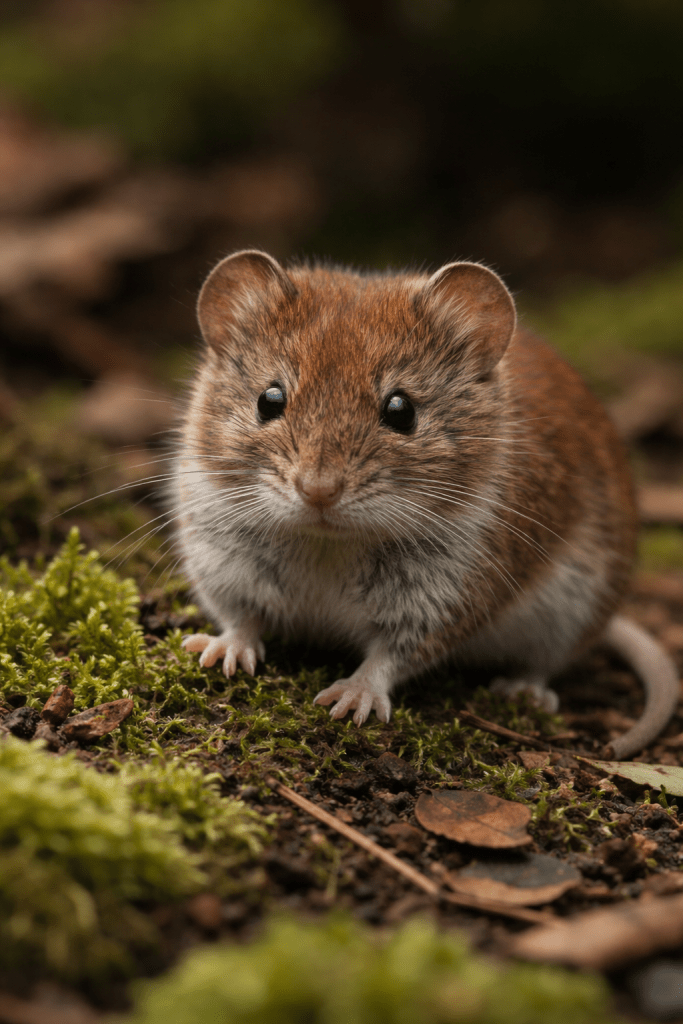
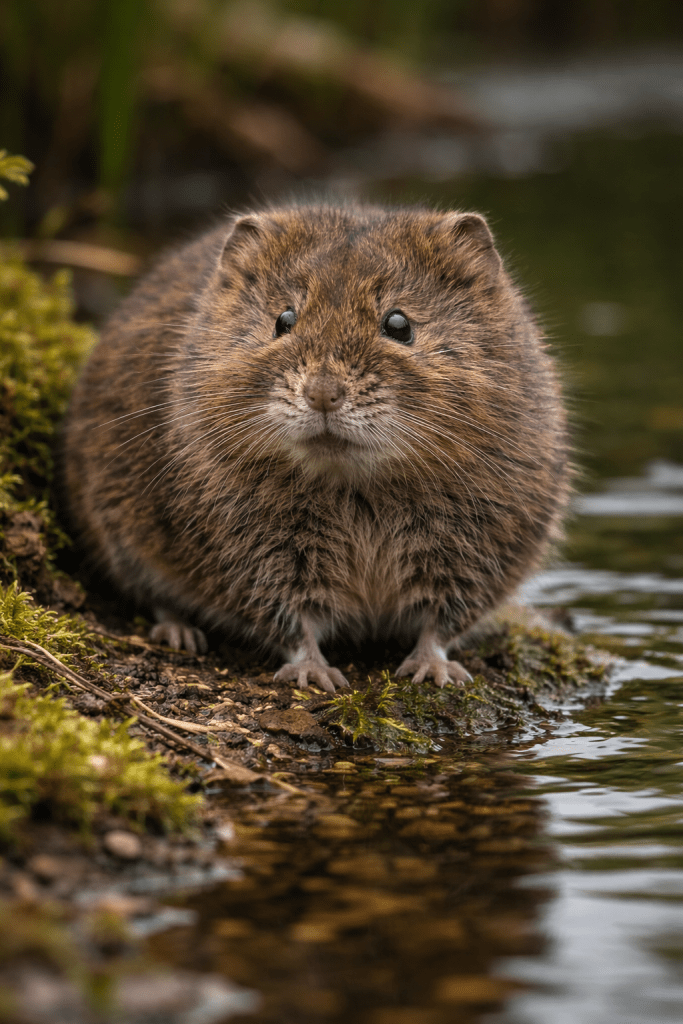
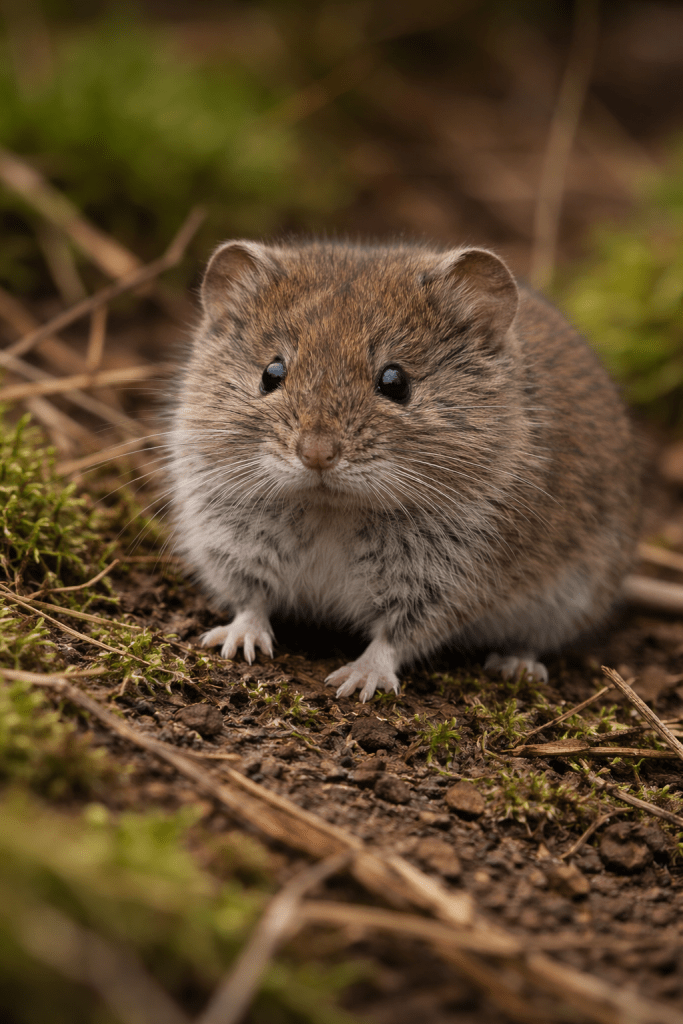
| The Hidden Engineers: Voles and Their Role in the UK Landscape Voles are among the least seen, yet most influential mammals in the UK. Small, round-bodied, and quietly industrious, they live largely out of sight—moving through grass, soil, hedgerows, riverbanks, and woodland edges with remarkable efficiency. While many people may never knowingly see a vole, their presence shapes landscapes, supports predators, and tells important ecological stories about the health of our countryside and waterways. Often confused with mice or rats, voles are a distinct group of mammals with their own behaviours, habitats, and ecological roles. To understand voles is to uncover a hidden layer of British wildlife that works continuously, silently, and with great impact. |
| What Is a Vole? Voles are small rodents with compact bodies, blunt noses, small ears (often hidden in fur), and relatively short tails compared to mice. Their movements are purposeful and ground-hugging, giving them a stocky, solid appearance rather than a sleek or agile one. In the UK, there are several vole species, each occupying a different niche. While they share similarities, their lifestyles, habitats, and relationships with the land can vary widely. Voles are prey animals, built for survival through concealment, reproduction, and constant movement rather than speed or aggression. Their lives are short, intense, and closely tied to the rhythms of the land. The Main Vole Species in the UK Water Vole – Arvicola Perhaps the most well-known vole, the water vole, is strongly associated with rivers, streams, ditches, canals, and wetlands. Larger than other vole species, it has a rounded face, rich brown fur, and a confident swimming ability. Water voles create burrow systems in riverbanks, with entrances above and below the waterline. They feed mainly on grasses and aquatic plants, shaping the vegetation along waterways. Once widespread, water voles have suffered dramatic declines due to habitat loss and predation, making them an important indicator species for healthy wetlands. Field Vole – Microtus agrestis Field voles are the most numerous vole species in the UK. They inhabit grasslands, meadows, rough pasture, moorland, and roadside verges. Their fur is typically brown or grey-brown, and they are slightly smaller than water voles. Field voles are known for population cycles—periods where numbers rise sharply, followed by sudden crashes. These fluctuations strongly influence predator populations such as owls, kestrels, and foxes. Bank Vole – Myodes glareolus Bank voles favour woodland edges, hedgerows, gardens, and areas with dense ground cover. They are more likely to be encountered near human habitation than other vole species, though they remain elusive. Slightly more agile climbers than field voles, bank voles will forage among low shrubs, roots, and leaf litter. Their diet includes seeds, berries, fungi, and plant material, making them important seed dispersers. Voles and Their Underground World One of the defining features of voles is their relationship with the ground. Many species create extensive tunnel systems just beneath the surface, forming hidden highways through grass and soil. These tunnels allow them to move safely between feeding areas and nesting sites while avoiding predators. These underground networks play a crucial role in soil health. As voles dig and move, they aerate the soil, redistribute nutrients, and encourage microbial activity. Over time, this improves soil structure and fertility, benefiting plant growth. In this way, voles act as natural soil engineers—quietly maintaining the living foundation of ecosystems. Diet and Feeding Behaviour Voles are primarily herbivorous, though their diet varies by species and season. Grasses, roots, shoots, bark, seeds, and leaves make up the bulk of their diet. In winter, when fresh growth is scarce, some species will gnaw bark at the base of trees or shrubs. Their feeding habits can sometimes bring them into conflict with gardeners or land managers, particularly when numbers are high. However, vole damage is usually localised and temporary, and their broader ecological benefits far outweigh these short-term issues. Because voles feed constantly to maintain their energy levels, their activity leaves subtle signs—runways through grass, clipped stems, and small piles of droppings—that reveal their presence to those who know how to look. Breeding and Life Cycle Voles have short lifespans, often less than a year in the wild. To compensate, they breed rapidly. Under favourable conditions, a female vole can produce multiple litters in a single year, each with several young. This high reproductive rate allows vole populations to respond quickly to good conditions such as mild weather and abundant food. It also makes them highly responsive to environmental change—both positive and negative. Population booms support predators, while crashes can ripple through the food chain, affecting birds of prey, mammals, and even plant communities. A Keystone Prey Species Voles are a cornerstone of many UK ecosystems. They form a major part of the diet for a wide range of predators, including owls, kestrels, buzzards, foxes, stoats, weasels, and snakes. When vole numbers are healthy, predator species thrive. When vole populations decline, predators are forced to switch prey or suffer reduced breeding success. This close relationship makes voles a key driver of ecological balance. In this sense, voles are not minor creatures at all—they are central players in the functioning of the countryside. Voles, Waterways, and Landscape Health Water voles, in particular, are deeply connected to the health of rivers and wetlands. Their presence indicates clean water, stable banks, and good vegetation structure. Where water voles disappear, it often signals deeper environmental problems such as pollution, erosion, or habitat fragmentation. Restoring vole populations often involves restoring entire ecosystems—reconnecting waterways, reducing chemical use, and allowing natural vegetation to recover. In this way, caring for voles means caring for much more than one species. Voles in Gardens and Managed Land While voles do sometimes appear in gardens, they are usually there because conditions suit them—dense planting, undisturbed areas, and available food. Wildlife-friendly gardens with layered habitats can support voles alongside birds, insects, and hedgehogs. Total exclusion is rarely necessary or effective. Instead, balance is key. Encouraging predators, maintaining healthy soil, and accepting some natural activity help create resilient spaces where wildlife can coexist with human use. Voles are part of the living system, not intruders from outside it. Why Voles Matter More Than We Think Because voles live quietly and often invisibly, they are easy to overlook. Yet their influence runs deep—into soil health, food chains, water quality, and landscape stability. They remind us that not all important wildlife is dramatic or charismatic. Some of the most vital work is done underground, at night, and out of sight. Learning about voles sharpens our awareness of the subtle processes that sustain ecosystems. It also encourages a shift in perspective—from controlling nature to understanding it. Seeing the Invisible The next time you notice narrow paths through long grass, a soft rustle at the edge of a hedge, or a sudden swoop of an owl over a field, consider the vole. Small, determined, and essential, it is one of the UK’s quiet success stories. By recognising the role of voles, we learn to value the unseen labour of nature—and the fragile connections that hold our landscapes together. |
 Earthly Comforts