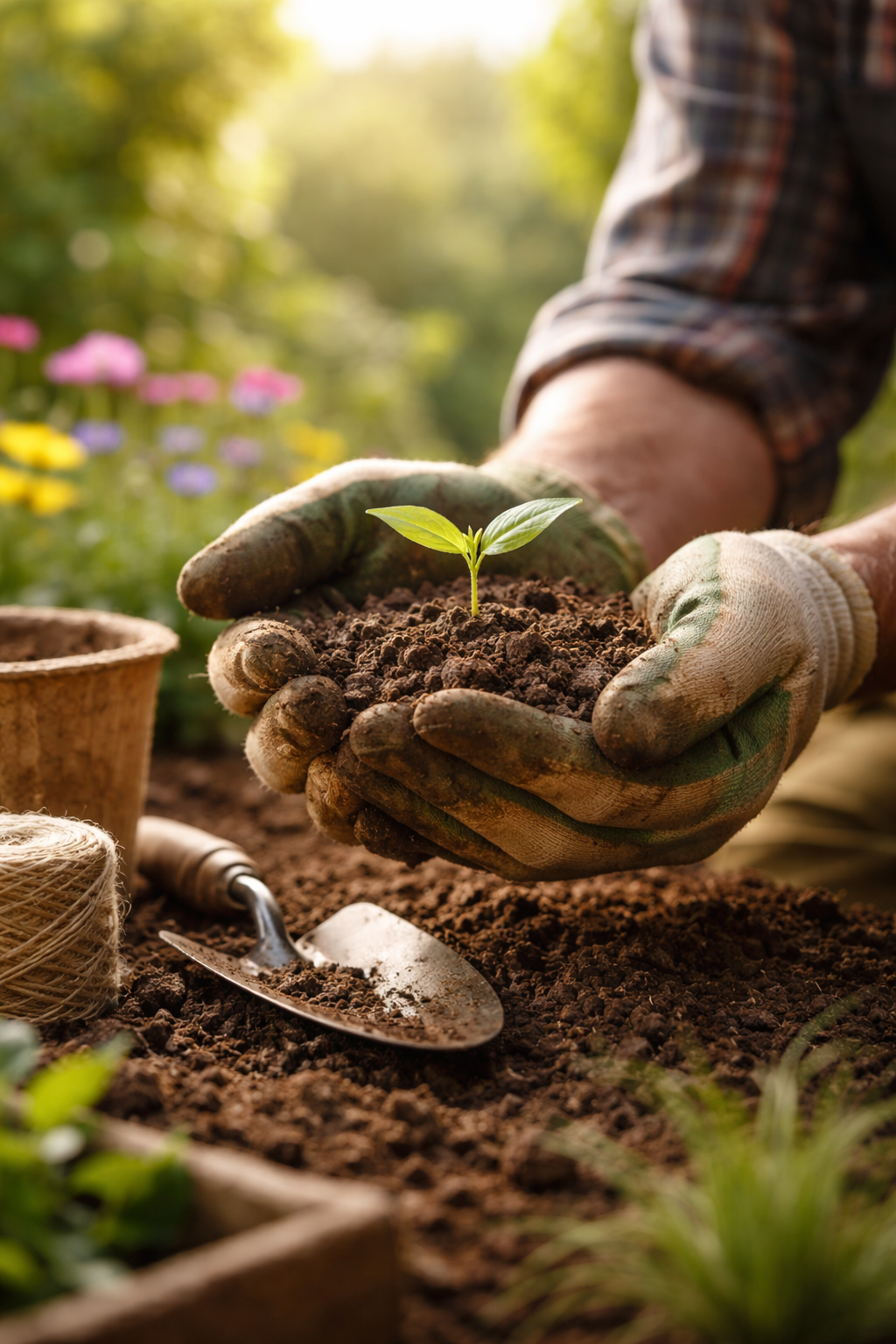
| In a world shaped by speed, convenience, and instant results, gardening remains quietly resistant to the urgency of the moment. Plants do not rush. Soil does not respond to pressure. Seasons do not negotiate. Gardening asks something increasingly rare of us: patience. Not as a vague virtue, but as an active, practical tool that directly affects outcomes. Patience in gardening is not about doing nothing. It is about understanding when to act, when to wait, and when to allow natural processes to complete their work. A gardener who lacks patience often works harder and achieves less. A gardener who learns patience works with the garden rather than against it. At its core, patience begins with expectation. Many gardening frustrations arise from expecting results too quickly: seeds that “should have” germinated by now, hedges that “ought to be” fuller, lawns that “must be” greener after one treatment. These expectations are often shaped by artificial timelines rather than biological ones. Plants operate on their own schedules, governed by temperature, light, moisture, and root development—factors that cannot be forced without consequence. One of the clearest examples of patience at work is seed growing. A seed does not simply sprout because it has been watered. It must first absorb moisture, activate enzymes, establish a root system, and then push upward through the soil. This invisible work happens before any green is seen. The impatient gardener digs to check progress, disrupting the very process they are waiting for. The patient gardener trusts the process, knowing that unseen progress is still progress. Soil improvement is another long lesson in patience. Adding compost, mulching beds, and reducing disturbance do not transform soil overnight. Soil health builds gradually as organic matter breaks down, microorganisms establish balance, and structure improves. The benefits may not be dramatic in the first season, but over time, the soil becomes more resilient, more moisture-retentive, and more supportive of plant life. Patience here compounds. Each year of care builds upon the last. Pruning teaches a different kind of patience: restraint. The urge to cut more, shape faster, or correct perceived flaws can result in stress, dieback, or distorted growth. Skilled gardeners learn to pause before cutting, to visualise future growth rather than immediate appearance. Sometimes, the most patient decision is to leave a plant alone and observe how it responds to its environment before intervening. Patience is also essential when dealing with setbacks. Plants fail. Weather damages work. Pests appear unexpectedly. The impatient response is often reactive—overfeeding, excessive spraying, drastic removal. A patient approach assesses the underlying cause. Is the plant young and still establishing? Is the weather temporarily unfavourable? Is the pest pressure minor and likely to balance itself? Often, time is the missing ingredient rather than action. Gardens designed with patience in mind tend to age better. Newly planted gardens rarely look finished. Spaces between plants can feel uncomfortable, even wrong, to those unfamiliar with plant growth. Filling every gap may create instant fullness, but it often leads to overcrowding later. Patient planting allows room for maturity, airflow, and natural form. The reward is a garden that settles rather than struggles. Patience also changes how gardeners view maintenance. Not every weed must be removed immediately. Not every leaf needs clearing the moment it falls. Some level of acceptance allows ecosystems to function more naturally. Leaf litter feeds soil life. Seed heads feed birds. Decaying material becomes nourishment. Patience here aligns gardening with ecological cycles rather than constant correction. On a human level, patience in gardening reshapes the mindset. It shifts focus from control to stewardship. The gardener becomes a caretaker of processes rather than a manager of outcomes. This perspective reduces frustration and increases satisfaction. Small signs—new growth, returning insects, improved soil texture—become meaningful indicators of success, even when the bigger picture is still forming. For professional gardeners, patience is equally valuable. Clients may want rapid transformation, but honest guidance about timelines builds trust. Explaining that a hedge needs seasons, not weeks, or that a lawn recovers gradually, sets realistic expectations and reduces future disappointment. Patience becomes part of professional integrity. Importantly, patience does not mean passivity. It works alongside observation, consistency, and timing. Watering regularly but not excessively. Feeding at appropriate intervals. Acting when conditions are right, not merely when enthusiasm peaks. Patience gives these actions their effectiveness. Over time, gardeners who cultivate patience often notice a shift in themselves. They become better observers, less reactive, more comfortable with uncertainty. Gardening stops being a task-driven activity and becomes a relationship with place, weather, and living systems. Progress is measured not only by appearance but also by resilience and balance. In this sense, patience is not just a tool for better gardens. It is a skill sharpened by the garden itself. Each season reinforces the same lesson: growth happens when conditions align, effort is rewarded over time, and forcing outcomes usually creates more work later. The garden teaches patience because it requires it, and those who listen are quietly transformed along with their soil. |
Patience as a Tool in Gardening
 Earthly Comforts