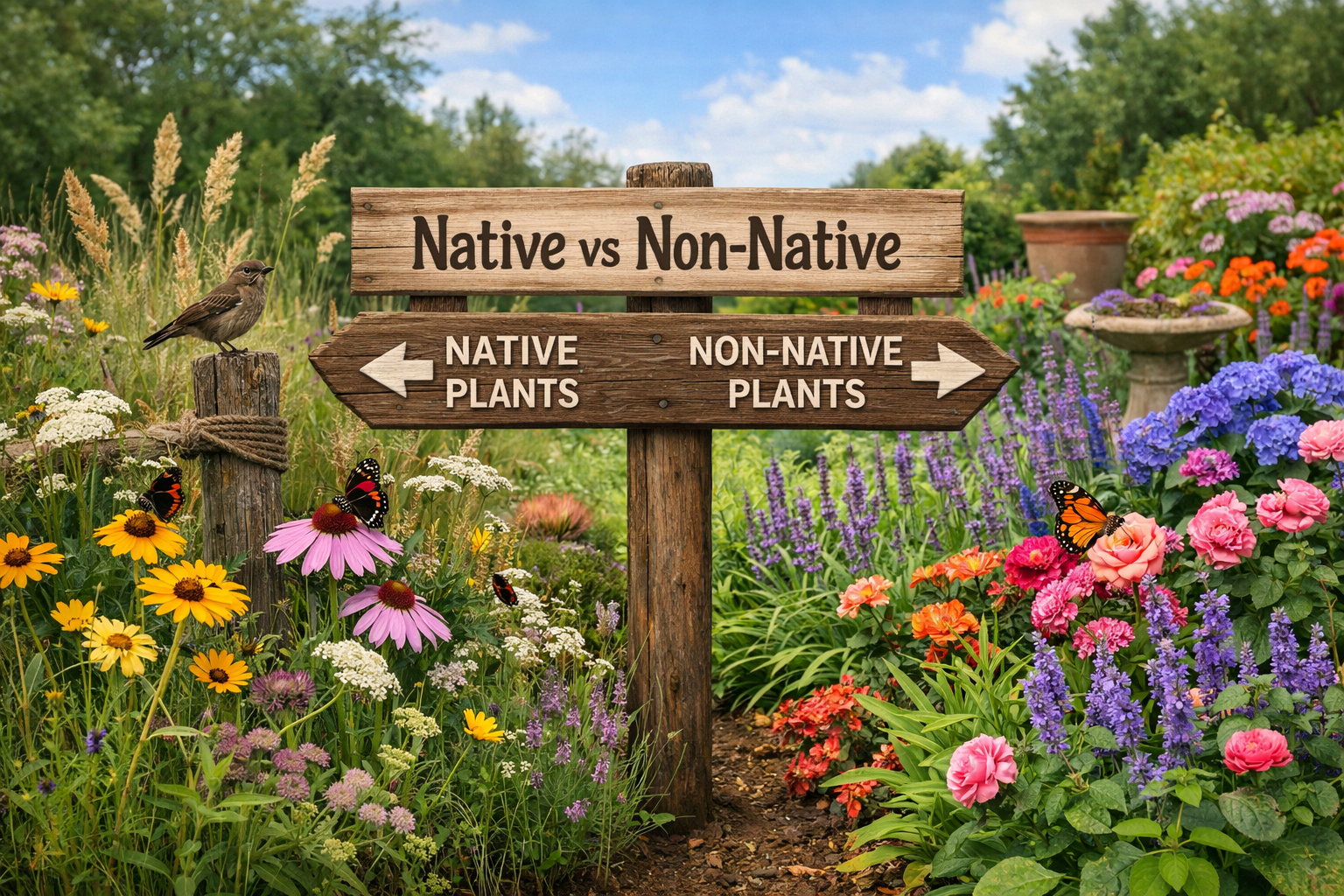
| Finding Balance Over Binaries Few topics in modern gardening spark as much debate as the question of native versus non-native plants. For some, native planting is seen as the gold standard for ecological responsibility. For others, a diverse mix of plants from around the world represents beauty, resilience, and creative freedom. The truth, as with most things in horticulture, is more nuanced than a simple either-or. Understanding this debate matters more now than ever. Climate instability, biodiversity loss, urban expansion, and changing lifestyles are reshaping how gardens function. Gardens are no longer just aesthetic spaces; they are micro-ecosystems, climate buffers, and places of human wellbeing. How we plant them has consequences, but those consequences depend on context, intention, and management rather than rigid rules. This article explores what native and non-native plants really mean, where the arguments come from, and how gardeners can make thoughtful, informed choices without falling into ideological extremes. What Do We Mean by “Native” and “Non-Native”? A native plant is typically defined as one that evolved naturally in a specific region without human intervention. In the UK, this often refers to species that established after the last Ice Age and before large-scale global plant movement. Non-native plants, by contrast, are those introduced intentionally or accidentally from other regions or continents. It is important to recognise that “non-native” does not automatically mean harmful. Many non-native plants have been present for hundreds of years, have integrated into local ecosystems, and cause no ecological disruption. A smaller subset of non-native plants is classified as invasive, meaning they spread aggressively and outcompete native species. These distinctions are often blurred in public discussion, leading to unnecessary fear or oversimplification. The Case for Native Plants Supporters of native planting often emphasise ecological relationships. Native plants tend to support local insects, birds, and fungi more effectively because they coevolved with them. Many specialist pollinators, for example, rely on specific native plants for food or breeding. Native plants are also often well adapted to local soils, rainfall patterns, and seasonal cycles. This can mean less need for irrigation, fertiliser, and intervention once established. From a maintenance perspective, this can make native planting appealing, particularly in larger or more naturalistic gardens. There is also a cultural and emotional aspect. Native landscapes can foster a sense of place and continuity, helping people feel connected to local history and ecology. In an increasingly globalised world, this sense of rootedness has genuine value. The Case for Non-Native Plants Non-native plants have shaped gardens for centuries and remain central to horticulture. Many offer extended flowering seasons and unique forms, colours, and textures that native palettes alone may not provide. This diversity can be especially valuable in small urban gardens where visual impact matters. Some non-native plants are also highly resilient. As climate patterns shift, certain plants from warmer or drier regions may cope better with future conditions than some native species. In this context, adaptability becomes just as important as origin. Non-native plants can also support wildlife. While they may not host specialist species, many provide nectar, pollen, shelter, and structure. A flowering shrub from another continent may still be buzzing with bees if it blooms at the right time and is accessible. Where the Debate Becomes Problematic The native-versus-non-native discussion can become unhelpful when it becomes ideological rather than practical. Painting all non-native plants as ecologically damaging ignores centuries of evidence to the contrary. Equally, dismissing the value of native plants as outdated or restrictive overlooks their proven ecological benefits. Gardening decisions are rarely made in a vacuum. Soil type, garden size, exposure, maintenance capacity, and personal well-being all play roles. A strict native-only approach may be impractical or uninspiring for some gardeners, while a purely ornamental approach without ecological consideration can miss opportunities for positive impact. There is also a risk of guilt-based gardening, where people feel judged for enjoying certain plants. This can discourage engagement altogether, which ultimately harms both people and nature. Invasive Species: A Separate Conversation Invasive plants deserve special mention because they are often wrongly conflated with all non-native species. Invasive plants are problematic not because they are foreign, but because they spread aggressively and disrupt ecosystems. These plants require active management and, in some cases, removal. However, focusing solely on invasiveness rather than origin is more effective. Some native plants can also behave aggressively in certain conditions. Responsible gardening is about understanding plant behaviour, not just plant passports. A Middle Ground: Ecological Intentionality An increasingly popular approach is to focus on function rather than labels. Instead of asking whether a plant is native, gardeners can ask what role it plays. Does it provide food for pollinators? Does it offer shelter? Does it flower during seasonal gaps? Does it require heavy inputs to survive? This mindset encourages thoughtful plant selection and layered planting. A garden might include native hedging for structure and habitat, alongside carefully chosen non-native perennials for extended flowering and resilience. The result can be both ecologically supportive and visually rich. Gardens designed this way tend to be more adaptable, especially in towns and cities where conditions have already been significantly altered from their original state. The Human Element Matters Gardens are also human spaces. They support mental health, creativity, rest, and connection. A garden that brings joy is more likely to be cared for, observed, and protected. This ongoing relationship is itself an ecological act. For professional gardeners and homeowners alike, sustainability works best when it aligns with enjoyment and realism. A perfect ecological plan that is abandoned serves no one. A well-loved garden with a mix of plants, managed thoughtfully, can deliver lasting benefits. Moving Forward With Confidence The future of gardening is unlikely to be purely native or purely ornamental. It will be adaptive, responsive, and locally informed. Climate pressures, changing wildlife patterns, and evolving lifestyles all demand flexibility. Rather than choosing sides, gardeners can embrace curiosity and observation. Watch which plants thrive, which insects arrive, and how the garden changes over time. Adjust planting choices as conditions shift. Learn which plants behave well and which do not. The most sustainable gardens are not dogmatic. They are intentional, responsive, and alive to both ecological and human needs. In that balance, the native-versus-non-native debate becomes less of a conflict and more of a conversation. |
The Native vs Non-Native Debate in Gardening
 Earthly Comforts