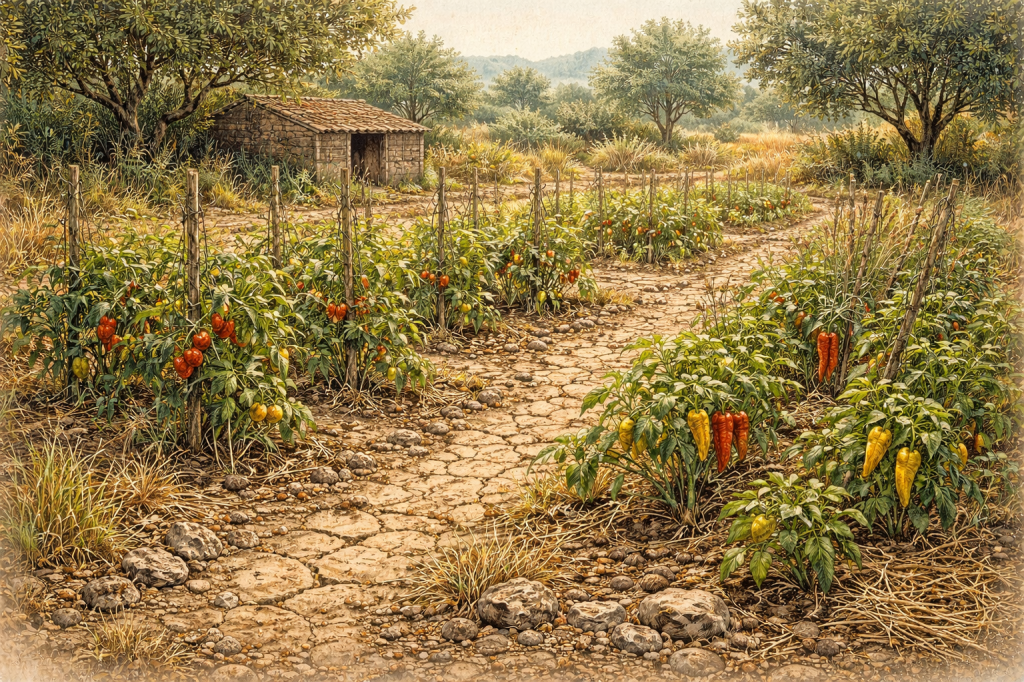
| Episode 5: Pascal Poot Seeds, Stress, and Vegetables That Learn to Survive If the British chapters of this series are rooted in soil health, accessibility, precision, and experimentation, Pascal Poot introduces a different — and increasingly urgent — question: What happens when vegetables are forced to adapt, rather than protected from difficulty? Working in the south of France, Poot has become internationally known for growing vegetables under extreme conditions — poor soils, minimal water, and little to no intervention — and then saving seed from the plants that survive. His work sits at the intersection of vegetable gardening, seed stewardship, and climate resilience, making this a pivotal episode in the series. A Garden Shaped by Stress Pascal Poot’s approach runs counter to much modern gardening advice. Instead of shielding plants from hardship, he allows them to experience it — drought, heat, nutrient scarcity — and observes which ones endure. These survivors are not coddled exceptions. They are the foundation of his work. By saving seed only from plants that complete their life cycle under stress, Poot believes vegetables can gradually re-learn resilience — becoming stronger, more self-sufficient, and better adapted to local conditions over time. This philosophy challenges the assumption that productivity must always be propped up by inputs. Seed Saving as Selection, Not Preservation Seed saving is often framed as preservation — keeping varieties alive as they are. Poot treats it as active selection instead. Each generation of plants becomes a response to place: Soil quality Rainfall patterns Temperature extremes Human restraint Over the years, his tomatoes, peppers, and other vegetables have developed traits that commercial seed breeding rarely prioritises: deep rooting, efficient water use, and the ability to withstand neglect. For home gardeners, this reframes seed saving from a nostalgic hobby into a practical tool for future food security. Letting Go of Control Perhaps the most radical aspect of Pascal Poot’s work is what he doesn’t do. There is little irrigation, minimal feeding, and no attempt to “correct” the garden when conditions become harsh. This restraint requires patience — and trust. Plants are not treated as fragile objects to be managed, but as living organisms capable of adaptation when given the chance. Failure is not avoided; it is filtered. In this sense, Poot’s garden behaves more like an ecosystem than a production system. Why This Matters Now Climate instability is no longer theoretical. Across Europe and beyond, gardeners are already facing: Hotter summers Longer droughts Unpredictable rainfall Declining soil quality Poot’s work does not offer quick fixes. Instead, it proposes a longer view: vegetables that evolve alongside their environment, rather than relying on increasingly expensive interventions. For growers willing to accept smaller yields in the short term, the long-term gains can be profound. A Different Kind of Productivity It is important to be clear: Pascal Poot is not chasing maximum yield. His success is measured differently: Survival Reproducibility Independence This makes his work fundamentally different from intensive market gardening or high-yield home production. Yet it complements them by asking a deeper question: what happens when inputs disappear? Within this series, his episode serves as a conceptual pivot, shifting the focus from optimisation to adaptation. Why Pascal Poot Belongs in This Series Among European vegetable growers, Pascal Poot stands out for representing something few others do: a clear, testable philosophy with global relevance. He is not included for popularity, but for impact. His ideas have influenced growers, seed savers, and educators across borders, appearing in documentaries and discussions far beyond France. Placed after the UK chapters, his work expands the conversation from how to grow better vegetables to what vegetables will need to survive at all. Where to Follow Pascal Poot Pascal Poot’s work can be found through: Documentaries and filmed interviews Seed-focused talks and lectures Online material connected to his seed-saving work Books and Publications Pascal Poot is associated with writings and publications on seed resilience and low-input growing. These focus on: Seed selection under stress Vegetable adaptation Rethinking dependency on irrigation and fertilisers A Necessary European Voice As this series moves deeper into Europe, Pascal Poot sets the tone. His work is not comfortable, polished, or easily summarised — and that is precisely why it matters. He reminds us that the future of vegetable gardening may depend less on control and more on listening carefully to what survives. |
 Earthly Comforts