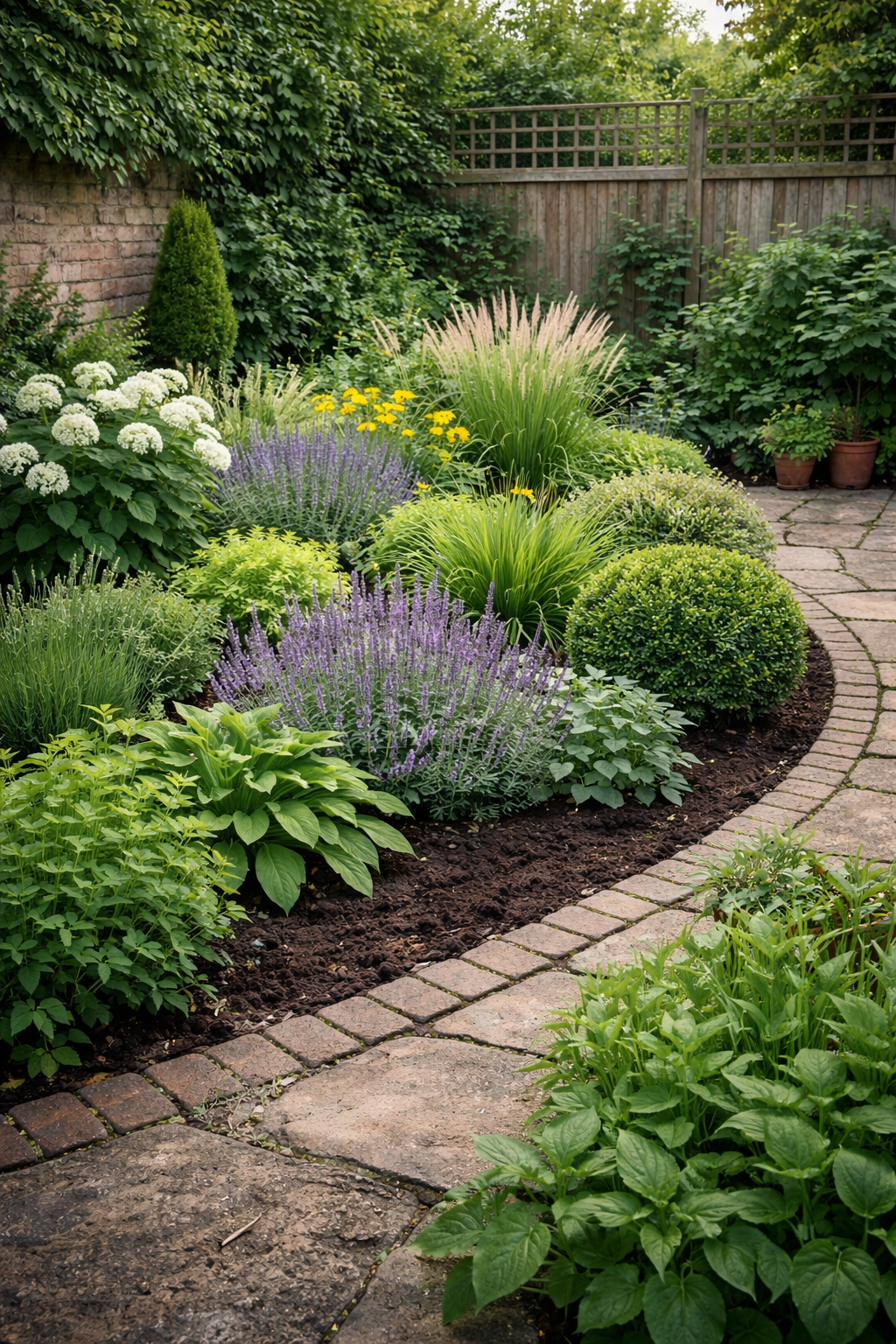
| Part 3 The Best Plant Types for Tight Spaces In small gardens, plants don’t just fill space — they define it. Every choice has consequences. A plant that sulks, sprawls, or demands constant attention doesn’t just affect itself; it alters the balance of the whole garden. In compact spaces, there’s very little margin for plants that don’t behave well. The aim in a small garden isn’t to grow everything you like. It’s to choose plants that earn their place. Small gardens favour good behaviour over novelty. In larger gardens, an awkward plant can often be absorbed. In small gardens, it becomes a problem quickly. Plants that: Spread unpredictably Collapse after flowering Need constant cutting back Or look scruffy for half the year. tend to dominate attention and maintenance in ways small spaces can’t afford. Plants that work well in tight spaces are usually reliable rather than exciting. They hold their shape, repeat each year, and don’t punish you for missing a week or two of attention. Good behaviour is not boring. In small gardens, it’s essential. Structure first, decoration second The most settled small gardens rely on plants that provide structure across the seasons. These are the plants that give a border its bones — shrubs, grasses, and long-lived perennials that keep a presence even when little else is happening. Once that structure is in place, softer or more decorative plants can sit comfortably around it. Without structure, borders rely entirely on short-lived colour. When that fades, the garden feels empty or messy, and the cycle of adding “just one more plant” begins again. A small garden with structure feels intentional even in winter. Plants that earn their place work for most of the year In tight spaces, plants need to justify themselves over time, not just at their moment of peak interest. A plant that looks spectacular for three weeks but untidy for the remaining forty-nine asks a lot from a small garden. By contrast, plants with good foliage, tidy habits, or long seasons of interest quietly support the garden month after month. This doesn’t mean avoiding flowers. It means favouring plants that contribute more than one thing: shape and colour, or texture and reliability. In small gardens, contribution matters more than drama. Fewer plant types make maintenance easier. One of the quickest ways to increase the work in a small garden is to introduce too many different plant types. Each plant has its own timing, needs, and quirks. Multiply that by dozens of varieties, and maintenance becomes complicated and reactive. Borders lose rhythm, and the garden never quite settles. Repeating a smaller number of well-chosen plants creates clarity. It simplifies care, improves visual calm, and makes it easier to spot when something genuinely needs attention. In small gardens, repetition is not restriction — it’s relief. Choose plants that fit the conditions, not your intentions. Many small gardens — especially courtyards and town plots — have challenging conditions: shade, dry soil, reflected heat, and limited airflow. The temptation is to fight these conditions with effort and input. The calmer approach is to acknowledge them and plant accordingly. Plants that suit the conditions grow with less intervention. They don’t constantly need rescuing, replacing, or correcting. Over time, this creates a garden that feels cooperative rather than demanding. A small garden works best when the plants are comfortable where they are. Good plant choices reduce the need for control. The right plants make a small garden easier to live with. They don’t need constant pruning to stay in bounds. They don’t collapse into paths. They don’t require frequent replacement. Instead, they grow predictably, age gracefully, and allow maintenance to be light rather than corrective. This is what allows a small garden to be cared for steadily — in short visits, or with limited energy — without ever feeling on the edge of chaos. Choosing well is an act of care Choosing the right plants for a small garden isn’t about restriction. It’s about respect — for the space, for the soil, and for the person maintaining it. When plants earn their place, the garden becomes calmer, clearer, and more forgiving. It stops demanding constant attention and starts offering something back. In the next post, I’ll look at why small gardens need more thought, not more plants — and how overcrowding often begins with the best intentions. Because a small garden done properly isn’t defined by its size. It’s defined by how well everything belongs. |
The Small Garden
 Earthly Comforts