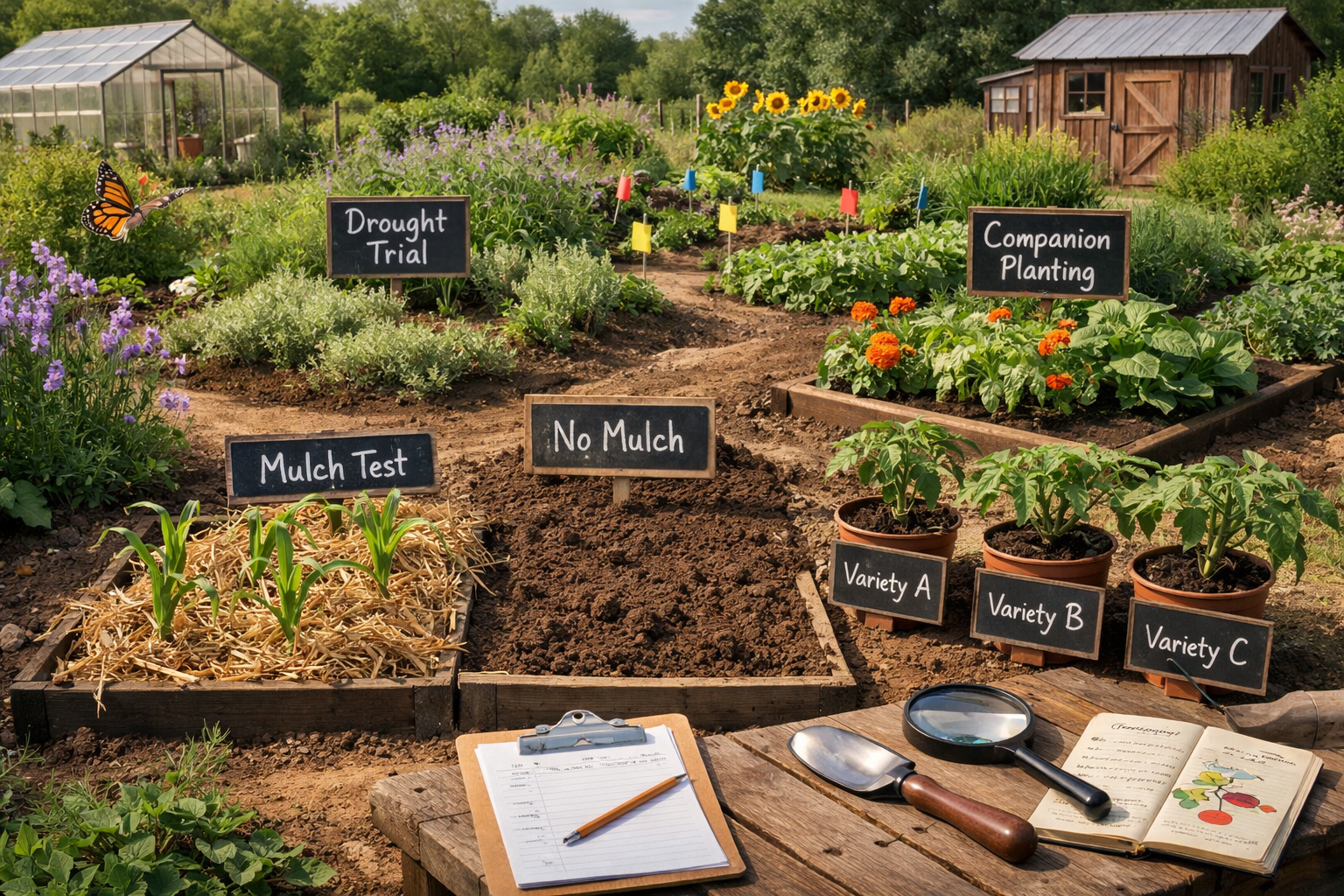
| Learning by Growing Experimental planting is the practice of trying new plants, combinations, methods, or timings in a garden to observe what genuinely works in a specific space. Rather than rigidly following rules, it treats the garden as a living laboratory. This approach embraces curiosity, observation, and adaptation, allowing gardeners to respond to changing climates, soils, and lifestyles with confidence rather than guesswork. At its core, experimental planting shifts gardening from “doing it right” to “finding what works here.” Every garden is unique. Soil structure, light levels, drainage, wind exposure, wildlife pressure, and even nearby buildings all influence outcomes. Experimental planting acknowledges this individuality and encourages gardeners to test ideas on a small scale before committing time, money, and effort on a larger scale. One of the strongest reasons experimental planting has grown in popularity is climate uncertainty. Traditional planting calendars and plant recommendations are becoming less reliable as seasons shift and weather becomes more erratic. Experimenting with drought-tolerant plants, earlier sowing dates, or alternative species helps gardeners build resilience into their gardens. Instead of reacting after failure, they learn proactively through controlled trials. Experimental planting does not mean chaos. It works best when approached with intention. A gardener might test two different mulch types in similar beds, trial three plant varieties in the same conditions, or compare watered versus unwatered zones. Keeping variables limited makes results clearer. The aim is not perfection, but insight. Even failures provide valuable information that improves future decisions. Another key benefit of experimental planting is reduced reliance on trends and assumptions. Gardening advice often generalises, yet what thrives in one garden may struggle in another only a few streets away. Experimentation allows gardeners to move beyond “recommended plants” and discover unexpected successes. A plant labelled as unsuitable for a soil type may flourish due to microclimate effects or improved soil biology, while a highly praised variety may underperform. Soil experimentation is one of the most impactful areas to explore. Testing compost blends, green manures, mulches, or no-dig approaches can reveal how soil responds over time. Small test patches can show whether water retention improves, weeds reduce, or plant health increases. This evidence-based approach leads to healthier soil systems rather than cosmetic short-term fixes. Plant combinations also benefit from experimentation. Companion planting is often discussed in fixed terms, but plant relationships are complex. Testing different spacing, mixed planting densities, and unexpected pairings can naturally improve resilience and reduce pest pressure. Some combinations may compete too strongly, while others support each other through shade, ground cover, or structural balance. Experimental planting also supports biodiversity. Allowing a section of garden to grow more freely, introducing native plants alongside ornamentals, or trialling wildlife-friendly groundcovers helps gardeners observe how insects, birds, and soil organisms respond. Over time, these experiments often lead to gardens that require less intervention and provide greater ecological value. For food growers, experimentation can improve reliability and yield. Trying succession sowing, alternative crop varieties, or mixed cropping helps identify what performs best under local conditions. A gardener may discover that smaller harvests spread across seasons outperform a single large crop, or that certain varieties cope better with fluctuating temperatures. Record keeping plays a quiet but important role in experimental planting. Simple notes, photos, or seasonal reflections help track what worked and why. Over time, this builds a personal gardening knowledge base that is far more accurate than generic advice. Patterns emerge, confidence grows, and decision-making becomes faster and more intuitive. Importantly, experimental planting reduces pressure. When outcomes are framed as learning rather than success or failure, gardening becomes more enjoyable. Losses are expected, not personal. This mindset encourages creativity and reduces the fear of “getting it wrong,” which often stops gardeners from trying new ideas altogether. Small-scale experimentation is especially valuable in maintained or working gardens. Testing changes in one border, bed, or corner avoids disruption while still generating insight. Successful experiments can then be scaled up gradually, ensuring changes are grounded in real-world results rather than assumptions. Experimental planting also aligns well with sustainable gardening. By observing what thrives naturally, gardeners can reduce inputs such as water, fertiliser, and pesticides. Plants that cope without constant support become the backbone of a low-maintenance, low-impact garden. Over time, this leads to gardens that are both practical and resilient. Ultimately, experimental planting is about relationship-building. It encourages gardeners to pay closer attention to their environment, notice subtle changes, and respond thoughtfully. The garden becomes a conversation rather than a checklist. Each season adds knowledge, shaping a space that reflects lived experience rather than rigid instruction. In a world of increasing environmental uncertainty, experimental planting offers a grounded, empowering approach. It allows gardeners to adapt intelligently, build resilience, and create gardens that truly belong to their place. By learning through growing, experimentation transforms gardening from routine maintenance into an evolving, rewarding practice. |
Experimental Planting in Gardening
 Earthly Comforts