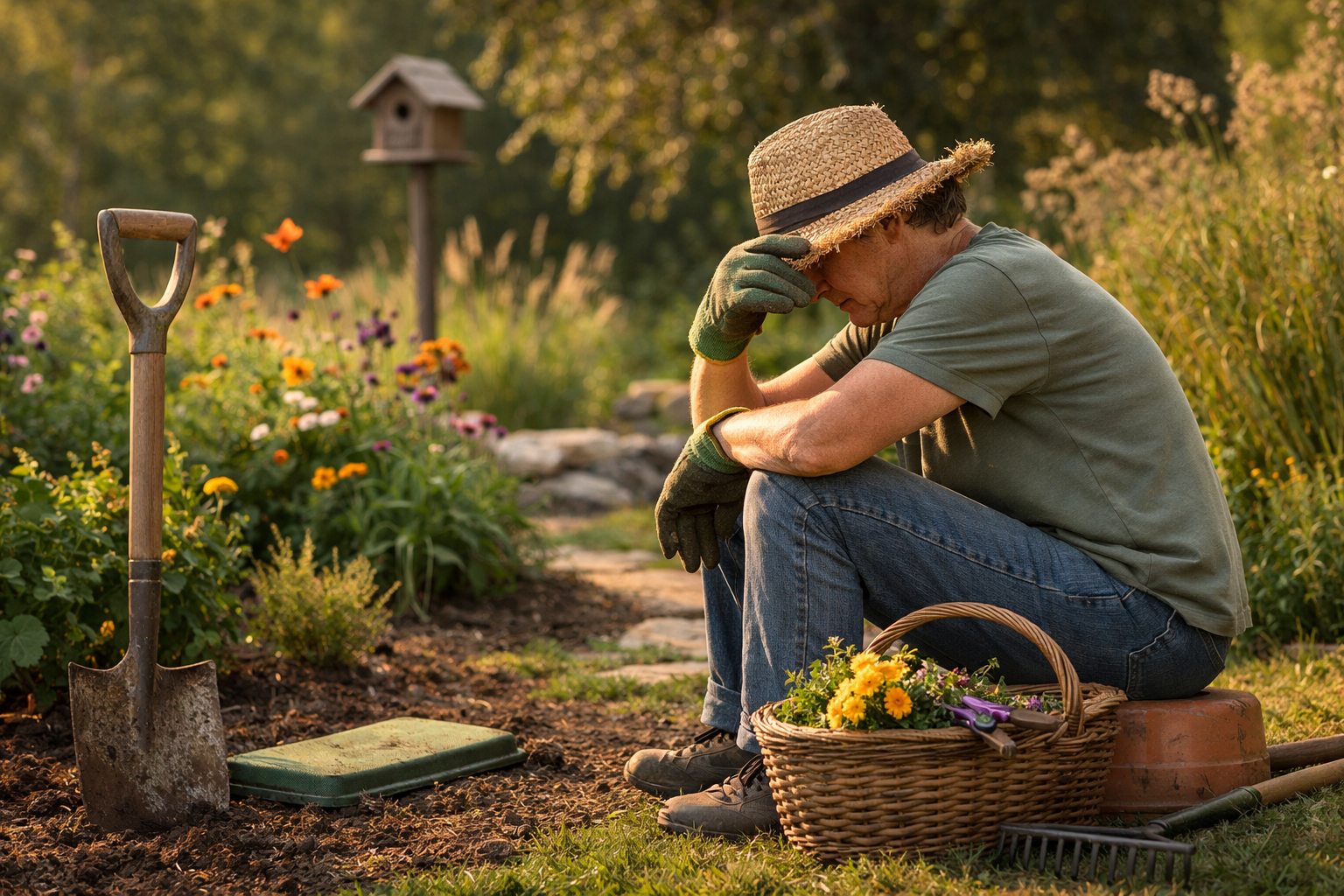
| … with Gardening Gardening is often described as peaceful, grounding, and restorative. For many people, it genuinely is. Yet there is a side of gardening that is talked about far less: the point where effort tips into exhaustion, care becomes compulsion, and “just one more job” quietly turns into physical strain, frustration, or even injury. Knowing when to stop with gardening is not about laziness or lowering standards. It is about sustainability—of the garden, the gardener, and the relationship between the two. Gardens are living systems, not static displays. They do not require constant intervention to thrive. In fact, excessive interference can do more harm than good. Soil compaction, over-pruning, stressed plants, and disrupted wildlife habitats are often the result of too much doing rather than too little. Learning when to step back is one of the most skilled and mature aspects of gardening. One of the first signs that it may be time to stop is physical fatigue that does not resolve quickly. Gardening requires the body to perform complex movements: bending, twisting, lifting, pulling, kneeling, and repetitive movements. While a healthy tiredness is normal, lingering pain, stiffness, or reduced mobility are signals, not obstacles to push through. Pain is information. Ignoring it does not make you resilient; it simply delays recovery and increases the risk of long-term damage. Another indicator is the declining quality of work. When concentration drops, tools are mishandled, cuts become rushed, and decisions lose clarity; mistakes creep in. Plants pruned at the wrong time, soil worked when too wet, or beds over-tidied can set a garden back weeks or months. Stopping before this point protects the results of all the work already done. Emotional signals matter just as much as physical ones. Gardening should not feel relentlessly pressurised. When the joy fades and is replaced by irritation, guilt, or a sense of failure for not “keeping up,” it is time to pause. Gardens are not moral tests. They do not measure worth, discipline, or dedication. They respond to care given within realistic human limits. Seasonal awareness plays a major role in knowing when to stop. There are times of year when restraint is more beneficial than action. Late summer exhaustion, autumn over-clearance, and winter tinkering often stem from discomfort with leaving things unfinished. Yet many plants need rest. Soil needs structure. Wildlife relies on fallen leaves, seed heads, and undisturbed corners. Stopping at the right time is an ecological decision, not a neglectful one. Weather conditions also provide clear stopping points. Working in extreme heat, saturated ground, frost, or high winds rarely leads to good outcomes. Plants are stressed in these conditions, and so are people. Pushing on despite unsuitable weather often causes compaction, breakage, and physical strain. Walking away and returning when conditions improve is a mark of experience, not weakness. There is also the question of diminishing returns. Early gardening efforts often produce visible improvements quickly. Later tasks may yield only marginal gains while demanding disproportionate energy. Chasing perfection—straighter edges, cleaner lines, fewer leaves—can consume hours with little benefit to plant health or overall garden balance. Recognising when a garden is “good enough for now” conserves energy for tasks that truly matter. Mental load is another overlooked factor. Planning, remembering, scheduling, and anticipating gardening tasks takes cognitive energy. When the garden becomes a constant background worry rather than a source of enjoyment, it has crossed a line. Stepping away, even temporarily, can restore perspective. Gardens do not unravel overnight. Most issues develop slowly and can be addressed later with a clearer head. Knowing when to stop also means understanding that not every job is necessary today. Gardening culture often promotes constant activity, particularly during peak seasons. Yet spacing tasks out, leaving some areas untouched, and accepting gradual progress leads to healthier gardens and gardeners alike. A slower pace encourages observation, which is often more valuable than action. For professional gardeners, this skill is even more critical. Physical longevity in the trade depends on pacing, task rotation, and recognising limits. Burnout and injury are common when stopping is seen as failure rather than professionalism. Sustainable work practices benefit clients too, as they result in consistent, thoughtful care rather than rushed, exhaustion-driven work. Stopping does not mean abandoning responsibility. It means choosing the right moment to rest, reassess, and return with intention. Sometimes the best thing you can do for a garden is leave it alone for a while. Growth, recovery, and balance often happen in the absence of intervention. Ultimately, knowing when to stop with gardening is about respect: respect for your body, your mind, the plants, and the natural rhythms at play. Gardens are not finished products. They are ongoing conversations. Listening—rather than constantly speaking through action—leads to deeper understanding and more resilient outcomes. A well-tended garden is not one that is constantly worked on. It is one that is allowed to breathe. |
Knowing When to Stop …
 Earthly Comforts