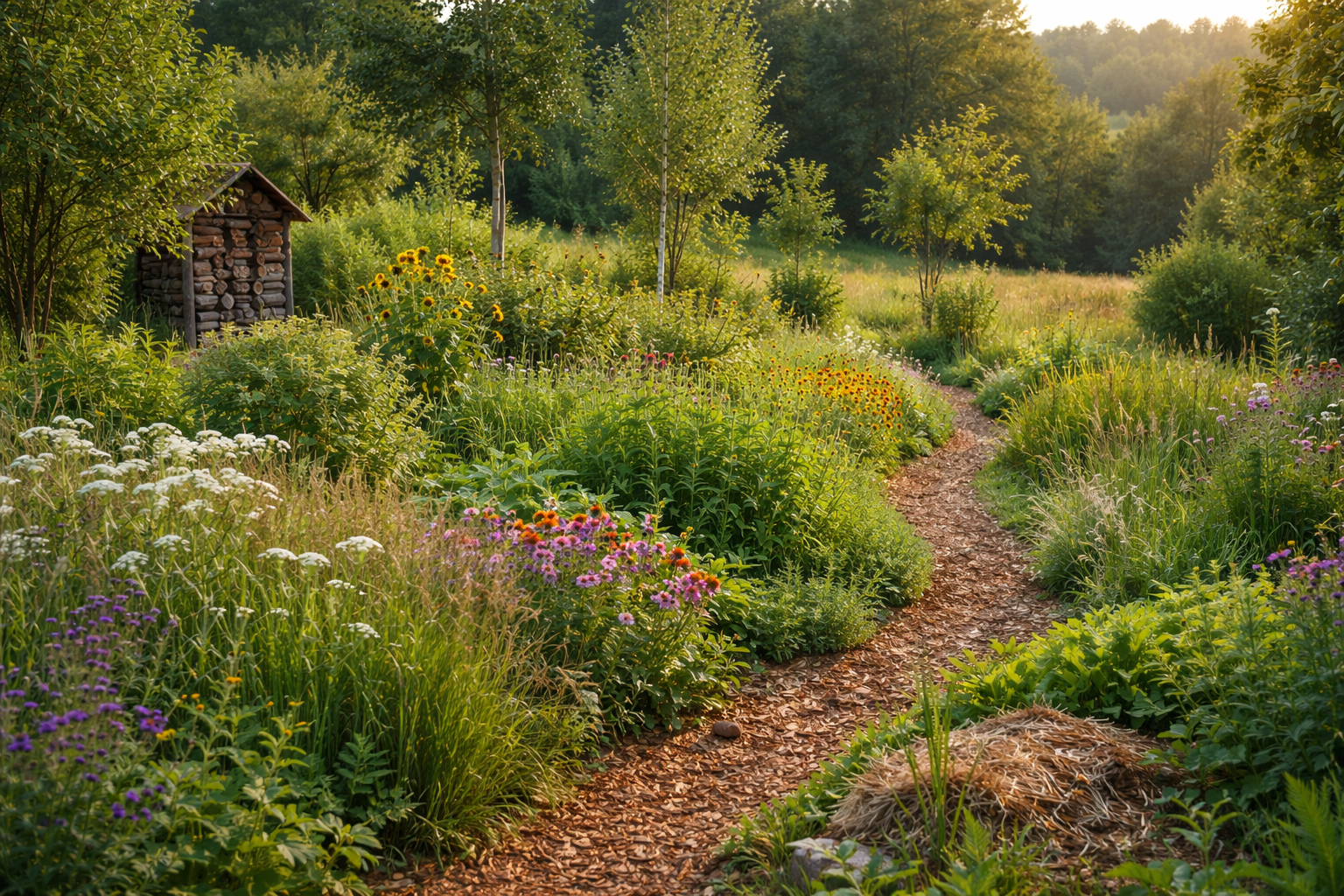
| Working With Nature, Not Against It Natural succession is the process by which landscapes slowly change and stabilise over time without human intervention. In the wild, bare ground does not stay bare for long. Nature moves in stages, gradually filling space, building soil, and creating increasingly complex plant communities. In gardening, understanding natural succession allows us to work with these patterns rather than constantly fighting them. Many modern gardens are managed as if nature should stand still: lawns trimmed weekly, borders held at an artificial balance, and “weeds” removed on sight. Natural succession challenges this mindset. It invites gardeners to see plants as part of a living system that is always in motion, responding to soil, light, moisture, disturbance, and time. When we design and maintain gardens with succession in mind, we reduce labour, improve soil health, support wildlife, and create spaces that feel calmer and more resilient. What Natural Succession Actually Means Natural succession happens in stages. The first stage usually begins with bare or disturbed ground. Pioneer plants move in quickly, often fast-growing species that tolerate poor soil and exposure. These plants stabilise the ground, protect it from erosion, and begin feeding soil life. Over time, their presence changes conditions enough for other plants to establish. As succession continues, plant communities become more diverse and layered. Taller plants create shade, roots loosen and enrich the soil, and organic matter builds year after year. Eventually, the landscape reaches a relatively stable state, sometimes called a “climax community,” where change slows but never truly stops. In a garden, succession may never reach its wild endpoint, but the process is still at work. Every time soil is dug, a lawn is laid, or a bed is cleared, succession resets and begins again. Why Succession Matters in Gardens Ignoring natural succession often leads to frustration. We weed the same plants repeatedly, fight compacted soil, and wonder why certain areas never thrive. Succession explains much of this behaviour. Plants that appear “problematic” are often simply doing the job the land currently needs. For example, a patch of compacted ground may attract deep-rooted plants that naturally break up the soil. Bare areas may invite fast colonisers that protect the surface and feed microbes. Instead of seeing these plants as enemies, succession encourages us to read them as indicators. By paying attention to what arrives uninvited, gardeners gain valuable information about soil condition, moisture levels, and disturbance history. Disturbance: The Trigger for Change Disturbance is what resets succession. This can be natural, such as storms, flooding, or drought, or human-made, like digging, mowing, or construction. In gardens, disturbance is frequent and often intense. This is why early-stage succession plants appear so readily. Every time we clear a bed back to bare soil, we create an open invitation. Nature responds immediately because it dislikes exposed ground. Understanding this helps gardeners reduce unwanted growth by minimising disturbance rather than relying on constant removal. Mulching, ground cover planting, and no-dig methods all work because they interrupt the early stages of succession and accelerate the garden’s shift towards stability. Succession and Soil Health Healthy soil is both a driver and a result of natural succession. Early-stage plants improve soil structure by sending roots into compacted layers and leaving organic matter behind when they die back. As soil life increases, nutrients become more available, moisture is retained more effectively, and plant health improves. Gardens that constantly remove organic material or rely heavily on synthetic inputs often stall succession at an early stage. In contrast, gardens that allow leaves to break down, roots to decompose in place, and soil organisms to flourish move more quickly towards balance. Succession-based gardening focuses less on feeding plants directly and more on feeding the soil that supports them. Rethinking “Weeds” One of the biggest mindset shifts required when embracing natural succession is rethinking weeds. Many so-called weeds are pioneer species designed to heal damaged land. They grow fast, cover ground quickly, and tolerate harsh conditions. This does not mean every self-seeding plant should be left untouched. Gardening is still a managed activity. However, selective tolerance can be powerful. Some plants can be chopped and dropped as mulch. Others can be allowed temporarily and removed once their job is done. Instead of asking, “How do I get rid of this?” succession asks, “Why is this here, and what is it doing for the soil?” Designing With Succession in Mind Succession-aware garden design starts by accepting change. Rather than aiming for a fixed picture, the goal becomes guiding a process. Planting densely, layering heights, and choosing ground covers all help reduce the likelihood of early-stage colonisers dominating. Perennials play a key role because they anchor soil year-round and reduce repeated disturbance. Shrubs, grasses, and self-supporting plants form structure, while annuals can still be used intentionally in gaps or for seasonal interest. Paths, edges, and mowing regimes also influence succession. Where grass is cut frequently, succession stays early. Where cutting is relaxed, diversity increases. Even small changes in management can shift plant communities significantly over time. Wildlife and Natural Succession Succession-based gardens are naturally wildlife-friendly. As plant diversity increases, so does habitat complexity. Insects benefit first, followed by birds, mammals, and amphibians. Seed heads, leaf litter, and undisturbed soil all provide food and shelter. Gardens that allow succession to progress even partially tend to feel more alive. Movement, sound, and seasonal variation become part of the experience. This richness does not require abandoning order; it only requires redefining what order looks like. A garden can be intentional, cared for, and still allow nature to express itself. Low-Maintenance Does Mean No Management A common misunderstanding is that succession gardening means doing nothing. In reality, it requires observation, timing, and restraint. The work shifts from constant intervention to thoughtful guidance. Cutting back at the right time, choosing when to leave plants standing, and deciding where disturbance is acceptable are all active decisions. Over time, maintenance costs often decrease as the system becomes more self-supporting. Gardening with succession is less about control and more about collaboration. Emotional and Practical Benefits There is a quieter satisfaction in succession-based gardening. Watching a space evolve naturally builds patience and trust. It reduces pressure to keep everything perfect and allows the garden to reflect the seasons, weather, and the passage of time. Practically, this approach saves energy, reduces waste, and supports long-term soil health. Emotionally, it reconnects gardeners with natural rhythms that are often lost in modern life. Natural succession reminds us that gardens are not static displays, but living systems we are lucky enough to steward. Bringing It All Together Natural succession is always happening, whether we acknowledge it or not. By understanding and working with it, gardeners can create spaces that are healthier, more resilient, and more rewarding. Instead of constantly correcting nature, we learn to read it, guide it, and give it room to do what it does best. In the end, succession-based gardening is not about letting go of care. It is about choosing a deeper, more informed kind of care—one that respects time, soil, and the quiet intelligence of the natural world. |
Natural Succession
 Earthly Comforts