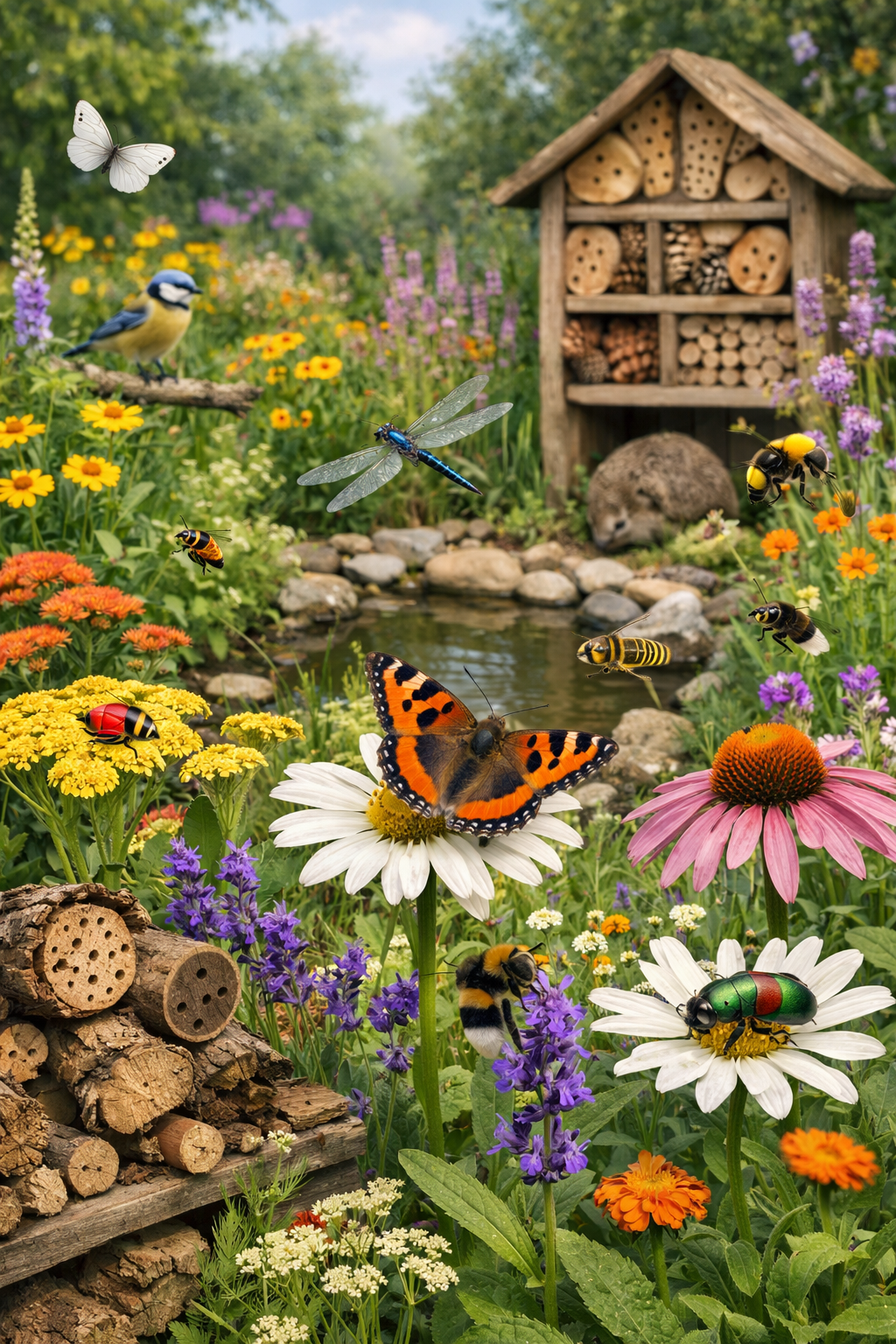
| Across the UK and beyond, insects are disappearing at an alarming rate. Once-common sights such as buzzing bees, fluttering butterflies, and midge clouds at dusk are becoming noticeably rarer. This decline is not just an ecological concern reserved for scientists; it is something gardeners are witnessing firsthand. Gardens, whether large or small, now sit on the frontline of insect conservation. Insects underpin much of the natural world. They pollinate crops and wild plants, recycle organic matter, improve soil health, and form the foundation of food chains that support birds, mammals, amphibians, and reptiles. When insect numbers fall, the effects ripple outward, weakening ecosystems and reducing biodiversity. Gardens, often overlooked as serious habitats, can play a meaningful role in reversing this trend. What’s Driving Insect Decline? The causes of insect decline are complex and interconnected. Habitat loss is one of the most significant factors. Meadows, hedgerows, wetlands, and unmanaged margins have been steadily removed or simplified, leaving insects with fewer places to feed, breed, and overwinter. Urban expansion and intensive agriculture have replaced diverse landscapes with uniform surfaces that offer little ecological value. Chemical use is another major contributor. Pesticides, herbicides, and fungicides do not distinguish between “pests” and beneficial insects. Even products marketed for domestic use can disrupt insect nervous systems, reduce fertility, and contaminate soil and water. Over time, repeated exposure weakens insect populations until they can no longer recover. Climate change adds further pressure. Warmer winters can disrupt life cycles, while sudden frosts, droughts, or prolonged wet periods can wipe out entire generations. Many insects rely on precise timing between emergence and plant flowering; when those timings slip out of sync, food shortages follow. Why Gardens Matter More Than Ever As natural habitats shrink, gardens are increasingly becoming vital refuges. Taken together, domestic gardens form a vast, interconnected patchwork of green space. When managed with care, they can provide nectar, shelter, nesting sites, and safe corridors for insects to move through landscapes. Unlike farmland or public spaces, gardens allow for flexibility. A gardener can choose to leave seed heads standing, let a corner grow wild, or avoid chemicals altogether. These small decisions, repeated across hundreds of gardens in a town, can collectively support thousands of insects. Gardens also offer continuity. While wild habitats may be fragmented, a garden that provides year-round interest—flowers in spring and summer, seed heads in autumn, and shelter through winter—can support insects throughout their entire life cycle. Rethinking the “Perfect” Garden One of the most powerful responses to insect decline is a shift in mindset. Traditional ideas of tidy lawns, bare soil, and constant cutting leave little room for wildlife. Insects thrive in complexity, not perfection. A slightly messy garden is often healthier. Allowing lawns to grow longer, even just in patches, gives insects access to flowering grasses and clover. Leaving fallen leaves under shrubs creates habitat for beetles and overwintering larvae. Dead wood, log piles, and old stems provide opportunities for nesting and shelter that are otherwise scarce. This doesn’t mean abandoning structure altogether. Thoughtful gardening balances human enjoyment with ecological function. Paths, seating areas, and maintained borders can coexist with wilder margins that quietly support insect life. Plant Choices That Support Insects Plant selection is one of the most direct ways gardeners can help. Insects evolved alongside certain plants, and many depend on them for nectar, pollen, or as food for their larvae. A garden dominated by non-flowering or heavily bred ornamental plants may look attractive but offer little nourishment. Including a variety of flowering plants that bloom across the seasons ensures a continuous food supply. Early spring flowers are crucial for emerging insects, while late summer and autumn blooms help build reserves before winter. Native plants are especially valuable, but a diverse mix that prioritises open, nectar-rich flowers is equally effective. Herbs, wildflowers, shrubs, and trees all play a role. Diversity in height, structure, and flowering time creates layers of habitat that support different insect species with different needs. Reducing Harm and Letting Nature Work One of the simplest yet most impactful actions is reducing or eliminating chemical use. Many so-called garden “problems” are part of natural systems. Aphids, for example, support ladybirds and hoverflies, which in turn help keep populations in balance. Removing insects at the first sign of damage often disrupts these natural controls. Healthy soil also supports insect life. Avoiding excessive digging, adding organic matter, and allowing microorganisms to thrive create conditions that allow insects to complete their life cycles safely. Compost heaps, leaf mould, and mulched beds all contribute to a living soil ecosystem. Water matters too. Shallow water sources, damp areas, and ponds—no matter how small—provide drinking and breeding opportunities. Even a simple dish with stones can help insects safely access water during dry spells. The Bigger Picture: Collective Impact While one garden alone cannot reverse insect decline, collective action can make a meaningful difference. When neighbours adopt wildlife-friendly practices, gardens link together into corridors that insects can move through, breed within, and rely on year after year. Gardening for insects is not about sacrifice; it is about resilience. Gardens alive with insects are healthier, more productive, and more enjoyable spaces. Birds sing more, plants set more seed, and the garden becomes a dynamic, living system rather than a static display. In responding to insect decline, gardeners are not just helping insects. They are restoring balance, strengthening ecosystems, and reconnecting with the natural rhythms that have always sustained life. The garden, once seen as a private space, becomes part of a much larger ecological story—one where small, thoughtful choices truly matter. |
Insect Decline and the Garden Response
 Earthly Comforts