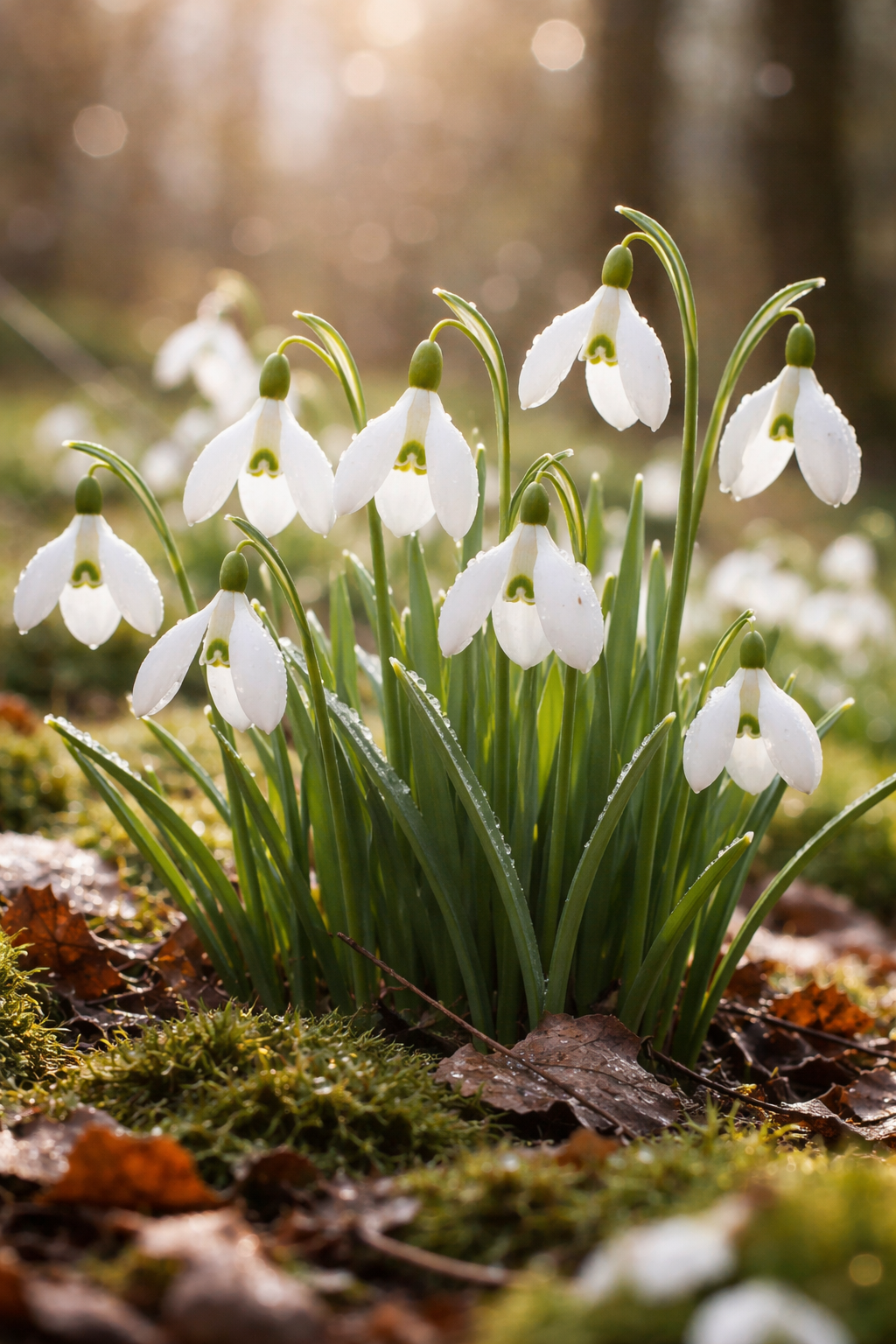
| A Second Look at a Familiar Flower |
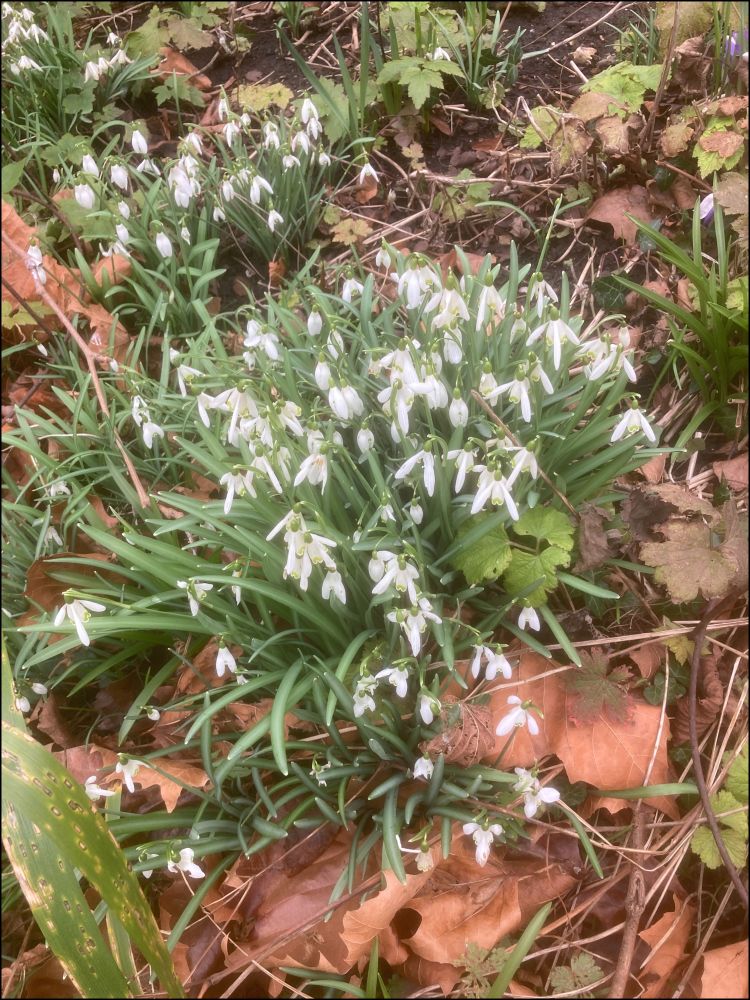
| Certain plants arrive so quietly each year that we forget to look at them properly. Snowdrops are one of those plants. They appear without announcement, no drumroll, no fanfare. One week, the ground is hard and undecided, and the next, small white lanterns are nodding just above the soil, as though someone has tested the air and decided it is safe to begin again. Last year, I wrote about their beauty and symbolism. I spoke about hope and endurance and the emotional weight we attach to their timing. This year, I find myself less interested in what they symbolise and more interested in what they actually are — how they behave, how they move through soil and season, how they fit into the working rhythm of a real garden. Because snowdrops are not sentimental, they are practical. They are built for timing. A plant that keeps its own calendar Snowdrops — Galanthus — operate according to a very narrow ecological window. They are not simply early; they are precise. Their leaves push through when deciduous trees are still bare, when light can reach woodland floors unimpeded. By the time the canopy closes and the first flush of competitive spring growth begins, they are already withdrawing. The leaves yellow, the energy sinks back into the bulb, and the plant retreats. That rhythm matters. In managed gardens, especially in towns, we often think in terms of colour sequences—Crocus after snowdrops, daffodils after crocus, tulips after daffodils. But in wilder settings — under beech trees, along hedgerows, in old churchyards — snowdrops are not part of a display. They are exploiting a moment. They occupy light and moisture before anything else can. This is one of the reasons they naturalise so effectively in the right conditions. They are not competing with summer plants. They have already finished. And that leads to the first quiet, practical truth: snowdrops do not want to be in lawns mown early and often. They tolerate it, yes, but they do not thrive there. They do best when the grass is allowed to rest until their leaves have fully fed the bulb. In other words, they prefer patience. Soil tells the story. In our part of Kent, the soil varies street by street. Some gardens are thin and chalky; others are heavy and reluctant. Snowdrops will tolerate a surprising range, but they are honest about drainage. They dislike sitting in waterlogged ground for prolonged periods. Cold, they can manage. Saturation, not so much. When planting “in the green” — lifting and dividing them just after flowering — I have learned to pay attention not only to drainage but to texture. They favour humus: leaf mould, well-rotted compost, the quiet debris of years. In woodland gardens, they settle into the top few inches, where organic matter naturally accumulates. In newly built gardens with scraped soil and compacted sublayers, they sulk. There is a common assumption that snowdrops are effortless. I would gently question that. They are low maintenance once established, but establishment is everything. Bulbs bought dry in autumn can fail if planted too shallowly or too late into cold, wet soil. Clumps divided too aggressively can take a year or two to recover. The best snowdrops I know are those that have been left alone long enough to become part of the place. Multiplication, not invasion People often speak of snowdrops “spreading everywhere” as though they are opportunistic colonisers. In truth, their multiplication is measured. They increase primarily by bulb division. Over time, a single bulb becomes a clump. The clump becomes a drift. But this takes years. In older estates and churchyards, the carpets of white we admire are rarely the result of dramatic planting schemes. They are the consequence of decades of steady increase. The soil has not been turned over repeatedly. The ground has been respected. There is something instructive in that—snowdrops reward continuity. If we disturb the soil every year in pursuit of novelty, we interrupt the quiet mathematics of bulb growth. If we allow them stability, they repay it with consistency. Light, shade, and the illusion of winter sun Snowdrops are often described as shade lovers, but that description needs nuance. They are woodland plants, yes, but woodland in late winter is not the same as woodland in June. In February, before leaves emerge, the light is surprisingly generous. Low-angled, pale, but unfiltered. In gardens where evergreen shrubs dominate — dense laurel, overgrown conifers — snowdrops struggle. The shade is too constant, too heavy. Under deciduous trees, however, they flourish. They use the brief interval before leaf-out to photosynthesise fully. So the lesson is not simply “plant in shade.” It is “a plant where light exists in February.” This distinction matters in urban gardens. I have seen snowdrops perform beautifully along the north side of brick terraces where winter light reflects and lingers. I have also seen them fail in dark corners where moisture collects and light rarely reaches. We sometimes underestimate how specific plants are about timing rather than location. A note on symbolism — and restraint It is easy to romanticise snowdrops. They bloom in bleakness. They persist through frost. They nod in the snow. All of this is true. But they are not heroic in the way we project. They are not fighting winter; they are aligned with it. Their physiology is adapted to cold soils. They are dormant in summer heat, not winter chill. What looks like bravery is ecological fit. There is comfort in that thought. We do not need to frame them as tiny warriors. They are well-designed organisms occupying their rightful niche. That may be enough. Working with snowdrops in managed gardens In client gardens, snowdrops present particular questions. Where do they belong in smaller urban spaces? How do we integrate them into borders without them disappearing beneath later growth? I have found that they work best at edges — along paths, beneath hedges, in transitional zones between lawn and planting bed. They appreciate being near something structural: a low wall, a hedge base, the line of a fence. Not centre stage. There is also a practical consideration about maintenance. If snowdrops are planted deep within herbaceous borders that are cut back heavily in autumn, it is easy to damage emerging shoots in early winter tidy-ups. They need space where we are not constantly digging or forking. One of the simplest, most effective strategies I have seen is this: plant them in modest drifts under lightly pruned, infrequently pruned deciduous shrubs. The shrubs provide summer shade; the snowdrops enjoy winter light. Maintenance is minimal. The pairing feels natural rather than ornamental. Toxicity and misconception Snowdrop bulbs contain alkaloids and are toxic if ingested. This is occasionally raised with concern by clients with pets. In practice, issues are rare. Dogs are far more likely to chew tulip bulbs or dig freshly disturbed soil. Snowdrops, planted and left undisturbed, are seldom a problem. There is another misconception worth addressing — the idea that rare snowdrops are somehow superior. The world of galanthophiles is fascinating, with subtle variations in petal markings and form commanding surprising sums. I admire the dedication. But in everyday gardens, common Galanthus nivalis performs beautifully. It naturalises reliably, tolerates British conditions, and creates exactly the quiet effect most people want. The pursuit of rarity is an aesthetic hobby, not a horticultural necessity. Sometimes the simplest form is the most durable. Weather shifts and timing In recent years, winter patterns have shifted. Some years snowdrops appear earlier; others they linger into March. Warmer December spells can prompt premature flowering, followed by sharp frost that temporarily flattens blooms. What I have observed, though, is their resilience. The flowers may collapse in cold snaps, but they rarely suffer long-term damage. The stems lift again when temperatures rise. The bulb, insulated underground, remains intact. This is another reminder that surface appearance does not always indicate harm. In gardening, we tend to panic when we see visible signs of stress. Snowdrops teach restraint. Wait. Observe. The plant often knows what it is doing. Practical observations from the ground There are a few things I have learned directly from handling them year after year. First, lift and divide clumps while the leaves are still green. Do not wait until they vanish. The energy is active then, and replanting is far more successful. Second, resist the urge to tidy away yellowing foliage too quickly. It is not untidy; it is essential. The leaves are replenishing the bulb for next year’s bloom. Third, improve the soil gently rather than dramatically. A top dressing of leaf mould each autumn does more long-term good than aggressive digging. And finally, accept that snowdrops establish slowly. They are not instant impact plants. Their reward is repetition. The quietest season What draws me back to snowdrops each year is not their colour, but their timing within the gardening calendar. February is not glamorous. Tools are cleaned. Plans are made. Soil is tested. Much of our work is preparatory. Snowdrops arrive in the midst of that preparation. They are not demanding attention; they are present. Their presence suggests continuity rather than spectacle. In commercial gardening, where clients understandably want visible results, it can be tempting to prioritise plants that shout. Snowdrops whisper. They are noticed most by those who are already paying attention. And perhaps that is their true role. Not to dazzle, but to anchor. Returning to them This year, walking through gardens where snowdrops have been established for decades, I am struck by their steadiness. They do not expand dramatically year to year. They do not alter a garden’s design language. They return. In a time when so much in horticulture feels accelerated — faster trends, quicker turnover, constant novelty — snowdrops remain slow. They teach us to think in cycles rather than seasons. They are modest bulbs with white bells. Nothing more. Nothing less. And that is why they endure. |
| About our writing & imagery Most articles reflect our real gardening experience and reflection. Some use AI in drafting or research, but never for voice or authority. Featured images may show our photos, original AI-generated visuals, or, where stated, credited images shared by others. All content is shaped and edited by Earthly Comforts, expressing our own views. |
 Earthly Comforts