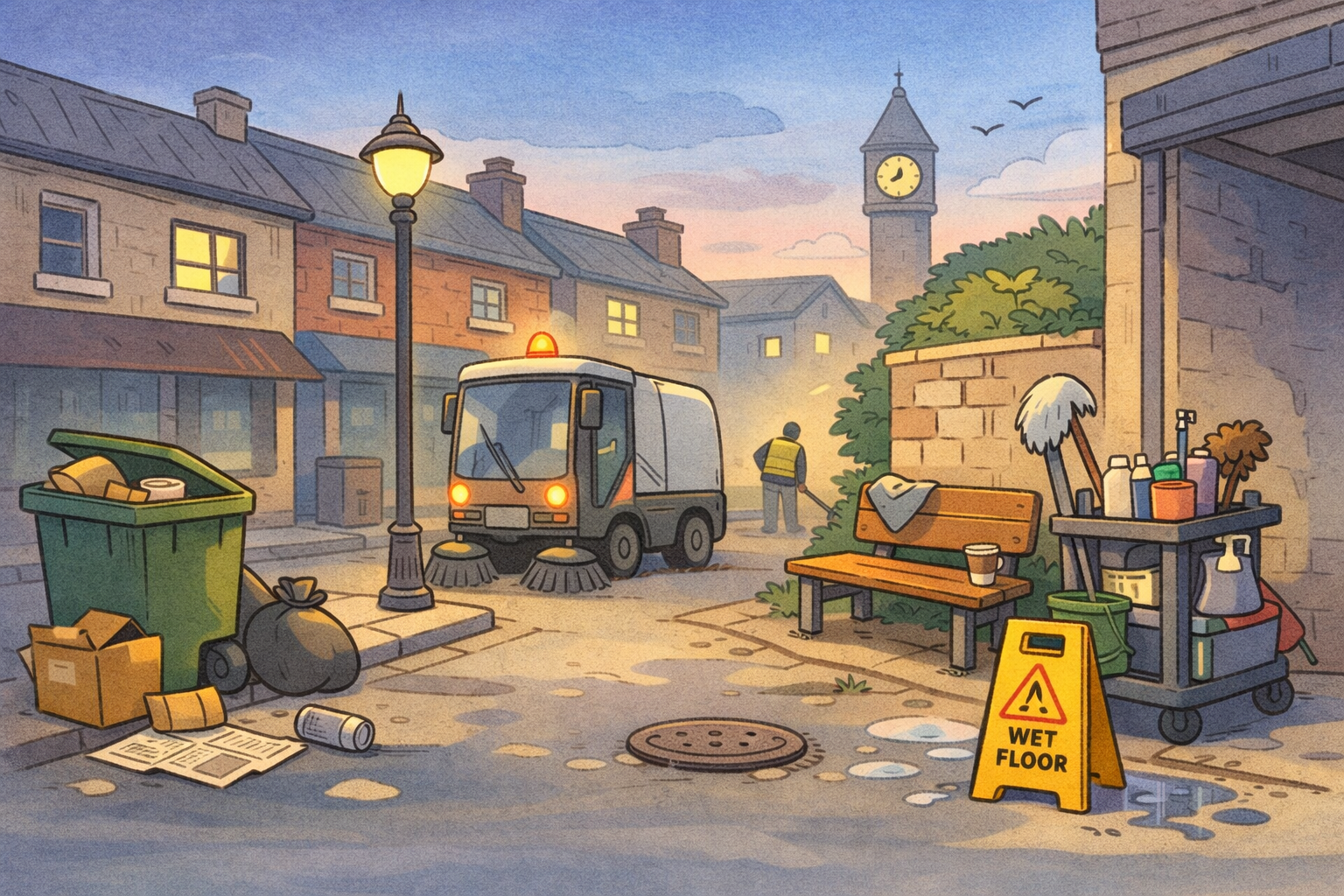
| Jobs That Are Only Noticed When They Stop |
| There are forms of work that announce themselves loudly. They arrive with uniforms, vehicles, paperwork, and titles. And then some jobs exist almost entirely in their absence. You don’t notice them while they’re being done. You notice them only when they aren’t. As a gardener, I sit firmly in the second category. When things are right, nobody comments. The path is clear. The hedge behaves. The gate opens. The place feels calm, which is often mistaken for “nothing happening.” It’s only when a bin isn’t emptied, a drain blocks, or a strip of grass goes uncut that the work becomes visible. This is not a complaint. It’s simply the nature of maintenance. Its success looks like normality. We tend to celebrate labour that transforms—building, creating, installing, producing. Before-and-after thinking runs deep. Yet most of the work that keeps places functional does not transform anything. It preserves a condition. It holds entropy at bay for a little longer. It resets rather than reinvents. One common assumption is that if work is essential, it will make itself known. In reality, the opposite is often true. The more quietly essential a job is, the less attention it receives. Drainage engineers, cleaners, groundskeepers, caretakers, refuse collectors — their work is woven into daily life so thoroughly that it disappears. Gardening has taught me that this invisibility changes how people value effort. If a hedge looks “the same” week after week, it can feel as though nothing has been done. In fact, quite a lot has been prevented. Growth redirected. Weakness spotted early. The work lives in the avoided problem. This creates an odd tension. Maintenance demands consistency, but consistency hides achievement. It’s one reason people are tempted to overdo things. If nothing appears to be happening, there’s pressure to make something obvious happen. Cut harder. Tidy further. Replace rather than tend. The result often shortens the life of whatever you’re meant to be caring for. Another myth worth challenging is that repetitive work dulls the mind. In practice, repetition sharpens attention. When you return to the same task regularly, you notice subtle changes. A sound that wasn’t there before. A plant that’s lagging. A latch that doesn’t quite catch. These details only reveal themselves to someone who knows what “normal” looks like. This kind of awareness doesn’t come from speed or scale. It comes from proximity. From being close enough to a thing to register its small shifts. That’s why so much essential work resists automation and abstraction. You can plan maintenance on a spreadsheet, but you can’t smell damp through one. There are trade-offs here. Quiet jobs rarely come with applause, and that can wear people down. It’s easier to feel motivated when your effort produces something visibly new. Maintenance asks for a different reward system: satisfaction in stability, pride in things holding together, trust that your absence would be felt. In my own work, the most precise feedback often arrives indirectly. A client mentioned how calm their garden feels. A space is being used more because it’s reliable. A path walked without thought. These are not compliments in the usual sense, but they are signs the work is doing what it should. There’s also a humility baked into this kind of labour. You are not the centre of the outcome. The goal is not to be noticed. In fact, being noticed often means something has gone wrong. When a hedge needs urgent attention or clearance, it usually follows a period when maintenance wasn’t possible or wasn’t prioritised. This perspective changes how you see work more broadly. You start to recognise the value in roles that don’t shout. You become wary of systems that reward only visible output. You notice how often society underpays the very jobs it depends on most. Perhaps the quietest truth is this: work that is only noticed when it stops is doing its job exceptionally well. Its success lies in continuity, not spectacle. It asks for trust rather than praise. And once you learn to see that, it becomes difficult to unsee. You start noticing the hands that keep things running. The people who reset the world while others sleep. The labour that allows everything else to feel effortless. That kind of work deserves more than attention when it fails. It deserves recognition for holding the line, day after day, without fuss. |
| About our writing & imagery Most articles reflect our real gardening experience and reflection. Some use AI in drafting or research, but never for voice or authority. Featured images may show our photos, original AI-generated visuals, or, where stated, credited images shared by others. All content is shaped and edited by Earthly Comforts, expressing our own views. |
 Earthly Comforts
How true Rory. We only miss the gardener if the garden is messy.
LikeLiked by 1 person
Hi Sadje, and that is it exactly 🙂
LikeLiked by 1 person
You’re right. But yesterday I saw that he had planted small pansies in lots of colors and I appreciate his efforts too.
LikeLiked by 1 person
That is always good to know 🙂 also that you have pansies, they are so wonderfully vibrant.
LikeLiked by 1 person
Thanks dear friend. They are so beautiful.
LikeLike