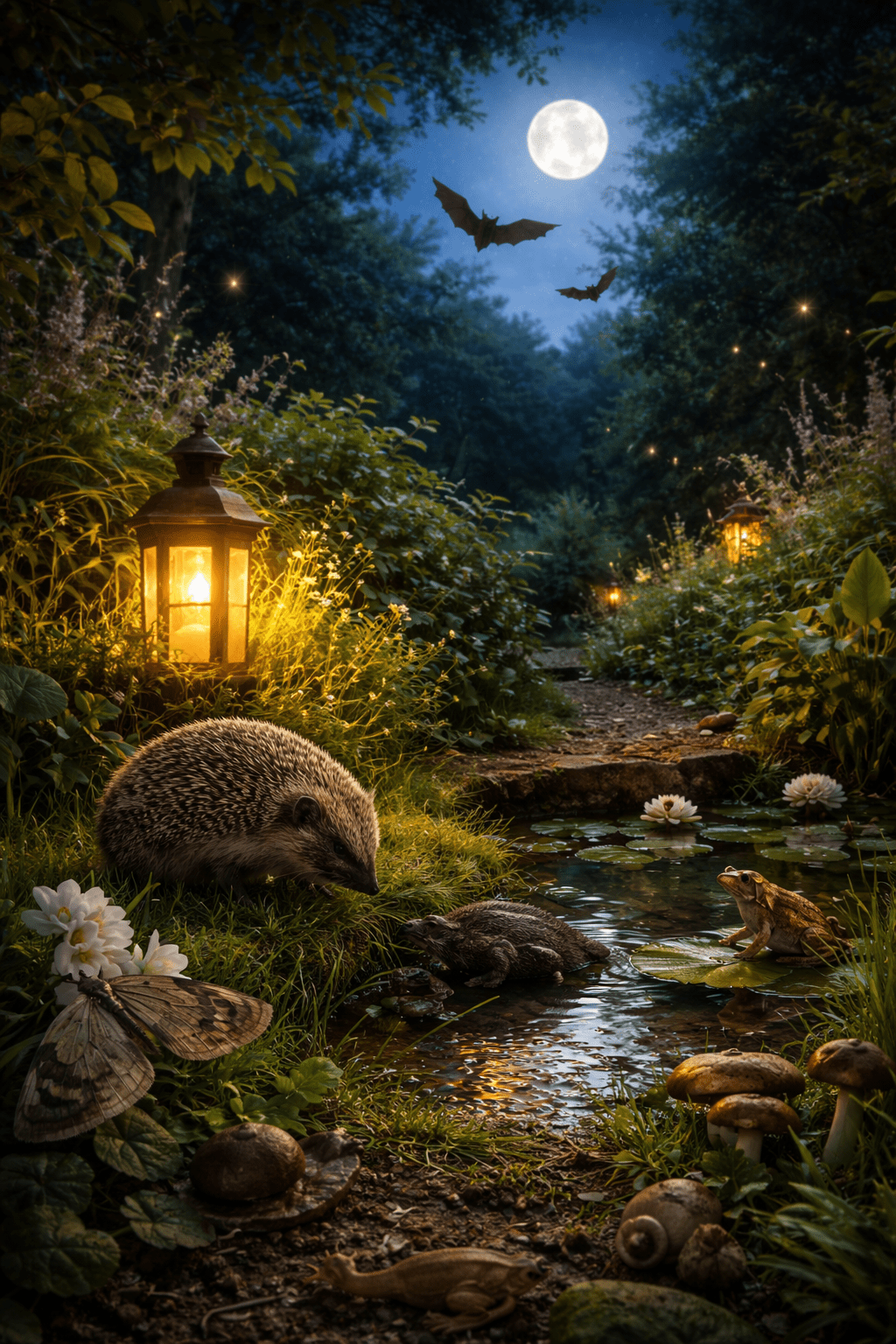
| When the garden falls quiet and human activity fades, another layer of life begins to move. Night-time gardening, wildlife is often unseen but deeply active, and in many ways, the health of a garden can be measured by what happens after dark. From the soil surface to the tree canopy, nocturnal creatures play vital roles in supporting plant health, controlling pests, and maintaining ecological balance. A garden that welcomes night-time wildlife is usually functioning well. One of the most noticeable differences between daytime and nighttime wildlife is behaviour. Many animals avoid daylight because of predators, noise, and human disturbance. At night, gardens become safer corridors where creatures can forage, mate, and travel between green spaces. Even small gardens can act as stepping stones, linking hedgerows, parks, and the countryside. This quiet connectivity is essential, particularly in towns where natural habitats are fragmented. Hedgehogs are among the most well-known nighttime garden visitors. They emerge after dusk to patrol lawns, borders, and paths in search of beetles, slugs, caterpillars, and worms. Their presence indicates that a garden offers both food and shelter. Log piles, leaf litter, dense planting, and gaps beneath fences all help hedgehogs move safely and nest. Without these features, even food-rich gardens can become inaccessible or dangerous. Bats are another important group that relies heavily on garden spaces after dark. Although rarely seen clearly, their presence can often be detected by their erratic flight patterns as they hunt insects above lawns, ponds, and tree lines. Gardens rich in night-flying insects provide valuable feeding grounds. Moths, midges, and beetles make up a large part of a bat’s diet, meaning that a garden supporting insect life indirectly supports bat populations, too. Moths themselves are often misunderstood, yet they are one of the most important night-time pollinators. While bees dominate daytime pollination, moths quietly take over at night, visiting flowers that release scent after dusk or have pale, reflective petals. Many plants depend on this nocturnal pollination to set seed. A decline in moth numbers can therefore affect plant diversity, even if daytime pollinators appear abundant. Amphibians such as frogs, toads, and newts also rely on nighttime conditions to move and feed. Moist air and lower temperatures reduce the risk of dehydration, allowing them to travel across lawns and borders in search of insects. Ponds are particularly important for these species, not only for breeding but also as cooling and hydration points during dry periods. Even small water features can provide meaningful support if kept chemical-free and accessible. Invertebrates form the backbone of night-time garden activity. Slugs, snails, beetles, woodlice, centipedes, and earthworms all become more active once the sun goes down. While some are seen as pests, many play crucial roles in breaking down organic matter and improving soil structure. Earthworms, for example, aerate the soil and help distribute nutrients, quietly improving plant health from below. Bird life does not stop entirely at night, either. Although most garden birds rest after dusk, species such as owls and nightjars rely on garden edges and open spaces to hunt. Even sleeping birds benefit indirectly from healthy night-time ecosystems, as insect-rich gardens also support daytime feeding. The boundary between night and day wildlife is more fluid than it might first appear. Human activity can have a significant impact on nocturnal wildlife, often without realising it. Artificial lighting is one of the biggest disruptors. Bright security lights, decorative garden lighting, and illuminated windows can confuse insects, alter feeding patterns, and disrupt natural rhythms. Many animals navigate by moonlight and stars, and excessive lighting can disorient them or make them vulnerable to predators. Noise and garden maintenance schedules also matter. Late-night mowing, strimming, or heavy movement can disturb feeding and nesting behaviour. Even routine tasks such as clearing leaf litter or cutting back dense planting too aggressively can remove vital shelter. Gardens that are slightly untidy, especially over winter, tend to support far more night-time life than those kept overly neat. Encouraging nocturnal wildlife does not require dramatic changes. Small, thoughtful adjustments often make the biggest difference. Leaving some areas unlit, allowing hedges and borders to grow a little fuller, and avoiding chemical treatments all help create safer conditions. Providing water, whether through a pond, shallow dish, or damp ground, supports a wide range of species during dry spells. Understanding night-time wildlife also changes how we perceive the garden itself. Rather than seeing it as a space that switches off after dark, it becomes a living system operating around the clock. The quiet hours are not empty but busy, layered, and essential. By respecting what happens when we are not watching, gardeners can support healthier, more resilient outdoor spaces. Ultimately, a garden that supports life at night is one that gives back more during the day. Plants grow stronger, pest populations remain balanced, and the ecosystem becomes more stable. Night-time wildlife may be hidden from view, but its influence is woven through every part of the garden. Learning to garden with the dark in mind is one of the most effective ways to garden with nature rather than against it. |
Night-Time Wildlife
 Earthly Comforts