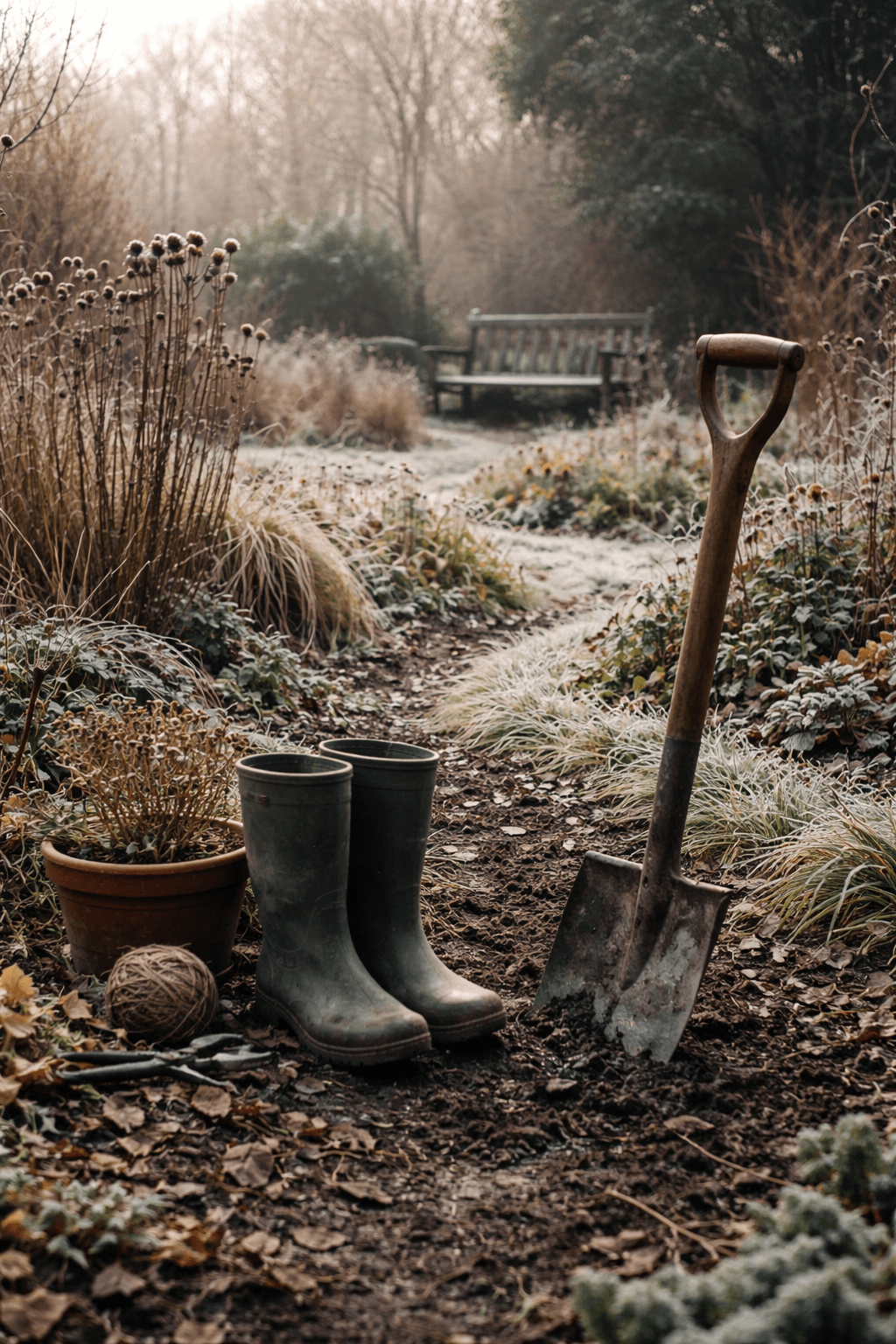
| Observation, restraint, and letting the garden rest — not fixing Winter is the season people misunderstand most in the garden. It’s seen as a problem to solve, a delay to push through, or a blank space that needs to be filled with effort. That misunderstanding creates more harm than neglect ever could. Winter gardening is not about improvement. It’s not about transformation. It’s not about catching up. It’s about paying attention. The garden in winter is not broken. It is paused. And learning to recognise the difference is one of the most valuable skills a gardener can develop. Too often, winter is approached with a list: cut this back, clear that out, tidy everything so spring can begin “properly.” The urge to intervene is strong because stillness feels like inaction, and inaction feels like failure. But gardens don’t work on productivity timelines. They work on biological ones. Winter is when the garden tells the truth. Without leaf cover and flowers to distract us, the structure is exposed. So is weakness. So is strength. You can see where water sits, where frost lingers, where soil compacts and where it drains freely. These are not problems to fix in December. They are information to carry forward. Observation is the real work of winter. Walking the same garden week after week in winter teaches you more than any planting plan ever could. You notice which paths turn slick, which beds slump, which hedges block light, which corners feel cold and lifeless. None of that is obvious in summer. Winter strips the garden back to its bones. This is why heavy intervention in winter often backfires. When you rush to “correct” what you don’t yet understand, you erase evidence. You flatten nuance. You tidy away clues you’ll wish you had noticed later. Restraint is not laziness. It is discipline. There is also the matter of soil. Winter soil is vulnerable. Wet, cold, and easily damaged, it remembers every careless step and every rushed job. Digging, compacting, and dragging equipment across saturated ground all leave marks that last well into the growing season. One of the quiet rules of good winter gardening is knowing when not to step in. Staying off beds. Leaving tools in the shed. Letting worm activity, fungal networks, and natural settling do the work you cannot see. The healthiest gardens in spring are often the ones that looked most untouched in winter. There is a cultural pressure to “get ahead” during winter. Prepare everything. Be ready. Start early. But early is not the same as ready. Forcing growth before conditions allow it leads to weak plants, shallow roots, and ongoing intervention later. Winter does not reward impatience. Another truth rarely said out loud is that winter gardening is also about the gardener. Cold, short days change how bodies move and recover. Fatigue sets in faster. Grip weakens. Balance shifts. Gardening through winter requires more care, not more ambition. Working gently in winter is not a concession. It is good practice. This is especially important for older gardeners, those recovering from illness, or anyone simply worn down by a long year. Winter allows a different relationship with the garden, one that does not demand constant output. You can still show up without performing. There are, of course, things worth doing in winter. Clearing genuinely hazardous debris. Addressing broken structures. Light pruning where timing genuinely matters. But these jobs are precise, limited, and purposeful. They are not blanket tasks applied out of habit. Winter gardening works best when it is selective. Leaving seed heads standing feeds birds and protects crowns. Fallen leaves insulate soil and support life below the surface. Bare stems catch frost and mark where life will return. What looks untidy to some is functioning exactly as it should. The idea that winter gardens must look “clean” is largely aesthetic, not ecological. Clean gardens are often quiet ones. Quiet in winter is not a compliment. Letting a garden rest does not mean abandoning it. It means changing the nature of your attention. Instead of doing, you watch. Instead of correcting, you record. Instead of pushing forward, you hold space. This mindset shift matters because winter decisions echo forward. What you leave standing affects spring wildlife. What you compact affects summer drainage. What you cut too early affects resilience later. Winter is not preparation for spring. It is part of the same cycle. There is also an emotional honesty to winter gardening that people don’t often talk about. Without colour and growth, it’s harder to pretend everything is fine. Gardens reflect the year that’s passed. Losses are visible. Failures remain. There is nowhere to hide them. That discomfort is useful. It teaches acceptance. It teaches proportion. It reminds you that gardens are not trophies. They are living systems that respond to weather, time, and care — but never fully obey. Trying to “fix” a garden in winter often comes from discomfort with that lack of control. Letting go of that impulse is one of the quiet achievements of experience. A rested garden enters spring stronger than a forced one. A rested gardener does too. So if winter feels slow, that’s because it is meant to be. If it feels unfinished, that’s because it is not the end of anything. And if it feels like nothing much is happening, that’s because the most important work is happening out of sight. Winter gardening is not about action. It’s about attention, restraint, and respect for timing. The garden does not need fixing right now. It needs time. |
Unless stated, featured images are my own work, created independently or with the assistance of AI.
 Earthly Comforts