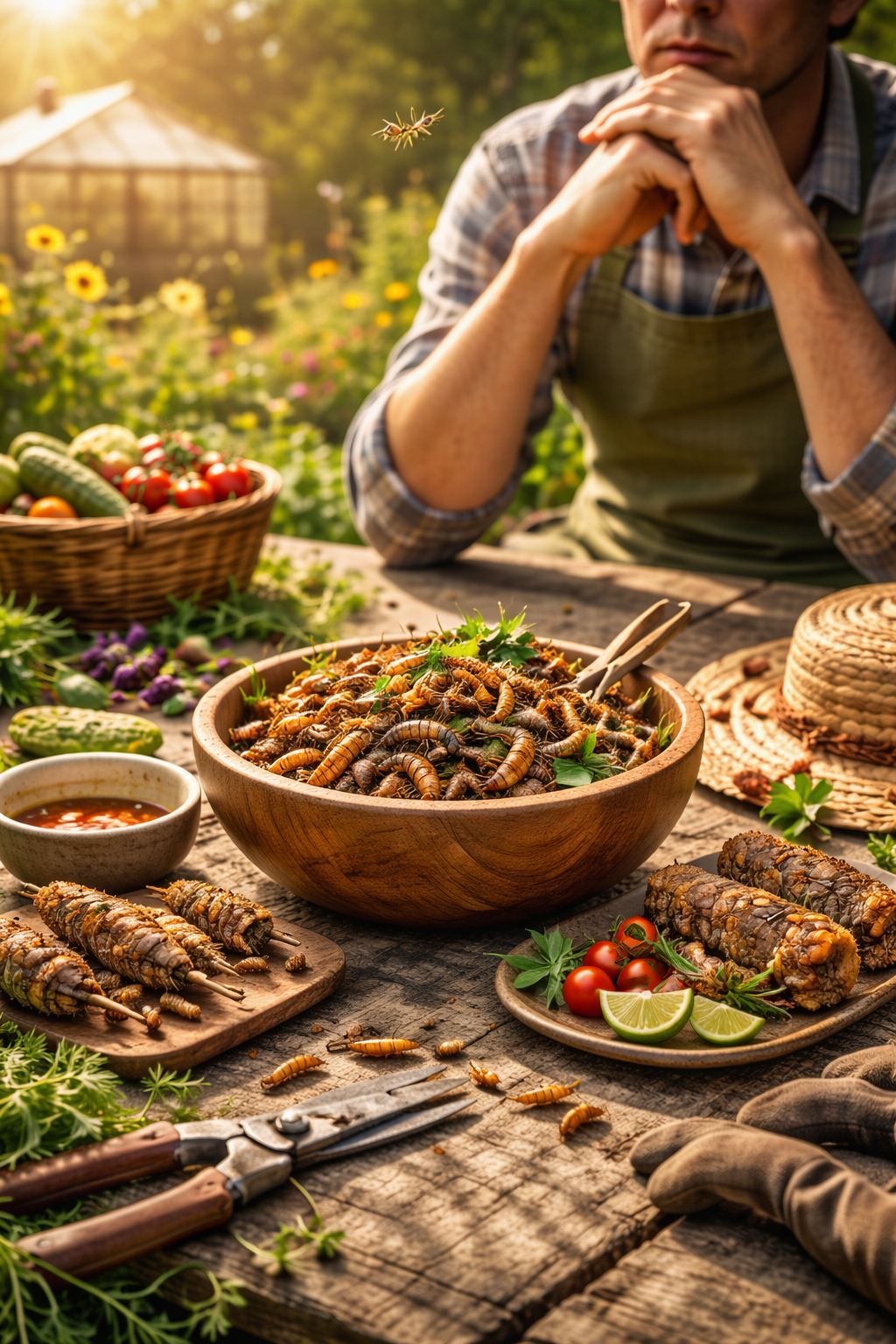
| A Gardener’s Reflection on a Future of Insect Consumption As a gardener, I spend my days watching small lives at work. Beetles lift grains of soil like builders. Bees arriving with purpose. Ants mapping routes I’ll never fully understand. For years, insects have been companions to the work — not pests, not miracles, just part of the quiet machinery that keeps a garden alive. Only yesterday, I wrote about how many insect species are disappearing each year and how quietly that loss is unfolding. How Many Insect Species Go Extinct Each Year? It has stayed with me since, because almost as soon as we begin to acknowledge loss, a different conversation seems to emerge alongside it — one about opportunity. Lately, insects are being discussed less as pollinators or indicators of soil health and more as resources. Protein. Feed. Food. A solution waiting to be scaled. It’s a strange thing to hear when you’ve spent years trying to create space for insects rather than extract value from them. There’s a growing sense that the world is bracing itself for scarcity. Land is under pressure. Climate patterns are less reliable. Food systems feel fragile. In response, ideas that once sat at the margins are moving closer to the centre. Insects, with their small footprint and rapid reproduction, fit neatly into this future-facing narrative. They are being reframed not as background life, but as sustenance. From a technical standpoint, the logic is hard to argue with. Insects efficiently convert plant matter into protein. They need little water, little space, and produce far less waste than conventional livestock. In a world constrained by limits, these qualities are appealing, and you can sense that appeal filtering into policy discussions, innovation spaces, and trial products. But from the gardener’s point of view, the idea lands differently. In the garden, insects are not units of nutrition. They are relationships. Remove too many, and something else falters. A bird doesn’t return. A plant fails to set seed. Soil loses its structure. What troubles me is not the act of insect consumption itself — humans have eaten insects for thousands of years — but the industrial mindset that may accompany it. We have a habit of scaling things until they break. If insects become commodities, they will be farmed. If they are farmed, they will be optimised. If they are optimised, diversity will narrow. A small number of species will be favoured, refined, and multiplied, while countless others continue to disappear outside the system. A future where insects are eaten while ecosystems continue to collapse is not difficult to imagine. We’ve seen this pattern before. What’s often missing from these conversations is soil. Insects don’t exist independently of place. Their value comes from context — hedgerows, leaf litter, decaying wood, mixed planting, unmanaged corners. In gardening, abundance comes from tolerance rather than control. Yet much of the thinking around insect consumption mirrors the same extractive logic that strained our existing food systems in the first place. There is also an emotional shift that’s hard to ignore. When you work daily among insects, familiarity breeds respect. A ladybird becomes a sign of balance. A hoverfly becomes reassurance. To then imagine those same creatures primarily as a future food source creates not outrage, but unease. Perhaps the more revealing question is not whether insects should be eaten, but what their rise as a food trend says about us. It suggests a future in which adaptation is necessary, but imagination remains narrow. We look for substitutes rather than redesigns. We ask what else we can consume, rather than how to consume less or live more lightly. The garden teaches something else entirely. That resilience comes from diversity. That abundance isn’t forced. Those systems hold when nothing is pushed to its limit. There may well be a future in which insects play a role in feeding people, particularly when options are scarce. But if that future arrives without equal effort to protect wild insect populations, restore habitats, and rethink land use, then we will have misunderstood the very life forms we are relying on. In the garden, insects are not a backup plan. They are the plan. If we only learn to value insects once they become edible, it will say more about our failure to listen than about their usefulness. Once the insects leave the soil, no amount of protein will put the garden back together. |
When the Garden Becomes the Larder
 Earthly Comforts