
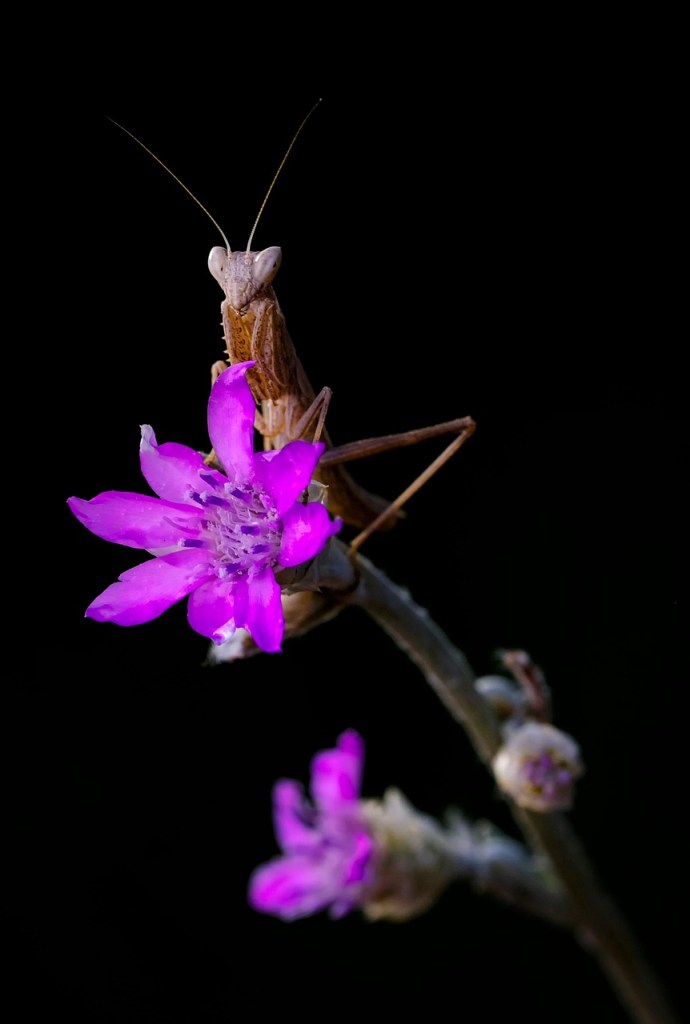
| Praying Mantis Philosophy The praying mantis never hurried me. It simply waited — and in doing so, taught me everything. In Malaysia, mantids didn’t announce themselves. You found them by almost missing them: a leaf that felt too deliberate, a stem that held its angle just a fraction too well. They were masters of stillness, sculpted to disappear in plain sight. When they moved, it wasn’t rushed. It was precise. Final. I watched them for long stretches, fascinated by the way they occupied time rather than passing through it. Mantids don’t chase opportunity. They let opportunity arrive. Their patience felt deliberate, considered — not passive, but purposeful. They were not gentle creatures. When prey came within reach, the strike was immediate and unapologetic. No hesitation. No remorse. The contrast between stillness and violence was startling and unforgettable. Malaysia made that contrast feel normal. In a place where butterflies floated like living banners and mosquitoes carried death, the mantis sat between those extremes — neither decorative nor invisible. It existed to function. Efficient. Balanced. Entirely unconcerned with how it was perceived. I learned early that watching a mantis hunt was not a comfortable experience. There was no drama, but there was clarity. Life did not negotiate. It acted. As a gardener now, I recognise mantis logic everywhere. Timing matters more than effort. Intervening too soon often does more harm than good. The best results come from understanding when not to act. Behind the spade, mantis philosophy lives in restraint. In waiting before pruning. In allowing pest populations to rise just enough for predators to respond. In trusting systems rather than constantly correcting them. Praying mantids don’t improve landscapes. They respond to them. They appear where conditions allow — structure, food, shelter — and disappear just as quietly when those conditions change. They do not demand attention. They reward it. Malaysia taught me that patience is not the absence of action. It is the selection of the right moment. And once you learn to garden like a mantis — observant, measured, decisive — the garden begins to feel less like something to control and more like something to cooperate with. Sometimes, the most powerful movement is knowing exactly when to stay still. |
| 10 True Facts About Malaysian Praying Mantises Malaysia hosts a wide variety of mantis species. From leaf-mimicking forms to slender grass mantises, the country’s tropical climate supports high mantis diversity. Many Malaysian mantises rely on camouflage rather than speed Their body shapes and colours closely resemble leaves, bark, or stems, allowing them to remain undetected. Mantises are ambush predators. They wait motionless for prey to come within reach, rather than actively hunting it. Their front legs are specially adapted for grasping The folded “praying” posture hides powerful, spined limbs designed to snap shut with great force. Mantises can rotate their heads. They can turn their heads side to side, giving them a wide field of vision without moving their bodies. They have excellent eyesight. Mantises rely heavily on vision to judge distance and movement, especially when striking prey. Malaysian mantises feed on a wide range of insects Their diet includes flies, moths, beetles, grasshoppers, and occasionally other mantises. Some species show sexual cannibalism. In certain cases, females may eat the male during or after mating, although this does not happen every time. Mantises are sensitive to habitat change. They rely on vegetation structure, so deforestation or heavy disturbance can quickly reduce their numbers. They play an important role in insect population balance By preying on other insects, mantises help regulate populations within tropical ecosystems. |
| About our writing & imagery Many of our articles are written by us, drawing on real experience, reflection, and practical work in gardens and places we know. Some pieces are developed with the assistance of AI as a drafting and research tool. Featured images may include our own photography, original AI-generated imagery, or—where noted—images kindly shared by other creators and credited accordingly (for example, via Pixabay). All content is shaped, edited, and published by Earthly Comforts, and the views expressed are our own. |
 Earthly Comforts