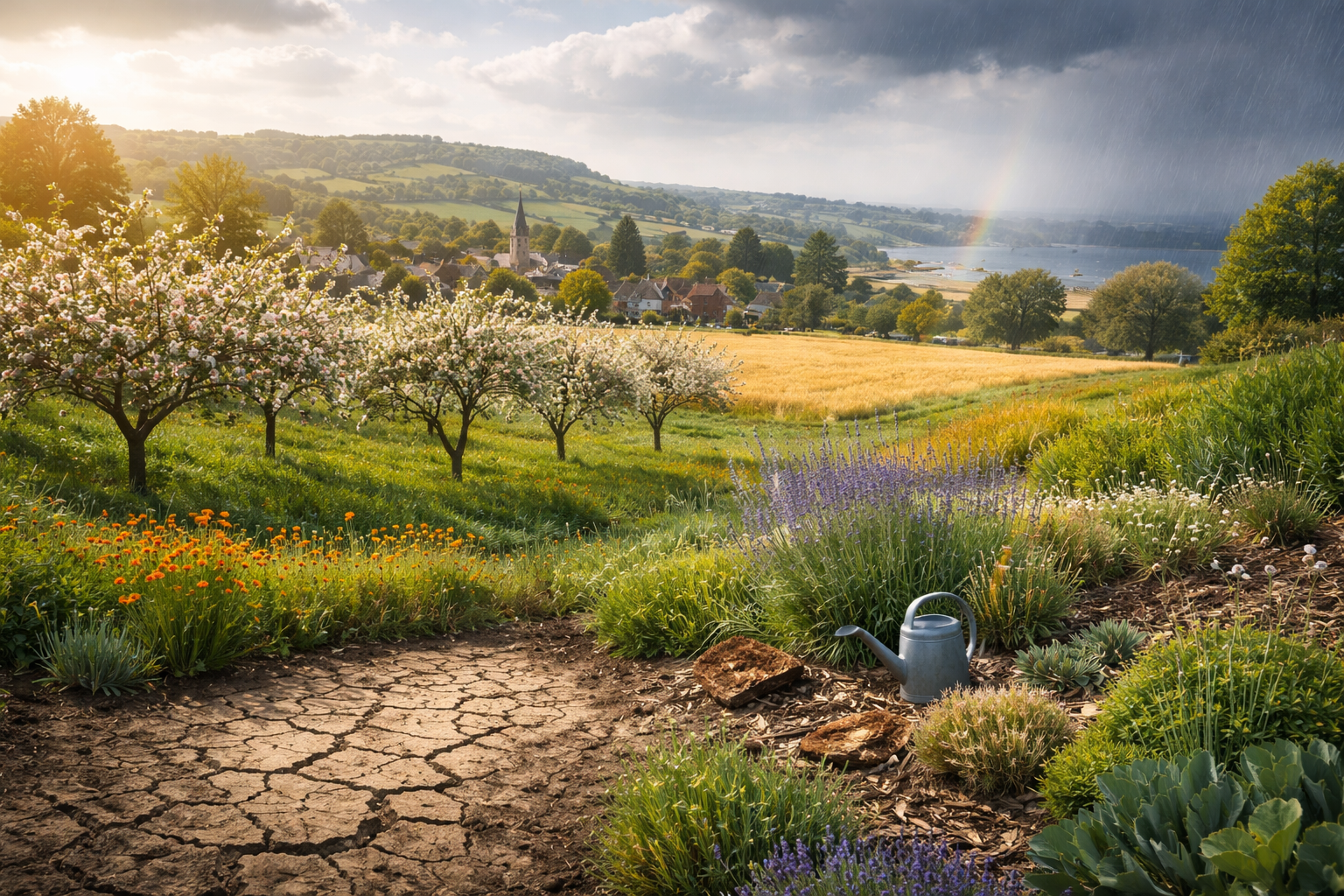
| How Subtle Change Is Quietly Reshaping Our Landscape Climate change is often spoken about in dramatic global terms: melting ice caps, extreme heatwaves, rising seas. Yet for many people, especially in places like Kent, the more noticeable shift is quieter and slower. This is climate drift. Not a sudden disaster, but a gradual, accumulating change that subtly alters how land behaves, how plants grow, and how people interact with the outdoors. Kent has long been shaped by its position between land and sea. Its chalk soils, coastal edges, orchards, and productive farmland have evolved over centuries under relatively predictable seasonal patterns. Climate drift is now nudging those patterns off course. Winters are becoming milder and wetter, summers are trending hotter and drier, and the shoulder seasons are stretching and blurring. Individually, these changes seem manageable. Collectively, they are transformative. One of the clearest signs of climate drift in Kent is seasonal instability. Spring often arrives earlier, but not more reliably. Warm spells in February encourage early growth, only for cold snaps to follow weeks later. Plants break dormancy too soon, lawns surge and stall, and blossoms appear before pollinators are fully active. Autumns linger longer, yet heavy rain arrives in sharper bursts, saturating soil rather than gently replenishing it. Rainfall patterns have changed noticeably. Kent is already one of the driest counties in England, and climate drift is exaggerating this imbalance. Long dry periods are punctuated by intense rainfall events that run off hardened ground instead of soaking in. This leads to surface flooding in towns and villages, compacted soils in gardens, and increased erosion along paths, slopes, and borders. The problem is not just how much rain falls, but how it arrives. Soil health sits at the heart of Kent’s climate drift story. Extended dry spells reduce soil biological activity, while sudden downpours strip away fine particles and nutrients. Compacted ground struggles to absorb water, creating a feedback loop of dryness and runoff. Gardens and green spaces that once needed minimal intervention now require thoughtful soil care to remain resilient. Plant behaviour is shifting too. Traditional favourites that thrived in Kent gardens for decades are showing stress, while others once considered marginal are coping better. Heat-tolerant perennials, Mediterranean shrubs, and deeper-rooted species are increasingly reliable. Meanwhile, shallow-rooted plants and moisture-dependent species need more attention or protection. Climate drift is not eliminating plants outright; it is quietly rearranging what feels “easy” to grow. Wildlife is responding in its own way. Insects are emerging earlier, birds are adjusting breeding times, and some species are extending their range into Kent. Others struggle with mismatches between food availability and life cycles. Gardens and green corridors now play a more important role than ever, acting as stepping stones for wildlife navigating a changing environment. For people, climate drift brings practical challenges rather than headline-grabbing crises. Lawns burn off faster in summer and recover more slowly. Hedges grow unevenly. Weeds thrive in disturbed conditions. Water use becomes a concern, especially during hosepipe bans. Maintenance routines that once followed a steady rhythm now require flexibility and observation. Kent’s towns and villages feel this drift in subtler ways too. Older drainage systems strain under heavy rainfall. Urban heat builds around hard surfaces. Coastal areas are subject to creeping erosion and salt exposure. These are not sudden failures but gradual pressures that accumulate year by year, often noticed only when something stops working as it used to. Adapting to climate drift does not require radical overhauls, but it does demand a shift in mindset. The focus moves from control to resilience. Improving soil structure, reducing compaction, and increasing organic matter help land cope with both drought and deluge. Choosing plants for durability rather than nostalgia builds gardens that evolve gracefully. Allowing space for wildlife supports natural balance and pest control. Climate drift also encourages smaller, smarter interventions. Mulching to retain moisture, planting at the right time rather than the traditional time, and working with natural growth patterns rather than against them. These changes are not about doing more, but about doing things differently. Kent’s identity has always been tied to its land. Climate drift is not erasing that connection, but it is reshaping it. The county’s landscapes are becoming a living lesson in adaptation, showing how gradual environmental change affects everyday life. By paying attention to these quiet shifts, individuals, communities, and businesses can respond early, thoughtfully, and with care. Understanding climate drift helps move the conversation away from distant catastrophe and toward local stewardship. It reminds us that change is already here, unfolding slowly under our feet, and that thoughtful, grounded responses can make a meaningful difference over time. |
Kent Climate Drift
 Earthly Comforts