| In a World That Shouts |




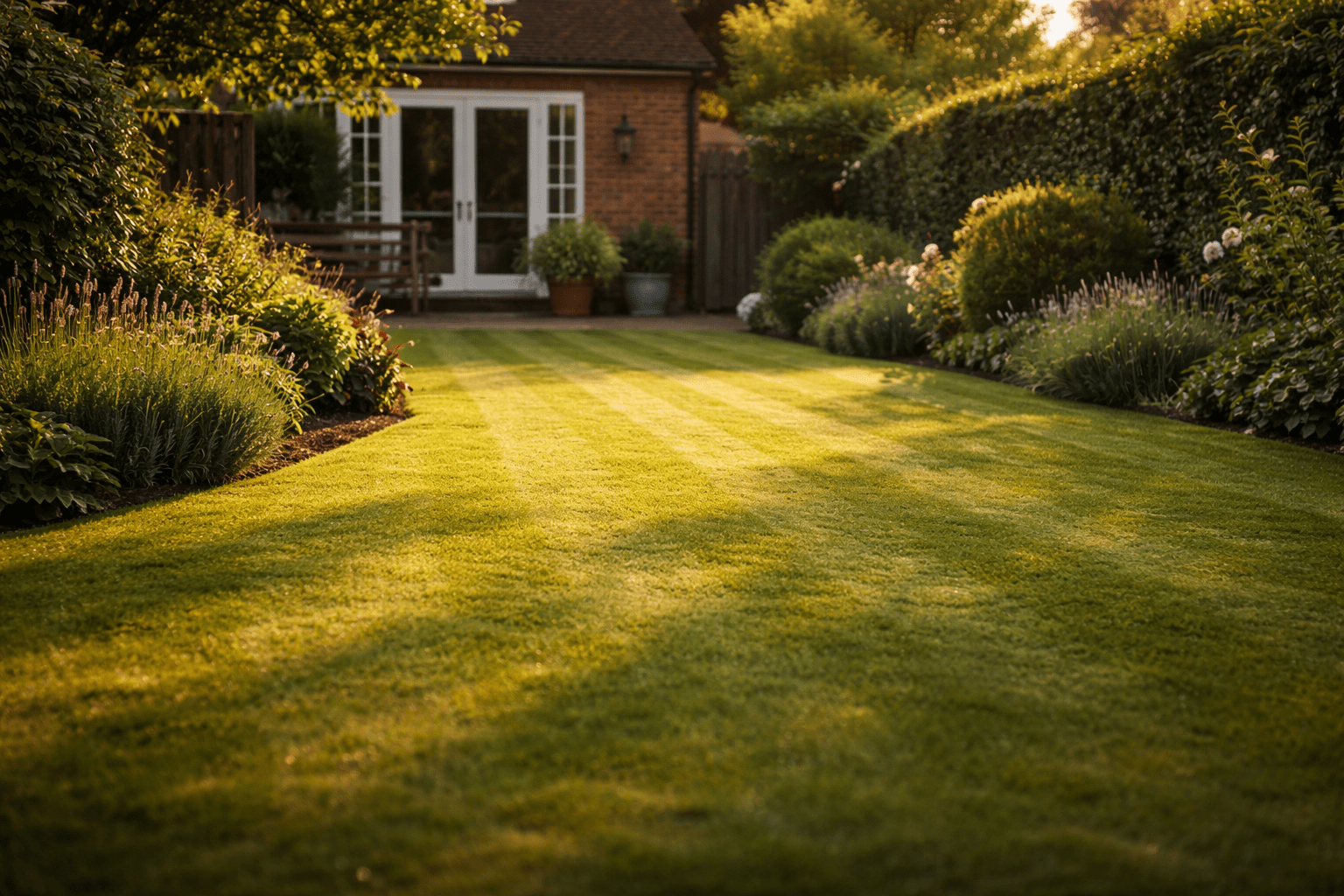
| Only yesterday did I talk about how seemingly crazy advertising has become in the post Have Advertisers Lost the Plot but the question that followed that, was, well, how would Earthly Comforts advertise and how should we advertise? There is a temptation, when looking at modern advertising, to assume that noise equals effectiveness. The louder brands appear confident. The brighter campaigns appear contemporary. The busier the edit, the more “now” it feels. And yet, if you stand still for a moment — properly still — and ask what most homeowners actually want from someone tending their garden, the answer is rarely spectacle. They want steadiness. They want someone who turns up when they say they will. Someone who does not oversell. Someone who does not vanish in August. Someone who does not treat their garden as a showroom or a social media backdrop. They want the quiet reassurance that the space outside their window is in hand. If we were to advertise Earthly Comforts honestly — and intelligently — it would not look like most modern service advertising. It would not lean on gimmickry. It would not invent urgency. It would not show dramatic transformations as though we were rescuing a collapsing estate. It would show something subtler: the atmosphere of a garden that has been consistently cared for. Because that is the real product. Not grass cutting. Not hedge trimming. Not seasonal tidy-ups. The product is a relief. The product is rhythm. The product knows the outside world is in order without you having to think about it. I spent years working in nightclubs and entertainment advertising. It was loud work. It had to be. You were competing for attention against 10 other events that week. Posters screamed. Fonts leaned forward aggressively. You were not whispering; you were pulling people in by the sleeve. Gardening is different. Or at least, it should be. The moment you begin advertising garden care as though it were a nightclub event, something has gone wrong. The tone mismatches the service. The energy mismatches the outcome. A garden is not an adrenaline experience. It is a long conversation over time. So if Earthly Comforts were to advertise in a way that reflects both marketplace logic and our own temperament, we would begin not with volume, but with light. Late-afternoon light. There is something about that time of day that captures the emotional reason people care about their gardens in the first place. It is when they look out of the kitchen window with a cup of tea. It is when they step outside after work and take stock. It is when shadows stretch across a lawn, and the world feels briefly in balance. That is the moment we would advertise The first image in such a campaign would not be a dramatic “before and after”. It would be a modest domestic lawn, freshly cut, with long shadows lying gently across it. Nothing ostentatious. No imported olive trees. No Mediterranean fantasy. Just a well-kept British garden on its own scale. Because most clients do not live in show gardens. They live in ordinary houses with manageable spaces. To advertise something unattainable is to create distance. To advertise something recognisable is to create trust. The second image would move closer. A hedge meets brickwork. A clean line where green meets red. Not obsessively sharp, not sculptural for the sake of it — just neat. There is dignity in a straight edge. There is reassurance in the definition. You see it, and you think: someone has taken care here. This is where marketplace logic becomes subtle rather than brash. Instead of dramatising chaos — overgrown jungles, wild neglect, panic — we dramatise order. Instead of humiliating the homeowner for falling behind, we normalise maintenance. There is no shame in a hedge that needs attention. There is no drama in a lawn that needs cutting. There is work to be done. The third image might show a path in warm light. Swept. Leaves gathered to the margins rather than obsessively erased. The sense is not sterility but balance. That is important. Over-sanitised gardens feel lifeless. Under-managed ones feel anxious. The middle ground is where most people want to live. Advertising too often confuses transformation with value. But in garden care, transformation is rarely the core offering. Most clients are not asking for reinvention. They are asking for consistency. The garden they love needs keeping. That is a quieter sell, but in many ways it is stronger. The fourth image would widen slightly. A border at rest in late summer. Some blooms are fading. Seed heads catching light. Not a competition display. Not hyper-saturated colour. Just seasonal rhythm. This is where we gently challenge a common assumption. Many people think gardening advertising must show perfection — peak bloom, immaculate lines, perpetual summer. But experienced homeowners know gardens are cyclical. They know there are months of exuberance and months of restraint. To pretend otherwise is dishonest. So our imagery would reflect seasonality rather than deny it. It is remarkable how calming honesty can be. The final image would show something symbolic rather than botanical. A gate, softly lit in late afternoon. Closed. Quiet. The implication is simple: the work has been done, and the gardener has left without fuss. That is the story. Not “Look what we built.” Not “Call now before it’s too late.” Not “Limited availability.” Just: the day’s work is complete. If there were words alongside these images, they would be sparse. One line per frame. No more. Something along the lines of “Consistent care.” Or “Attention where it matters.” Or “No drama.” In a feed full of shouting, restraint becomes conspicuous. In a world of exaggerated promises, modest assurance feels premium. There is, of course, a trade-off. Quiet advertising will never attract everyone. It will not appeal to bargain hunters looking for discounts. It will not excite the client looking for spectacle landscaping. But that is precisely the point. Good marketing does not try to please everyone. It filters. When I was promoting events years ago, we knew that if a flyer attracted absolutely everyone, the night would lack identity. The same principle applies here. Earthly Comforts is not trying to be the loudest garden service. It is trying to be the most dependable for a specific kind of homeowner. And that homeowner, more often than not, values steadiness over sparkle. There is another dimension to this. Many of our clients are at a stage where they are beginning to notice the garden feels heavier than it once did. Not dramatically so. Just subtly. The hedge takes longer. The borders feel more effortful. Pride remains, but energy shifts. To advertise aggressively at that demographic would be tone-deaf. The messaging must preserve dignity. The imagery must suggest partnership rather than rescue. No one wants to be portrayed as incapable. They want a hand. That is why late-afternoon reassurance works so well. It mirrors the moment when people quietly assess their space. It acknowledges their attachment to it. It says, “We are here to maintain what you already love.” From a purely strategic perspective, this approach aligns with modern targeting principles without adopting modern noise. We would run such a campaign locally. Hyper-local. Targeted to homeowners within a defined radius. Aged appropriately. With interests aligned to property and home care. The aim would not be mass visibility. It would be recognition. The viewer sees the image and thinks, “That feels like my garden.” Or more accurately, “That feels like the garden I want mine to be.” There is power in familiarity. It is also worth acknowledging limits. Calm advertising requires patience. It may generate fewer immediate enquiries than a bold offer or a dramatic transformation reel. But the enquiries it does generate are likely to be aligned. And alignment matters more than volume. In gardening, as in most crafts, long-term relationships sustain the business. A client who values quiet competence is likely to stay. A client drawn in by spectacle may drift when the novelty fades. So our advertising would not aim to impress. It would aim to reassure. It would not attempt to redefine gardening. It would simply reflect it honestly. In many ways, this is the most canny approach available. Not because it is clever in a flashy sense, but because it understands emotional context. The modern advertising landscape is saturated with urgency. By removing urgency, we create space. By removing noise, we create clarity. And clarity, in the end, is what people pay for. Gardens respond to rhythm. Businesses do too. Earthly Comforts would advertise in the same way it works: steadily, seasonally, without drama. The images you have seen — the lawn in warm light, the hedge line against brick, the swept path, the border at rest, the gate closed at dusk — are not just attractive photographs. They are statements of intent. They say: ” This is what cared-for looks like. And for the right client, that is enough. |
| About our writing & imagery Most articles reflect our real gardening experience and reflection. Some use AI in drafting or research, but never for voice or authority. Featured images may show our photos, original AI-generated visuals, or, where stated, credited images shared by others. All content is shaped and edited by Earthly Comforts, expressing our own views. |
 Earthly Comforts