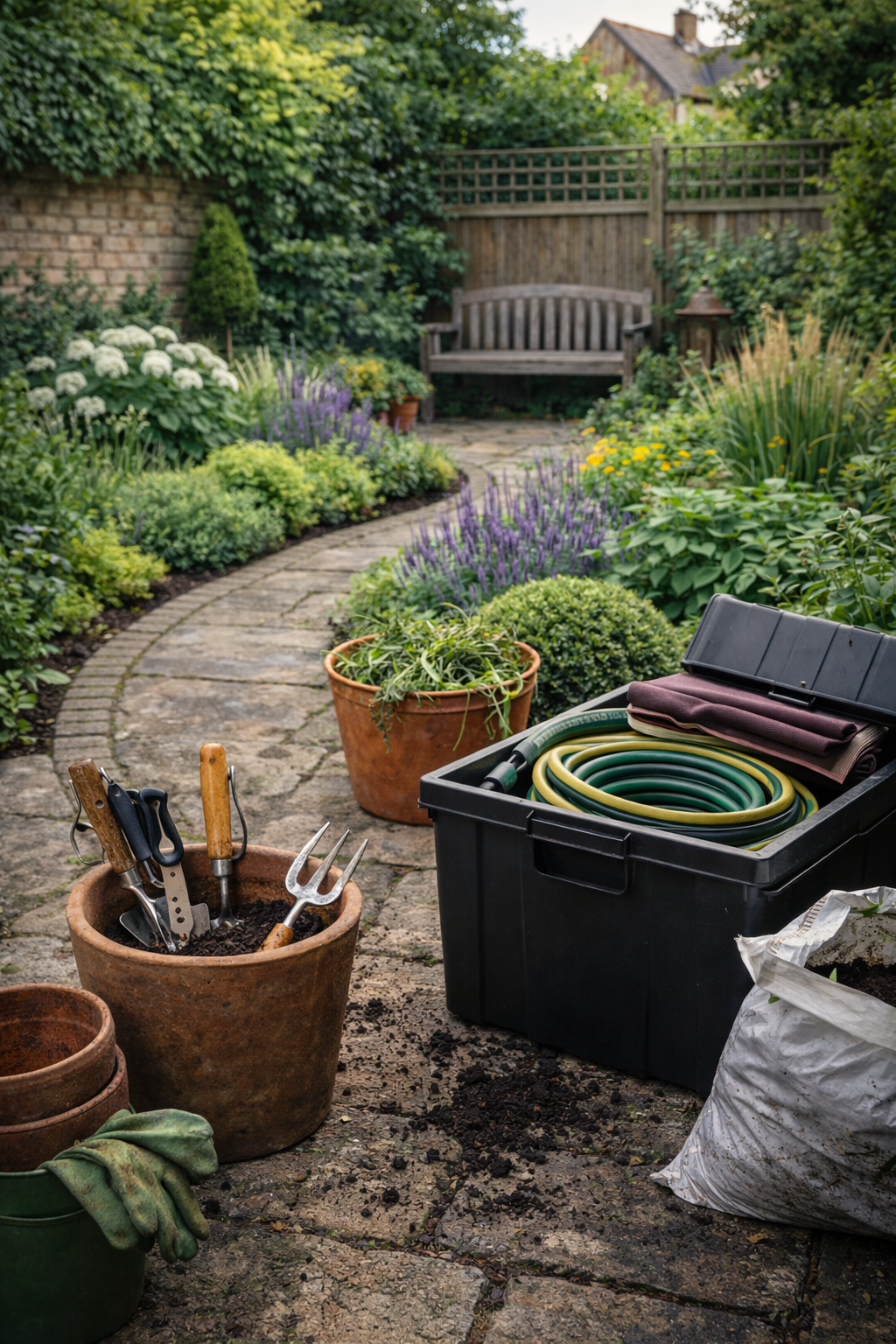
| Part 5 Gardening When Storage Is Limited One of the quiet realities of small gardens is that they rarely come with space to put things. No shed. No side access. No corner where tools, pots, compost bags, and green waste can live without being in the way. Yet many small gardens are still treated as though storage is infinite — as if every problem can be solved by buying something new. Over time, the garden becomes cluttered not with plants, but with things. A small garden works best when it’s designed around what can realistically be stored and managed. Limited storage changes how a garden should be designed. When storage is tight, every object left in the garden matters. Unused pots, spare materials, broken tools, and half-used bags of compost quickly dominate small spaces. They interrupt sightlines, restrict access, and create a feeling of constant incompletion. Gardens designed without considering storage often end up serving clutter rather than the person using them. A small garden that works accepts early on that storage is part of the design, not an afterthought. Fewer tools, chosen well Small gardens don’t benefit from having many tools. They benefit from having the right ones. A handful of reliable, multi-purpose tools — properly maintained and easy to access — will outperform a shed full of rarely used equipment. When tools are simple and familiar, jobs stay small and manageable. The more equipment a garden requires, the more effort it takes just to begin. A well-considered small garden makes it easy to start, not harder. Design out the need for equipment where possible. One of the most effective ways to reduce storage pressure is to reduce the need for tools in the first place. This happens when: Borders are easily reached from paths. Plants are spaced to reduce the need for constant pruning. Ground cover suppresses weeds naturally. Edges are defined and stable. When a garden is designed to behave well, maintenance becomes lighter and less frequent — and the need for equipment shrinks accordingly. A small garden that works doesn’t rely on intervention to stay presentable. Green waste is often the real problem. In many small gardens, green waste creates more stress than tools ever do. Clippings pile up. Bags wait by the door. Temporary solutions become semi-permanent. Without a clear plan, waste begins to dictate how and when gardening happens. Gardens that function well usually have one of three things: Minimal waste generation through careful planting A clear, regular removal routine Or a discreet, well-managed composting solution Without this, even the best-designed garden can feel unmanageable. Storage constraints favour steady maintenance. Limited storage naturally supports a calmer way of gardening. When there’s no room for stockpiling waste or materials, jobs are done little and often. Maintenance becomes lighter, more regular, and less disruptive. Problems are addressed early, before they require big interventions. This rhythm suits small gardens. It keeps spaces usable and prevents work from spilling over into living areas. Steady care works better than bursts of effort when space is tight. A garden should fit the life around it. Perhaps the most important point is this: a small garden doesn’t exist in isolation. It sits alongside daily life, shared access, neighbours, and limited space indoors. A garden that demands constant storage, setup, and clearing becomes a burden rather than a pleasure. A small garden done properly fits quietly into life. It asks little, gives back steadily, and doesn’t require a separate infrastructure to function. In the next post, I’ll look at how to make a small garden feel calm rather than busy — and why simplicity in layout, colour, and repetition matters more than scale. Because the best small gardens aren’t supported by storage. They’re supported by good decisions. |
The Small Garden
 Earthly Comforts