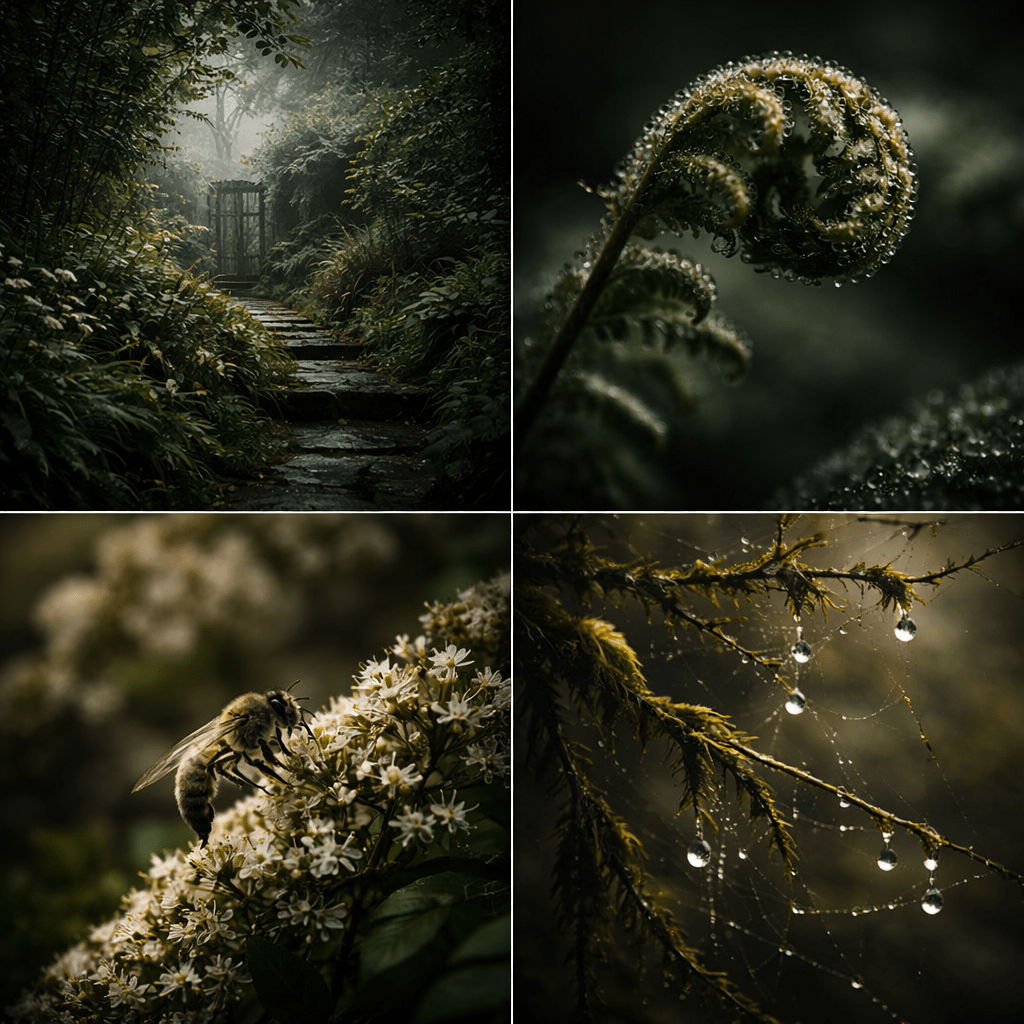
| From time to time, someone asks why we use AI-generated imagery on our website and in our writing. The question is usually polite, sometimes curious, occasionally sceptical. It’s a fair question. Gardening is tactile, soil-under-the-nails work. Why introduce something digital into something so rooted in the physical? The simple answer is this: we don’t “sometimes” use AI imagery. We mostly use it. Roughly speaking, around 75% of the images that accompany our writing are AI-generated. About 15% are our own photographs, taken in the course of real work. Around 10% come from libraries such as Pixabay, where appropriate. That balance is deliberate. It has grown from practice rather than theory. Earthly Comforts is not a nostalgic enterprise pretending the modern world does not exist. We maintain gardens today, and today includes digital tools. We use battery mowers, soil analysis apps, accounting software, and mapping tools. AI imagery sits within that ecosystem. It is simply another instrument — not a replacement for experience, but an extension of how we communicate it. |
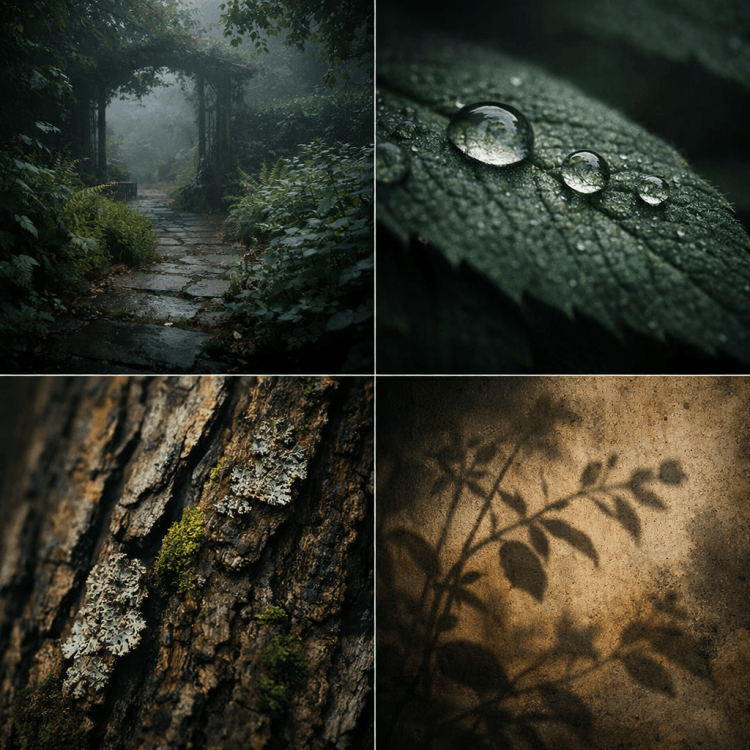
| Privacy and the nature of domestic gardens Most of the gardens we care for are private, lived-in spaces. They are not show gardens or public parks. They belong to individuals and families who value discretion. In a town like Sandwich, layouts are recognisable. A certain brick wall, a particular roofline, the angle of a path — these details can identify a property far more easily than people imagine. Legally, one can often photograph a garden without issue. Practically and relationally, it is not always so straightforward. A garden reflects income, taste, vulnerability, sometimes even routine. I would rather err on the side of restraint than discover, too late, that someone felt exposed. We do occasionally photograph our work, and when we do, we ask. That conversation matters more than the image itself. But asking every week, in every garden, for every small detail becomes performative. It shifts the atmosphere from quiet care to content gathering. I would rather spend that energy properly pruning a rose. AI imagery lets us illustrate ideas without borrowing someone’s private space. Atmosphere over documentation Another reason is tone. Much of our writing is reflective rather than promotional. We are not primarily producing before-and-after showcases. We are writing about soil health, restraint in pruning, the way gardens change at dusk, and the patience required to let a hedge thicken over years rather than weeks. Stock libraries are useful, but they tend towards the bright, the cheerful, the generic. There is nothing wrong with that, yet it does not always sit comfortably alongside a quieter, more observational voice. When you rely heavily on stock imagery, you inherit the aesthetic of whoever uploaded it. With AI, we can shape the mood to suit the piece. If we are writing about winter structure, the image can feel spare and low-lit. If we are exploring texture, we can focus on bark or leaf surfaces without implying they belong to a particular client. It becomes conceptual rather than documentary. Some assume AI imagery is about spectacle. In our case, it is usually about restraint. It allows us to avoid showing too much. |
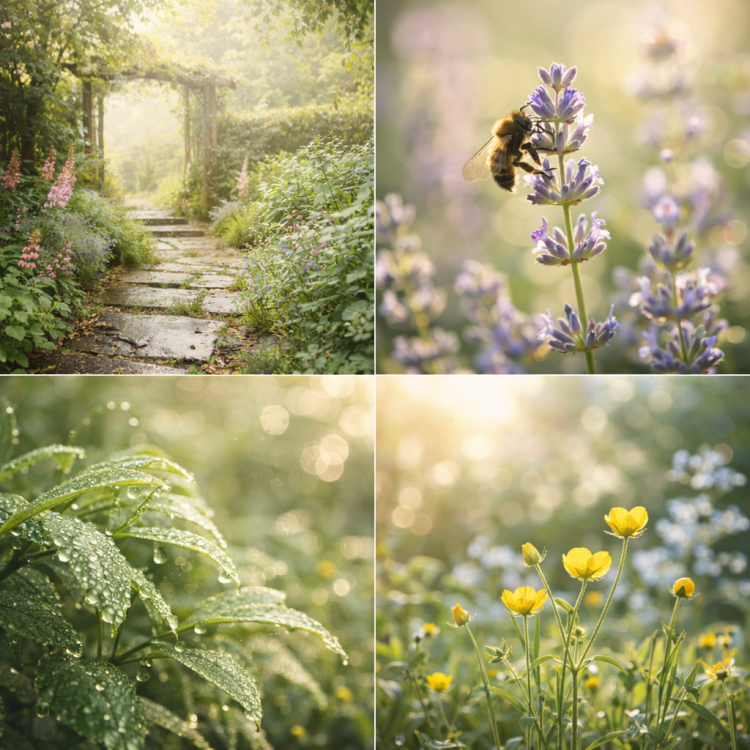
| Originality and repetition There is also the matter of repetition. Stock images circulate widely. The same photograph of a lavender border can appear on a hundred websites. Over time, that flattens distinctiveness. Gardening already suffers from a certain sameness online — identical advice, identical planting schemes, identical imagery. If we are going to write something considered, I prefer the visual companion to feel equally intentional. AI enables us to create imagery that has not been used elsewhere. It does not mean it is superior. It simply means it is ours to shape. We still use our own photography, which adds an honest, uncontrived element. A tool resting against a shed, a newly cut edge, the texture of compost after rain — those moments carry the weight of real work. But we choose them sparingly. Too much self-documentation turns into performance. The ethics of “free” imagery Pixabay and similar platforms have their place. We use them occasionally, around 10% of the time. Yet the idea of “free” imagery has become more complicated. Creators increasingly want proper credit or compensation, and rightly so. The cultural landscape has shifted. AI imagery sidesteps some of that ambiguity. It is not lifted from a photographer’s portfolio. It is generated in response to a prompt. We are open about that. There is no pretence that it is a literal photograph of a client’s garden. It is an illustration of an idea. Some argue that using AI undermines artists. I understand the concern. But the reality is more nuanced. Tools evolve. Photography once unsettled painters. Digital cameras unsettled film. Battery tools unsettled petrol. The question is not whether a tool exists, but how it is used. We use AI imagery in the service of clarity and discretion, not to replace human craft. |
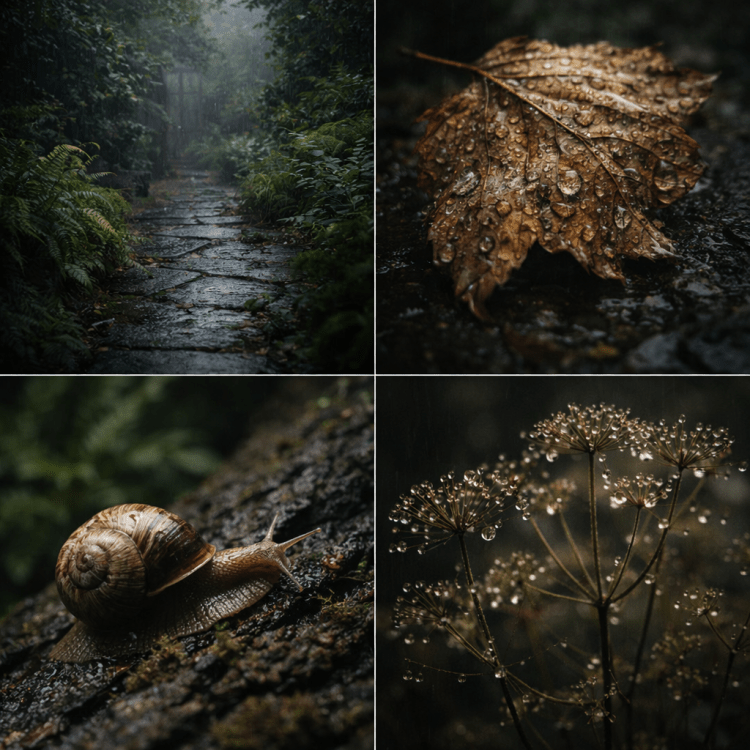
| Embracing technology without abandoning soil There is a quiet myth in horticulture that authenticity requires technological reluctance. As if using modern tools somehow weakens one’s credibility with plants. I do not recognise that binary. Good gardening is about observation, timing, and care. None of those qualities is threatened by using digital tools to communicate. In fact, clarity often improves trust. By stating plainly that most of our imagery is AI-generated, we remove ambiguity. Readers know what they are looking at. Clients know we will not display their property without their consent. The relationship remains intact. The trade-off is that an AI image is not a real moment in a real garden. It does not carry the smell of damp soil or the memory of a difficult afternoon of hedge cutting. But it does allow us to speak freely about ideas without entangling them with someone else’s domestic space. That, for us, is a worthwhile exchange. A considered balance Our current balance — roughly 15% our own photography, 10% curated from open libraries, and the majority AI-generated — is not ideological. It is practical. It reflects the kind of business we are: discreet, thoughtful, open to modern tools, and careful with other people’s spaces. If one day that balance shifts, it will do so because our practice shifts. The proportions are less important than the intention behind them. We maintain gardens with care. We write about them with care. And we illustrate those reflections in a way that respects both the craft and the privacy of those who invite us into their spaces. AI imagery is not a shortcut for us. It is a tool that allows us to remain aligned with our values while communicating clearly in a digital world. |
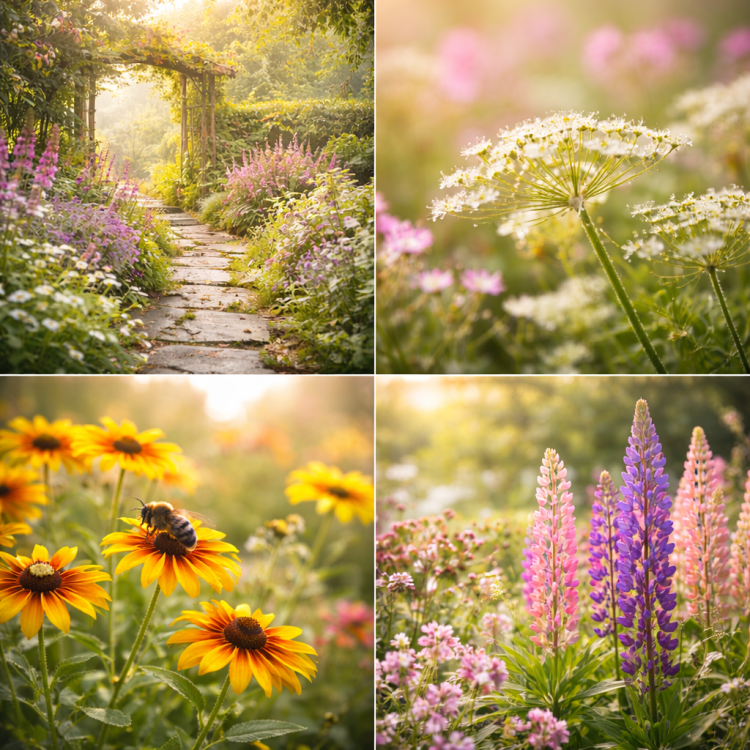
| About our writing & imagery Most articles reflect our real gardening experience and reflection. Some use AI in drafting or research, but never for voice or authority. Featured images may show our photos, original AI-generated visuals, or, where stated, credited images shared by others. All content is shaped and edited by Earthly Comforts, expressing our own views. |
 Earthly Comforts