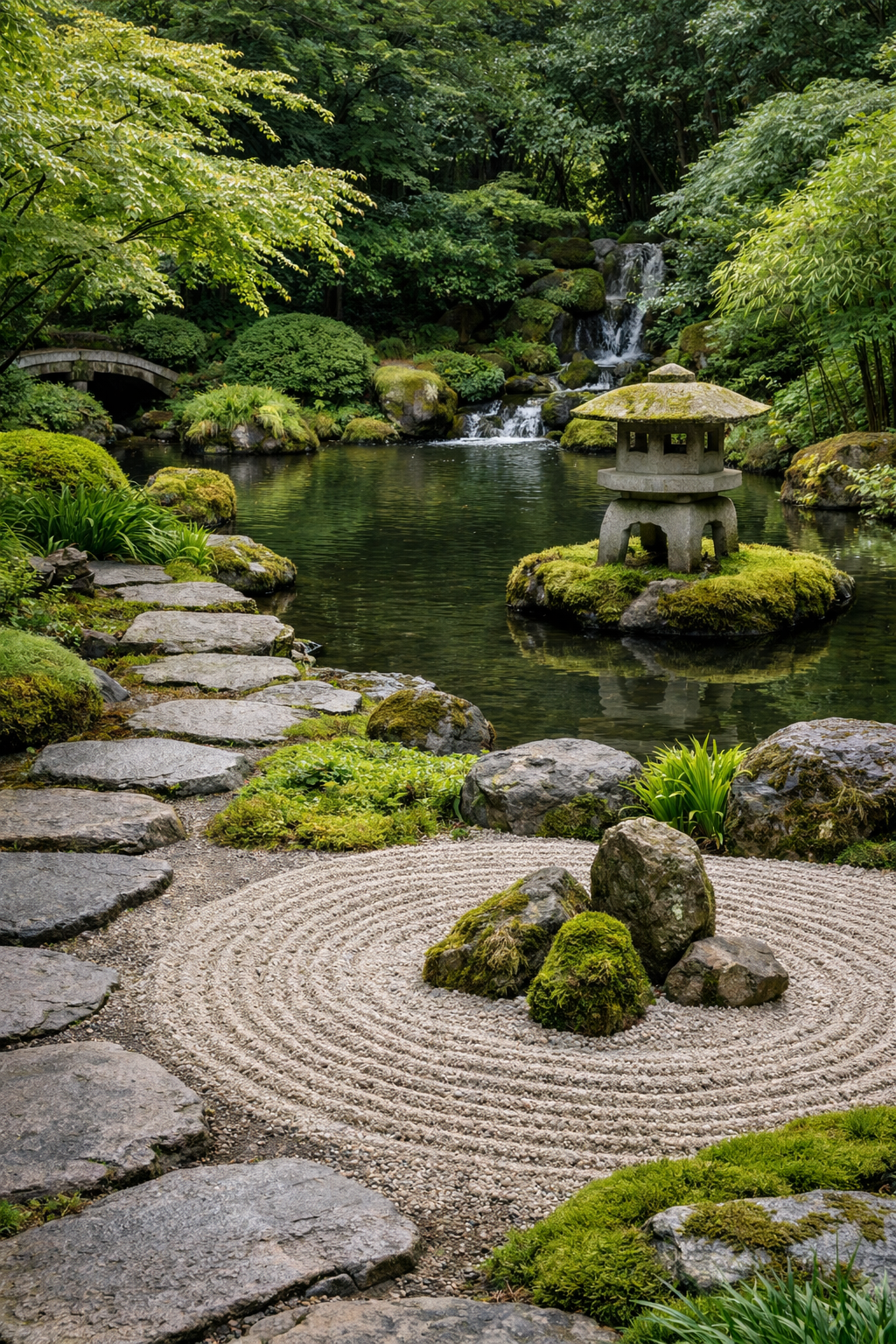
| Designing with Balance, Restraint, and Meaning Japanese gardens are often admired for their quiet beauty, but what truly sets them apart is not decoration or the rarity of plants. At their heart, Japanese gardens are guided by principles that shape how space, nature, and the human mind interact. These principles create gardens that feel peaceful, intentional, and timeless, regardless of size. Rather than trying to impress, a Japanese garden aims to reveal. It invites stillness, reflection, and an awareness of natural rhythms. Whether applied to a large landscape or a small courtyard, these principles can transform how we think about garden design altogether. Harmony with Nature, Not Control Over It One of the most important ideas behind Japanese garden design is working with nature rather than overpowering it. The garden is not a stage set, but a living system that changes with the seasons, the weather, and the passage of time. Plants are chosen for how they grow naturally, not how they can be forced into shape. This respect for nature often means allowing imperfections: moss creeping where it chooses, stones weathering unevenly, leaves falling and decomposing. These elements are not flaws but signs of life. A Japanese garden does not aim to look “finished”; it aims to feel alive. Asymmetry and Natural Balance Unlike many Western gardens that rely on symmetry and straight lines, Japanese gardens favour asymmetry. Balance is achieved not through mirroring but through visual weight. A large stone may be balanced by an open space. A dense planting might be offset by water or gravel. This asymmetry mirrors nature itself, where perfect symmetry is rare. The result feels more relaxed and organic, encouraging the eye to wander slowly rather than being drawn to a single focal point. Simplicity and Restraint Less is not just more in Japanese garden design; less is essential. Every element must earn its place. If something does not contribute to the garden’s feeling or story, it is removed. This restraint applies to plant choice, materials, and ornamentation. Colour palettes are often limited. Hard landscaping is subtle. There is space to breathe. This simplicity allows the mind to settle and notice small details: the texture of bark, the sound of water, the movement of shadow. The Power of Empty Space Empty space is not wasted space in a Japanese garden. Known as ma, this concept recognises that absence can be as powerful as presence. Open gravel areas, raked sand, or uncluttered ground give the garden rhythm and clarity. These spaces provide contrast, allowing surrounding elements to stand out more clearly. They also create a sense of calm, giving the eye and the mind a place to rest. Symbolism and Suggestion Japanese gardens rarely present things literally. Instead, they suggest miniature landscapes on a larger scale. A group of rocks may represent mountains. Raked gravel may stand in for flowing water. A single tree can imply an entire forest. This symbolic approach encourages imagination and contemplation. The garden becomes something to engage with mentally, not just visually. Even small gardens can feel expansive when symbolism is used thoughtfully. A Journey, Not a View Many Japanese gardens are designed to be experienced as a journey rather than observed all at once. Paths curve and reveal views gradually. Screens of planting or walls hide what lies ahead. Each step offers a slightly different perspective. This sense of movement slows the visitor down. It discourages rushing and encourages mindfulness. Even in a small space, subtle changes in height, texture, or planting can create this feeling of progression. Seasonal Awareness Japanese gardens are deeply attuned to the seasons. They are not designed to look the same year-round. Spring blossoms, summer greens, autumn colour, and winter structure all have equal importance. Plants are chosen for their seasonal moments, but also for what they offer when those moments pass. Bare branches, seed heads, and evergreen forms ensure the garden remains meaningful even in dormancy. Materials That Age Gracefully Stone, wood, bamboo, and gravel are favoured materials because they weather well. Age is not hidden; it is celebrated. Lichen on stone, faded timber, and softened edges add depth and authenticity. This acceptance of ageing reflects a broader philosophy that values transience and impermanence. A Japanese garden grows more beautiful with time, not less. Human Presence Without Dominance While Japanese gardens are designed for people, they never place humans at the centre. Seating, paths, and viewpoints are subtle and integrated. There is no sense that the garden exists to be conquered or reshaped constantly. Instead, the visitor becomes part of the landscape, passing through it briefly. This humility fosters a deeper respect for nature and a quieter way of being within it. Applying Japanese Principles to Modern Gardens You do not need a traditional Japanese garden to apply these ideas. Any garden can benefit from restraint, thoughtful balance, seasonal awareness, and respect for natural forms. Reducing clutter, softening lines, and allowing space can dramatically change how a garden feels. At its core, Japanese garden design is less about copying a style and more about adopting a mindset. It asks us to slow down, observe closely, and design with intention. In a busy world, these principles offer not just aesthetic guidance but a gentler way of interacting with the spaces we tend. |
Japanese Garden Principles
 Earthly Comforts