| When Hydrangeas Have Too Much Water |
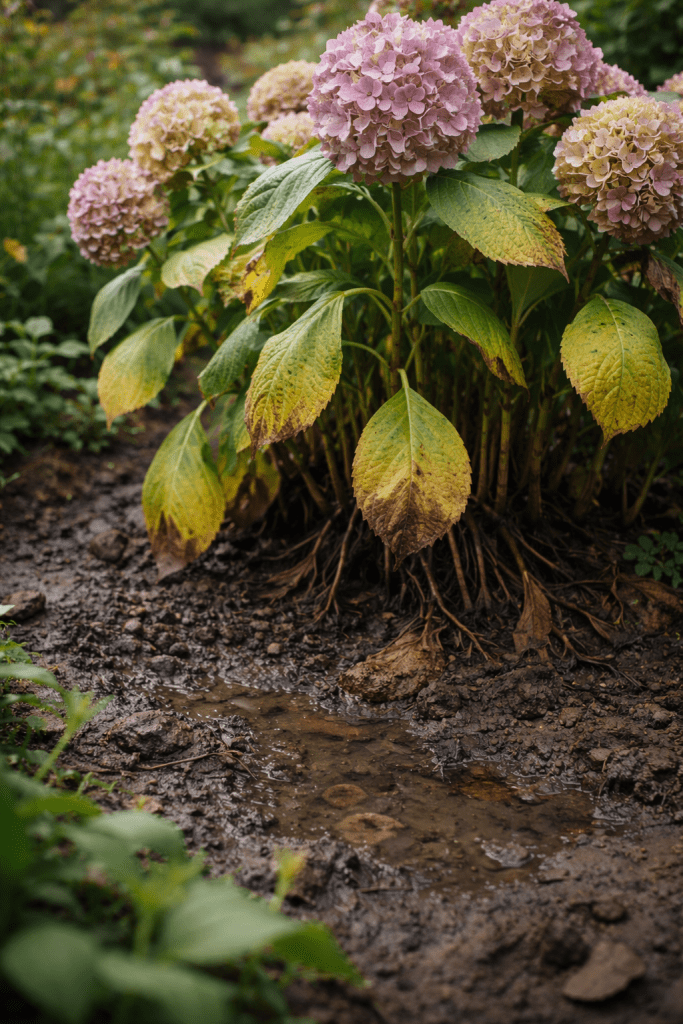
| Hydrangeas are often described as thirsty plants, and in many respects, they are. Anyone who has watched a mophead droop theatrically in July heat will know how quickly they signal distress. But there is a quiet misunderstanding woven into that reputation. Thirsty does not mean waterlogged. In fact, in much of the UK, especially on heavier soils, hydrangeas are more likely to suffer from excess water than from drought. I garden on clay. Proper clay. The sort that holds a footprint for days and cracks like old pottery in August. In winter and early spring, it behaves like a shallow bowl, slow to release what the sky delivers. Hydrangeas planted into such ground can look content for years and then, after a particularly wet season, begin to falter in ways that are easily misread. The first sign is often yellowing leaves low down on the plant. It is tempting to respond with more water, assuming the plant is hungry or parched. But if the soil feels cool and heavy beneath the surface, the issue is rarely thirst. Roots require oxygen as much as moisture. When soil pores are filled with water, air is excluded. Roots then struggle not because they lack water, but because they lack breath. Another observation, less obvious but more telling, is the quality of the growth. In overwatered conditions, hydrangeas may produce soft, sappy stems that lack resilience. The foliage appears lush but not robust. Flowers are smaller or fewer, as the plant diverts its energy into coping rather than flourishing. It is a subtle decline rather than a dramatic collapse. Container-grown hydrangeas present their own version of this problem. Pots offer control, but only if drainage is respected. A saucer that never quite empties, compost that has compacted over time, or a decorative outer pot without holes can quietly undo a plant that otherwise receives attentive care. The compost may look dry at the surface yet remain saturated beneath. In such cases, watering becomes an act of kindness that causes harm. It is worth gently challenging the common advice to “keep hydrangeas well watered” as though it were a universal instruction. Context matters. A hydrangea in sandy soil in Sussex will require a different care rhythm from one in Kentish clay or a London courtyard pot. The plant’s needs are not abstract; they are relational, tied to soil structure, rainfall patterns, and aspect. In practice, the solution is rarely to water more or less, but to think about structure. Improving soil with compost does more than feed the plant; it creates air pockets and better drainage. Planting slightly proud of heavy ground, rather than flush with it, can prevent winter saturation around the crown. Mulching, sensibly applied, moderates extremes without sealing the surface. Hydrangeas are generous plants. They forgive much and reward patience. But they are not aquatic. They ask for balance: moisture held in living soil that can both retain and release. As gardeners, our task is not to quench a perpetual thirst, but to understand the quiet equilibrium beneath the surface, where roots seek both water and air in equal measure. |
| About our writing & imagery Most articles reflect our real gardening experience and reflection. Some use AI in drafting or research, but never for voice or authority. Featured images may show our photos, original AI-generated visuals, or, where stated, credited images shared by others. All content is shaped and edited by Earthly Comforts, expressing our own views. |
 Earthly Comforts