
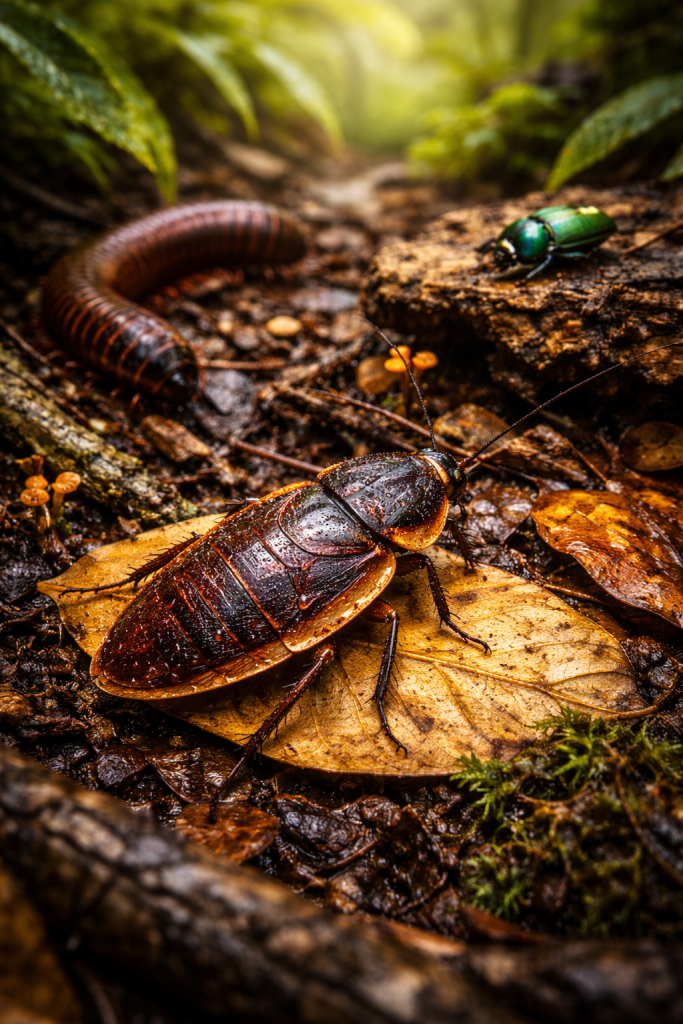
| Cockroaches cured me of ranking insects. In Malaysia, they were impossible to avoid — large, fast, glossy, and utterly unimpressed by human opinion. Some flew. Some didn’t. Some announced themselves with a frantic scramble; others appeared without warning, already present, already established. They weren’t shy, and they certainly weren’t apologetic. At first, I recoiled like everyone else. Cockroaches carry cultural weight far heavier than their bodies can bear. They are shorthand for dirt, decay, and neglect — a reputation built more on discomfort than understanding. But living in Malaysia quickly dismantled that story. These were not the small, furtive creatures of kitchen corners. Some were enormous. Heavy-bodied. Armoured. They lived in leaf litter, rotting wood, drains, palm debris — places rich with breakdown and renewal. They were not invaders of human space so much as reminders that humans had built into theirs. And once you watch something long enough, disgust loses its grip. Cockroaches are engineers. Recyclers. They process what other creatures won’t touch. In the tropics, where decay happens fast and relentlessly, that role is not optional — it is essential. Without them, waste would accumulate, nutrients would stall, systems would clog. Alongside them were other unloved marvels: millipedes moving with slow certainty through damp ground; beetles shaped like polished tools; insects that did not ask to be admired and had no interest in pleasing anyone. None of them was decorative. All of them were effective. Malaysia taught me that ecosystems don’t reward charisma. They reward function. The insects people hate most are often the ones doing the hardest work — in darkness, in rot, in places most of us refuse to look. Cockroaches thrive not because they are filthy, but because they are adaptable. They survive floods, heat, scarcity, and disturbance with a resilience that borders on indifference. As a gardener now, I see them differently — not necessarily in my house, but in the soil, the compost, the hidden layers beneath mulch and debris. Life there is not pretty. It is necessary. Behind the spade, I’ve learned that revulsion is rarely ecological. It’s emotional. We dislike what reminds us that we are temporary, that decay is inevitable, that control is an illusion. Cockroaches do not pretend otherwise. They are not here to charm. They are here to endure. And in a world as vibrant, chaotic, and demanding as Malaysia, endurance is not a flaw — it is a masterpiece. Sometimes, the most important creatures in a system are the ones we refuse to thank. |
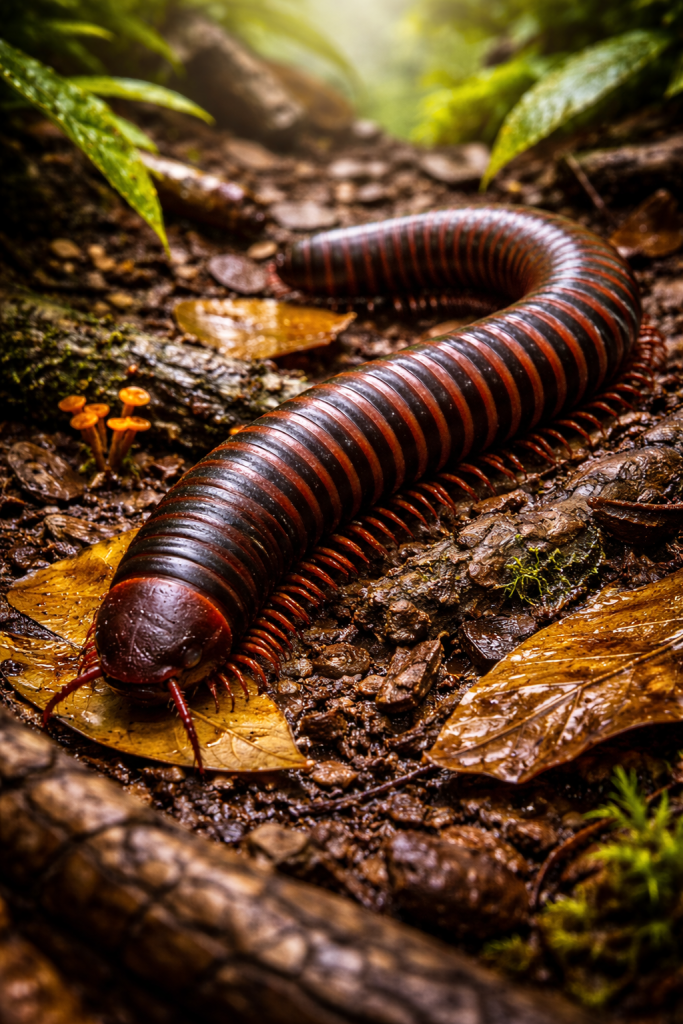
| 7 True Facts About Cockroaches Cockroaches are ancient insects. They have existed for hundreds of millions of years, surviving mass extinctions that wiped out far larger creatures. Most cockroach species do not live in houses. The majority live outdoors in forests, leaf litter, and soil, playing natural ecological roles. Cockroaches are powerful decomposers. They break down decaying plant matter, helping return nutrients to the soil. They can survive on very little food. Cockroaches are highly efficient, able to live for long periods on minimal resources. Some species can fly short distances. Flying cockroaches are common in tropical regions, even though many species prefer to run. They are extremely sensitive to vibration and air movement This makes them hard to catch and very quick to escape perceived danger. Cockroaches thrive in warm, humid environments. Tropical climates provide ideal conditions for their survival and diversity. 7 True Facts About Millipedes Millipedes are not insects. They are arthropods, more closely related to centipedes than to insects. They are slow-moving decomposers. Millipedes feed mainly on decaying leaves, wood, and plant matter. They have many legs — but not a thousand Despite their name, most species have between 30 and 400 legs. Millipedes curl into a spiral when threatened This posture protects their softer underside and vital organs. Some species release defensive chemicals. These substances can smell unpleasant or irritate skin, but are not deadly to humans. They prefer dark, damp environments. Millipedes thrive under logs, stones, mulch, and leaf litter. Millipedes play a key role in soil formation. By breaking down organic matter, they improve soil structure and fertility. 1 Shared Ecological Truth Both cockroaches and millipedes are essential recyclers They process organic waste that few other creatures can handle, quietly sustaining healthy ecosystems from the ground up. |
 Earthly Comforts