
| A Seven-Part Exploration of Resilience, Climate, and the Future of Earthly Comforts |
| Part III — Micro Gardening as Climate Infrastructure |
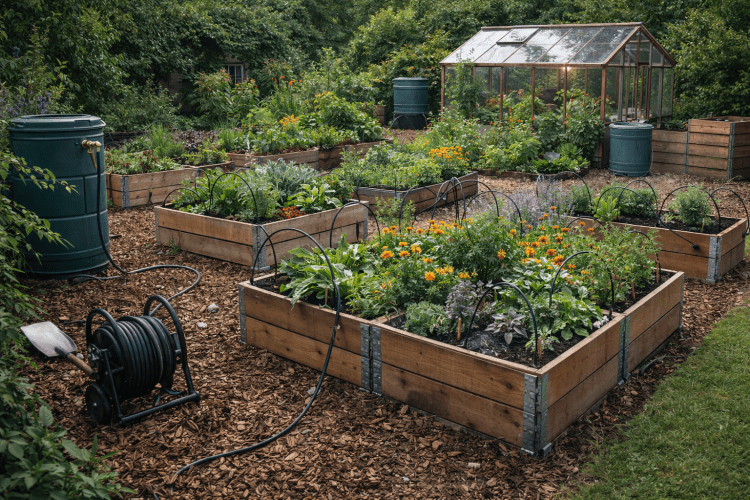
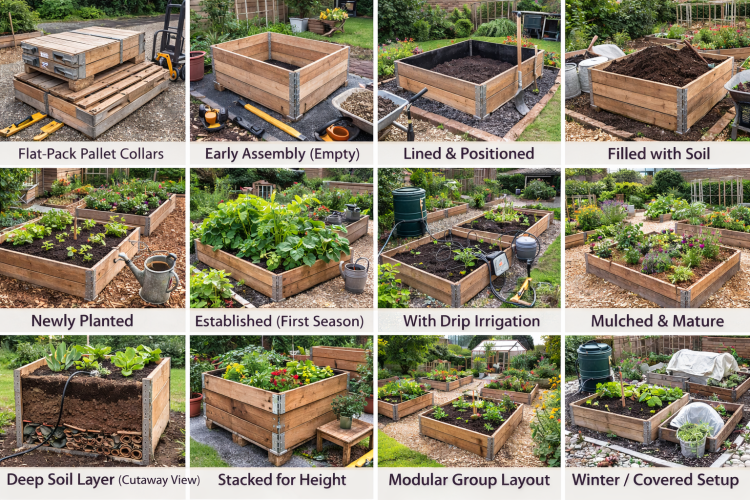
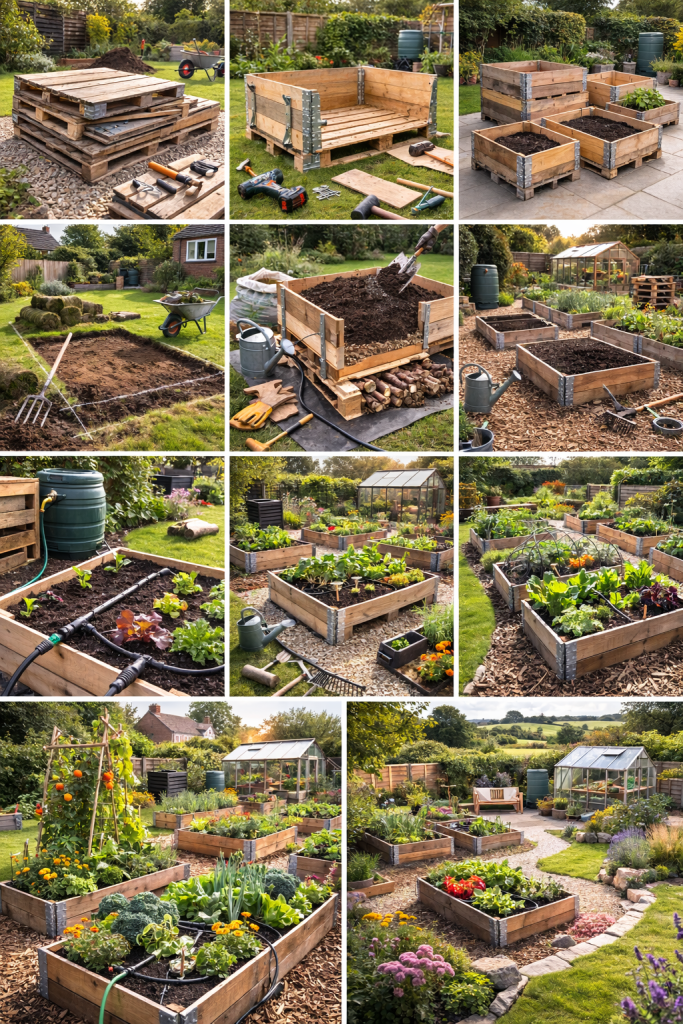
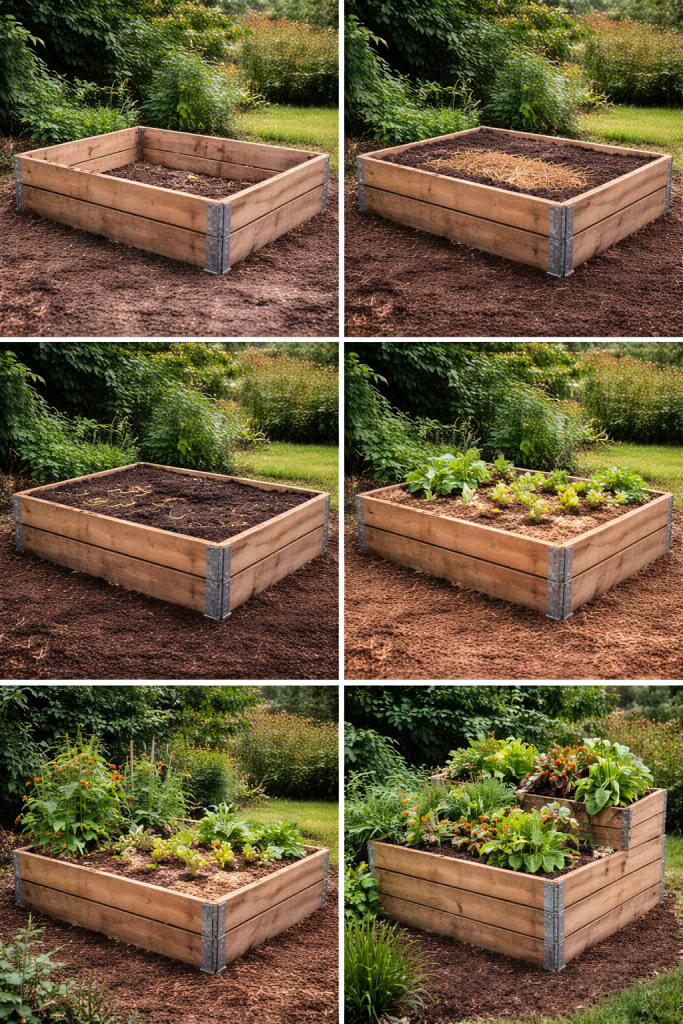
| Pallet collars, containment, and modular adaptation In the previous parts of this series, we examined the instability introduced by climate volatility and the gradual erosion of lawn-first service models. This third part turns to something more structural and practical: the role of micro-gardening systems — particularly pallet collars and raised modular beds — as forms of domestic climate infrastructure. The language of infrastructure may seem disproportionate when applied to a timber frame measuring little more than a square metre. Yet, at its core, infrastructure concerns systems that stabilise function under pressure. In a volatile climate, gardens require stabilising elements just as much as cities do. Modular raised systems provide one such element. They allow control over soil, water, and plant selection in ways that broad expanses of turf do not. Traditional lawns are efficient under stable weather patterns. They are visually coherent, mechanically straightforward to maintain, and culturally familiar. However, they are also single-surface systems. When drought occurs, the entire lawn responds. When heavy rain saturates the soil, the entire area becomes vulnerable to compaction. Disease and stress spread across continuous root zones without interruption. In business terms, lawns concentrate exposure. Micro systems operate differently. A pallet collar raised bed isolates a defined soil volume. The soil composition can be engineered. Organic matter levels can be increased deliberately. Drainage can be improved through layering. Mulch can be applied at depth without affecting the surrounding ground. Irrigation can be delivered precisely to root zones. If stress or failure occurs within one unit, it remains contained rather than spreading across the entire landscape. This containment is not merely aesthetic. It represents risk distribution at the scale of the garden. In finance, diversification reduces volatility by spreading exposure across assets that respond differently to external shocks. In horticulture, modular beds distribute biological and environmental risk across discrete zones. One bed may struggle in a dry spell, while another, planted differently or positioned more favourably, continues to perform. The impact of extreme weather is moderated rather than amplified. Soil control is central to this argument. Climate instability increasingly manifests through soil stress. Extended rainfall reduces oxygen availability, compacts structure, and leaches nutrients. Prolonged drought reduces microbial activity and can create hydrophobic surface layers. Traditional in-ground beds depend heavily on underlying soil conditions, which may take time to recover after extreme events. Raised systems allow for faster intervention. Soil blends can be adjusted seasonally. Organic inputs can be increased without reworking large areas. Recovery is more manageable because the volume of soil involved is smaller and contained. Water management further strengthens the case for modularity. Under drought conditions, irrigation efficiency becomes critical. Delivering water to broad turf areas is inherently less precise than delivering it to contained beds. Drip systems can be installed within pallet collars at relatively low cost and with minimal disruption. Water is directed to root zones rather than lost to evaporation or runoff. The total volume required to sustain a contained bed is significantly lower than that required to maintain a comparable area of turf in peak summer conditions. Conversely, during periods of heavy rainfall, raised beds benefit from elevation and improved drainage. While no system is immune to prolonged saturation, elevation reduces the duration of waterlogging. Soil structure within the bed is less likely to be compacted by foot traffic or machinery because access can be managed carefully. In this sense, micro systems function as adaptable platforms within the broader garden, able to cope with both drought and excessive rain more flexibly than uniform turf. There is also a human dimension to modular systems that should not be underestimated. Large-scale garden redesigns can feel daunting to clients. They require a financial commitment and convey a sense of permanence. A pallet collar installation, by contrast, is incremental. It represents a defined and manageable intervention. Clients can experiment without dismantling the entire landscape. This incremental approach lowers resistance to adaptation. Change becomes evolutionary rather than disruptive. From a business perspective, micro systems also create opportunities for skill development and internal training. Contained beds provide controlled environments for testing soil blends, mulch depths, plant varieties, and irrigation strategies. Mistakes remain localised and recoverable. For a gardening team adapting to climate uncertainty, such contained experimentation builds competence and confidence. Over time, these small trials generate site-specific knowledge that strengthens advisory credibility. The economic implications differ from those associated with lawn maintenance. Turf provides recurring income tied to growth cycles. Modular installations generate project-based revenue, followed by stewardship contracts tied to plant health and soil management rather than cutting frequency. This shifts the emphasis from mechanical repetition to ecological oversight. The value proposition evolves accordingly. Clients are not paying for visible trimming alone; they are investing in controlled systems designed to perform under variable conditions. It is important to recognise the limitations. Raised systems require materials and periodic maintenance. Timber degrades. Soil must be replenished. Installation is labour-intensive compared to mowing. Over-scaling without planning can strain capacity. Modular systems do not replace broader ecological planting or eliminate the need for lawn where it serves a function. They are not a universal solution. However, within a resilience framework, they offer a structural complement to traditional garden elements. By introducing containment, control, and adaptability at a small scale, micro systems reduce overall exposure to climate volatility. They enable more precise water use, more responsive soil management, and more deliberate planting strategies. When viewed collectively across multiple properties, the effect becomes more significant. A distributed network of small, well-managed beds functions as a decentralised infrastructure. Each unit stores moisture, supports biodiversity, and allows controlled experimentation. The cumulative impact may be modest individually but meaningful in aggregate. For Earthly Comforts, the strategic relevance is clear. Micro gardening does not require abandoning established services. It requires layering modular systems where appropriate, particularly in underused utility spaces already present within the client base. These installations reduce dependence on turf performance while expanding the scope of climate-aware stewardship. Resilience is rarely achieved through grand gestures. It emerges from incremental structural adjustments that redistribute risk and increase control. Pallet collar systems, modest though they appear, represent one such adjustment. They transform sections of garden space from exposed surface into managed infrastructure. In the next part of this series, we turn from physical systems to financial architecture, examining how diversification and service layering translate these structural adaptations into economic stability for a small gardening business operating within an increasingly unpredictable climate. |
| About our writing & imagery Most articles reflect our real gardening experience and reflection. Some use AI in drafting or research, but never for voice or authority. Featured images may show our photos, original AI-generated visuals, or, where stated, credited images shared by others. All content is shaped and edited by Earthly Comforts, expressing our own views. |
 Earthly Comforts