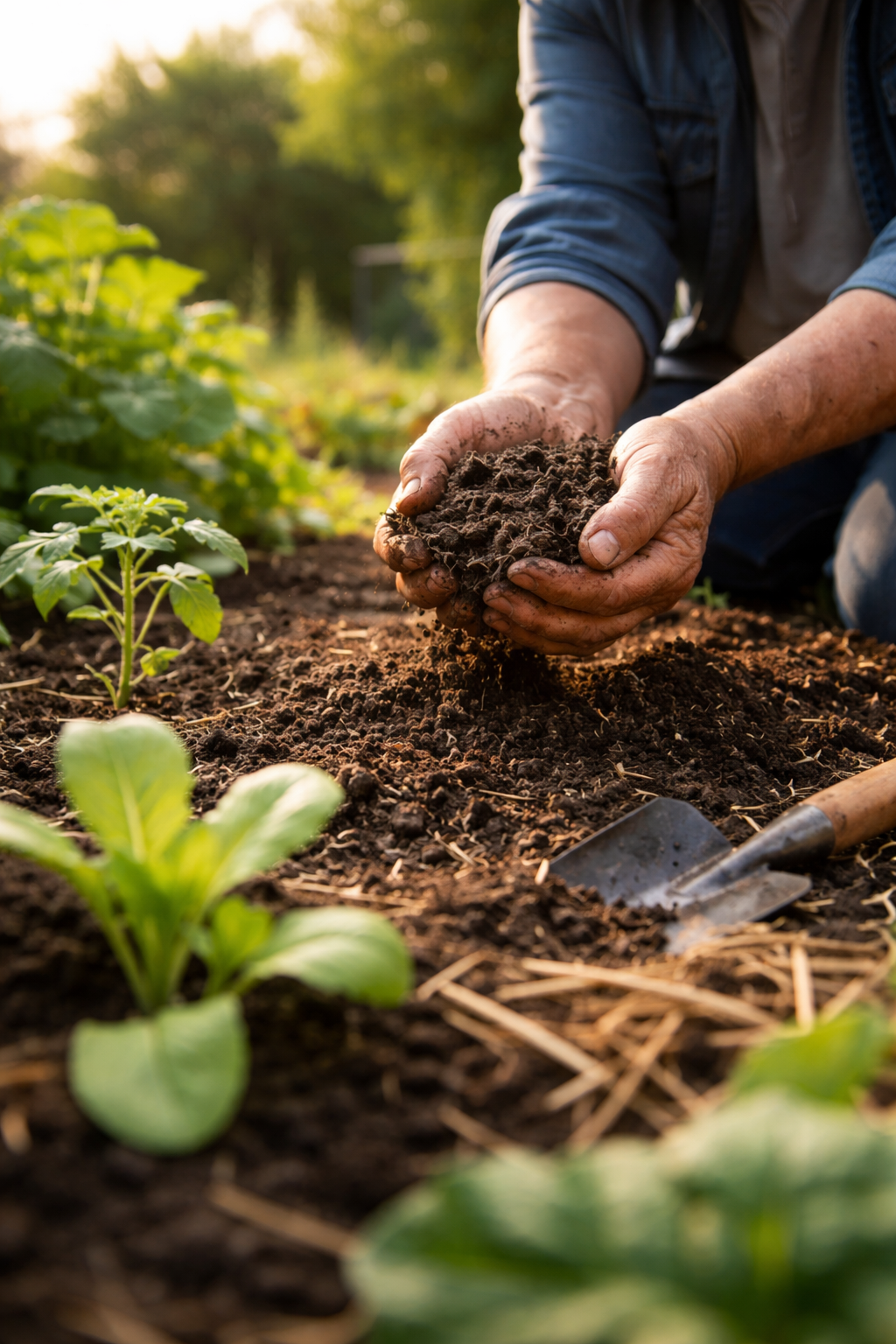
| How Soil Health Reflects Long-Term Decision-Making Soil health is one of the clearest examples of how long-term decision-making quietly shapes outcomes. Unlike quick visual fixes in the garden, soil responds slowly. It remembers what has been done to it, both good and bad. Every choice leaves a trace, and the results often appear months or even years later. This is precisely why soil is such a powerful teacher of patience. Healthy soil is not created by a single action. It is built through consistent, thoughtful decisions: how often it is disturbed, what is returned to it, how it is protected, and how much time it is allowed to recover. These decisions rarely deliver instant gratification. Instead, they compound. The gardener who understands this learns to work with time rather than against it. Modern life tends to reward speed. We are encouraged to solve problems quickly, optimise immediately, and expect visible progress. Soil operates on a different rhythm. It improves gradually, often invisibly, before any change shows above ground. Learning to care for soil requires letting go of urgency and trusting a process that cannot be rushed. At its core, soil health is about balance. Living soils contain bacteria, fungi, insects, organic matter, air, and water in a dynamic relationship. When one element is pushed too hard—over-feeding, over-digging, over-watering—the system destabilises. Recovery takes time, not because soil is fragile, but because it is complex. Complexity resists shortcuts. This mirrors long-term decision-making in life. Sustainable progress is rarely dramatic at first. It looks like repetition, restraint, and sometimes doing less rather than more. Just as soil improves through small, consistent inputs, life improves through habits that may feel insignificant day to day but become powerful over time. One of the hardest lessons soil teaches is delayed reward. Compost added today will not feed plants tomorrow. Mulch applied now may not show its benefits until the following season. Reduced digging may initially feel like neglect, even though it is an investment in structure and biology. The gardener must act without immediate confirmation that they are “doing it right.” In life, patience often fails at this same point. We abandon good choices because results are not yet visible. Soil reminds us that absence of evidence is not evidence of absence. Processes can be working beneath the surface long before they announce themselves. Soil also teaches restraint. It is tempting to intervene constantly—to add another product, turn the ground again, correct every perceived problem. Yet healthy soil thrives when interference is measured. Over-management strips it of resilience. Long-term thinking means recognising when action helps and when it hinders. This restraint builds trust: trust in natural systems, and trust in ourselves. When we choose to wait rather than react, we allow space for systems to self-correct. In gardening, this might mean letting a plant struggle briefly while roots establish. In life, it might mean sitting with uncertainty instead of forcing an outcome too soon. Another lesson soil offers is accountability across time. Poor soil rarely results from one mistake. It reflects patterns: repeated compaction, removal of organic matter, neglect of living inputs. Likewise, healthy soil reflects consistent care, even when no one is watching. Long-term decision-making works the same way. Outcomes are rarely accidents; they are the accumulation of choices. This perspective shifts blame away from single events and toward habits. It encourages reflection rather than reaction. When a garden struggles, the question is not “What went wrong this week?” but “What has been happening here over time?” Applied to life, this lens fosters responsibility without harshness. It invites adjustment rather than regret. Patience in the garden also builds humility. Soil does not obey schedules or expectations. Weather, biology, and time all have their say. A gardener can influence conditions but never fully control them. Accepting this reality encourages cooperation instead of domination. It is a lesson many areas of life would benefit from. Humility makes long-term thinking possible. When we stop trying to force results, we become better observers. We notice patterns, subtle improvements, and early warning signs. Soil rewards attention far more than force. Life often does the same. There is also comfort in the soil’s reliability. While it moves slowly, it is honest. Treated well, it responds. Neglected, it declines. This clarity can be grounding in a world full of noise and abstraction. The feedback loop may be long, but it is consistent. This builds confidence in patient effort. Gardening with soil health in mind reframes success. Instead of chasing perfection each season, success becomes resilience, improvement, and continuity. A good year is not one without problems, but one in which the system copes better than before. This is a powerful mindset shift for life as well. Long-term decision-making often feels uncomfortable because it delays satisfaction. Soil teaches that comfort is not the goal; stability is. Healthy soil weathers drought, heavy rain, and pressure because it has depth. Lives built with patience gain similar depth. They bend rather than break. Ultimately, soil health reminds us that meaningful outcomes are grown, not installed. They require presence, consistency, and faith in processes we cannot fully see. Patience in the garden is not passive; it is active trust. And that lesson, learned with hands in the earth, extends far beyond the garden gate. |
What patience in the garden teaches about patience in life
 Earthly Comforts
It’s the simple things in life we learn the most from.
LikeLiked by 1 person