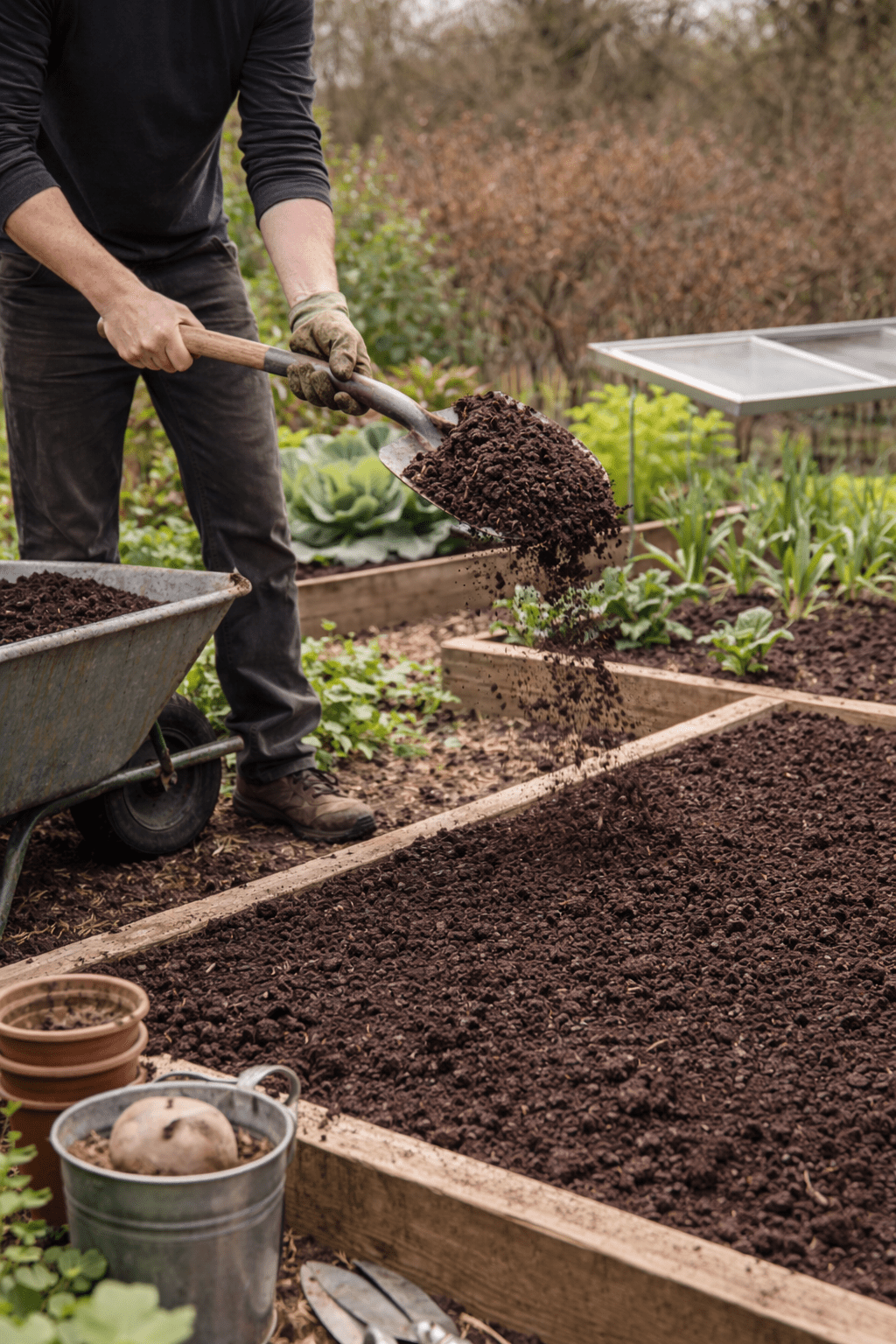
| Early March has a different energy altogether; February lingers, but March leans forward. The light strengthens, the birds grow louder, and the soil—though still cool—begins to loosen winter’s grip. There’s readiness in the air. The garden is no longer asleep; it’s stretching. For vegetable beds, early March is often the last calm window before everything accelerates. Seed packets are open, trays are stacked, and the urge to “get going” is strong. Before sowing takes over, though, one steady job sets the tone for the season: topping up beds with compost. It looks simple. It is simple. And it changes everything. Compost is often described in grand terms—fertiliser, soil improver, miracle cure—but it’s better understood more plainly. Compost is a layer of patience. It doesn’t rescue a bed overnight or transform exhausted soil in a single gesture. It slowly alters the structure, feeds soil life, improves water retention, softens heavy ground, and steadies light ground. In early March, you’re not saving the soil; you’re preparing it. Rescue is urgent. Preparation is calm—March rewards calm work. Applied as a surface layer, compost acts as mulch—conserving moisture, suppressing weeds, and gradually improving soil structure as it breaks down. The description is practical; the experience is better. Beds treated this way are easier to manage, more forgiving in dry spells, and less prone to crusting after heavy rain, in a climate that has grown less predictable; that resilience matters. March offers two key advantages. Most beds are still open enough to spread compost evenly without disturbing young roots. Winter saturation has often eased, leaving the surface workable and receptive. Even if deeper layers remain cool, that surface friability is enough. There’s also a biological benefit: applying compost now gives worms and soil organisms time to incorporate it before peak planting begins. Rain settles it. Worms draw it down. Fungi connect it. The soil does the mixing. It’s easy to overthink how much compost is needed. If you top up annually, consistency matters more than volume. Aim for a modest, even layer—a thoughtful blanket rather than a burial. Heavier soils benefit from repeated additions; sandy soils appreciate anything that slows water loss. The key is repeatability. Apply what you can realistically source and spread every season. Early March is about maintaining momentum, not dramatic rebuilding. And remember: compost is heavy. Load barrows sensibly. Protect your back. There’s no virtue in finishing in one trip if you pay for it later. Many gardeners were taught that compost only “counts” if it’s dug in, but repeated digging disrupts soil structure and fungal networks. Inverting soil can undo as much as it improves over time. The most future-facing approach is straightforward: spread compost evenly and leave it on the surface. If you’re sowing fine seeds—carrots, parsnips, early salads—a light raking to level is enough. “Fine” means workable, not powdered. Soil life will incorporate the rest more effectively than a fork ever could. Over recent years, soil has moved centre stage in gardening conversations. “Soil health” is no longer niche language, and composting is no longer an afterthought. The shift is visible everywhere—in no-dig methods, regenerative language, peat-free debates, and a broader understanding that fertility is built rather than bought. Topping up beds in early March isn’t just routine; it reflects a broader shift toward stewardship rather than intervention. Soil first, plants second. As compost becomes more central, its ingredients matter more, too. The move toward peat-free blends is gathering pace, and while ethically significant, it can require adjustment. Peat-free composts vary in texture and moisture retention. Some are coarser—some dry faster at the surface. Early March is a good moment to observe: does it clump or crumble, wet easily or resist, settle quickly or sit proud? These small observations inform how thickly you apply it and how you manage watering later. The aim isn’t perfection; it’s familiarity. A fresh compost layer also plays a quiet defensive role. Reducing light at the soil surface slows weed germination. It doesn’t eliminate weeds, but it delays them—and in March, delay is valuable. Sowing into a calm bed feels entirely different from sowing into one already in competition. Prevention rarely looks impressive, but it saves hours later. Early March composting carries subtle optimism. February reflects, April rushes, March prepares. You spread the compost, level it, and step back. When the first sowings go in—radish under cover, broad beans pushing upward, hardy greens lining up—you’re not asking depleted soil to perform miracles. You’re working with ground that has been quietly readied. In a year where drought may arrive early, rain may fall hard, or cold may linger unexpectedly, soil that has been steadily enriched offers one of the few stabilising factors under your control. It doesn’t depend on forecasting. It depends on habit. The work isn’t glamorous, and it won’t dominate a photograph, but it sets the season in motion. |
| About our writing & imagery Most articles reflect our real gardening experience and reflection. Some use AI in drafting or research, but never for voice or authority. Featured images may show our photos, original AI-generated visuals, or, where stated, credited images shared by others. All content is shaped and edited by Earthly Comforts, expressing our own views. |
 Earthly Comforts