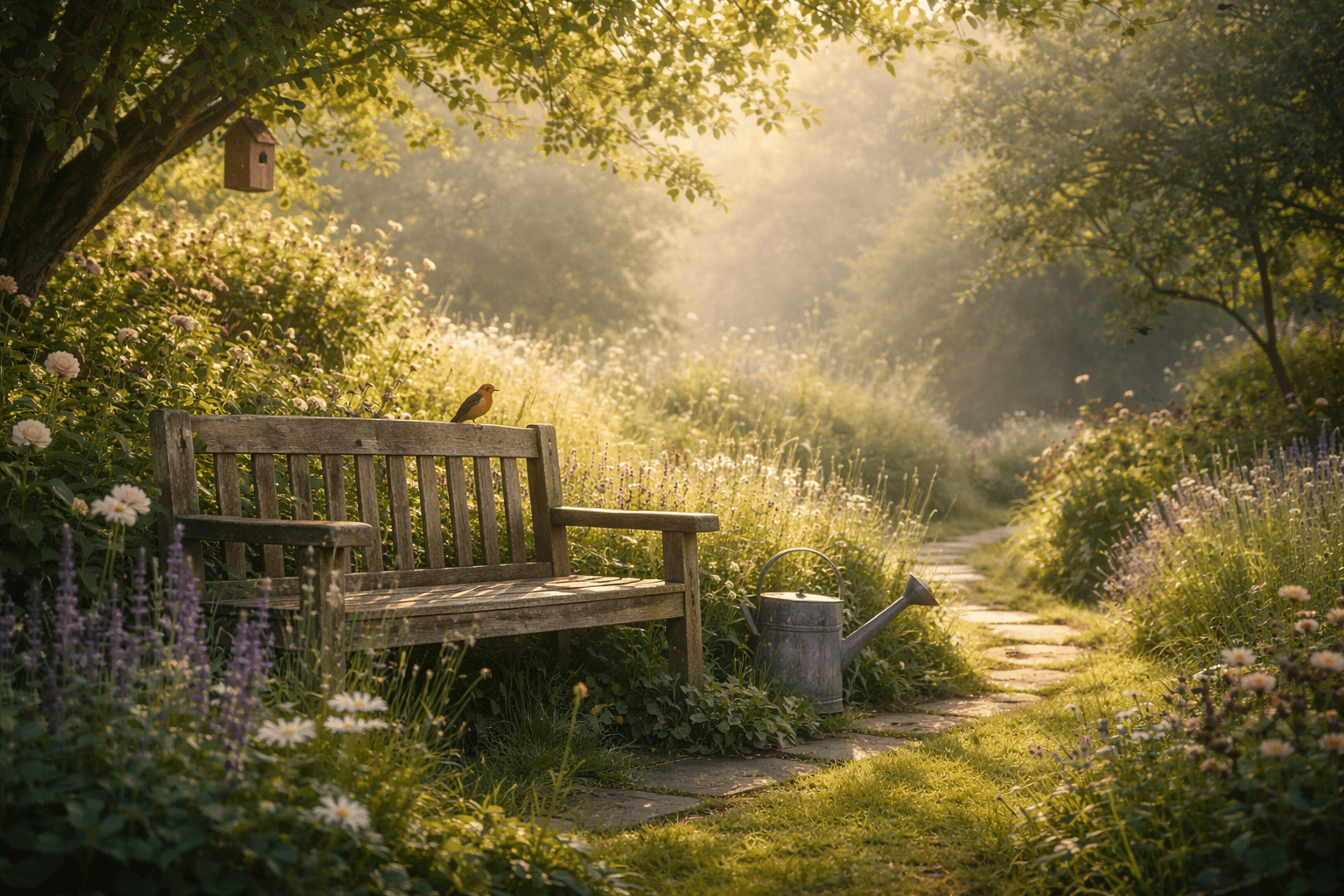
| What Birdsong Teaches Us About Patience There is a moment in the gardening year that can feel unsettling if you are not expecting it. The mornings are lighter, the plants are growing strongly, and yet the garden feels quieter. The dawn chorus that once spilt across hedges and rooftops softens, then fades. Many gardeners notice it instinctively and wonder, often with concern, what has changed. Quieter birdsong does not usually mean something is wrong. More often, it signals a shift in purpose. In early spring, birds sing loudly to establish territory and attract mates. By late spring and early summer, much of that work is done. Energy turns inward. Nests are built, eggs hatch, and feeding becomes the priority. Silence, in this sense, is not absence. It is a focus. This seasonal quietening mirrors something gardeners themselves come to understand with time. The garden is never truly still, even when it appears so. Beneath the soil, roots are extending. In hedges and shrubs, life is concealed rather than displayed. The loud, visible moments of growth are only part of the story. Much of the real work happens quietly, unseen. Modern life trains us to expect constant signals of progress. Notifications, updates, metrics, results. When things go quiet, we assume stagnation or failure. The garden gently challenges this assumption. A bed that looks unchanged from one week to the next may, in fact, be strengthening below the surface. A tree that is not visibly growing taller may be laying down resilience ring by ring. Birdsong fading teaches the same lesson. The birds have not disappeared. They are simply doing what needs to be done next. This is patience in action, not as waiting idly, but as allowing the right rhythm to unfold. The garden does not rush birds back into song, nor does it demand proof of productivity. It trusts the process. Patience in the garden is rarely dramatic. It shows up in small decisions: leaving seed heads standing longer than feels tidy, resisting the urge to over-prune, and allowing soil to rest rather than forcing another intervention. Each choice says, “I don’t need to control every outcome.” Over time, this mindset shifts how we move through the world beyond the garden gate. Life, like gardening, has seasons of visibility and seasons of quiet work. There are times when progress is obvious and celebrated, and times when effort feels unacknowledged. The quieter phases can feel uncomfortable, especially when we equate noise with success. The garden reminds us that silence can be purposeful, even necessary. When birds are feeding young, drawing attention can be risky. Quietness is protective. In life, there are moments when keeping our heads down, consolidating skills, or tending private responsibilities is the wisest path. Not every season is meant for display. Some are meant for nourishment. Gardeners who learn to listen differently notice that quiet does not mean empty. Subtle sounds replace the chorus: wings fluttering in hedges, leaves shifting, insects moving through long grass. Attention sharpens. Stillness becomes richer rather than dull. This deeper listening is another form of patience, one that values presence over output. In a world that prizes speed, the garden operates on trust. You plant knowing that germination cannot be forced. You water, wait, and observe. You accept losses without giving up. Over time, this teaches resilience. The quiet periods do not feel like failures; they feel like part of the agreement you have made with nature. Birdsong will return. Later in the year, voices rise again, though differently. Young birds find their sound. Autumn brings its own music. The cycle continues, not because it is hurried, but because it is allowed to complete itself. Patience, then, is not about enduring discomfort while waiting for things to “get better.” It is about understanding timing. It is about recognising when action is needed and when restraint is the wiser choice. The garden offers daily practice in this, without lectures or instruction manuals. When the garden grows quieter, it invites us to slow down with it. To trust that unseen work still counts. To believe that growth does not require constant announcement. In listening to the silence between the songs, we learn that patience is not passive. It is attentive, grounded, and deeply alive. |
 Earthly Comforts