
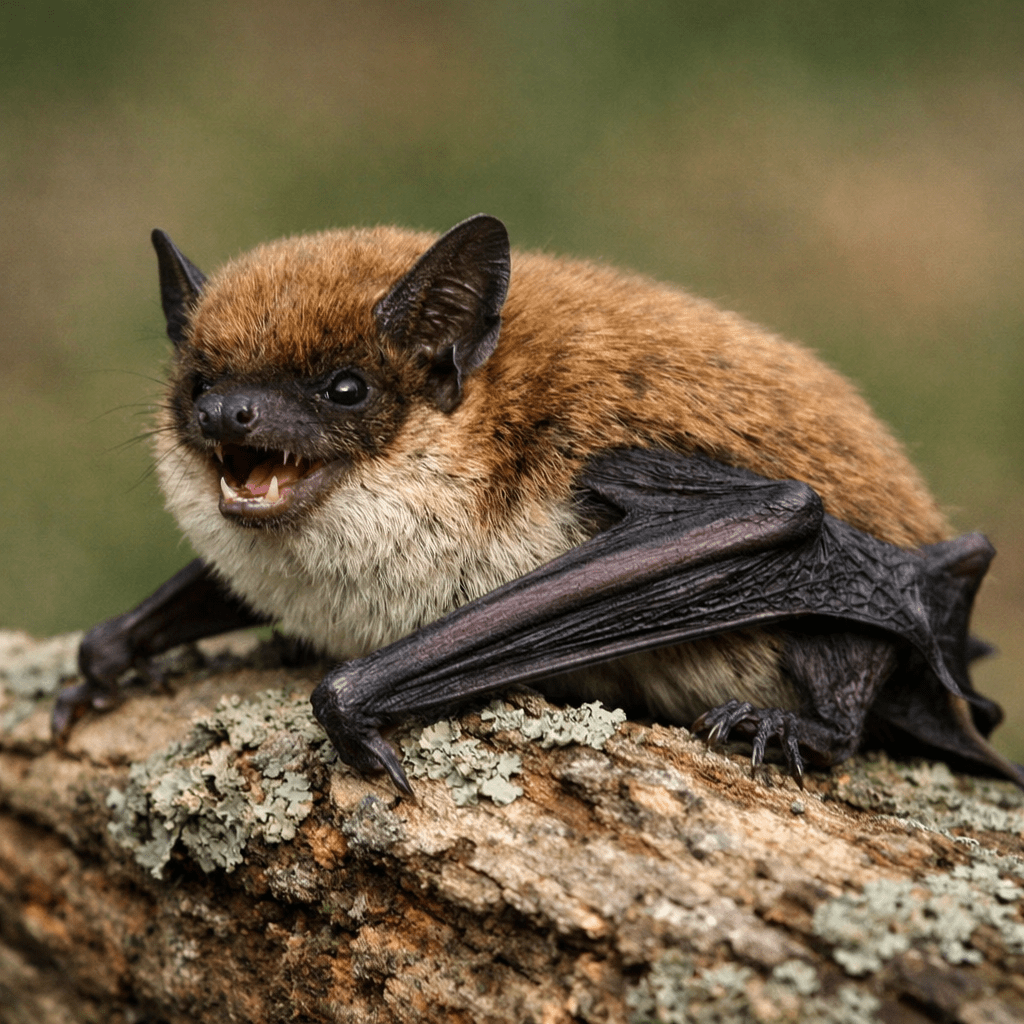
| The Soprano Pipistrelle Bat: The Bright Voice of the Dusk At first glance, the soprano pipistrelle bat seems almost identical to its more familiar cousin, the common pipistrelle. It is small, fast, and frequently seen at dusk, weaving through the air above gardens, waterways, and woodland edges. Yet this bat has its own rhythm, preferences, and subtle distinctions. Where the common pipistrelle is a generalist, the soprano pipistrelle is more selective. Where others spread widely, this bat often follows water, listening carefully to the fine textures of the night. The soprano pipistrelle does not shout its presence — but it sings constantly, in a voice pitched just beyond human hearing. |
| Small, Agile, and Always Moving The soprano pipistrelle is tiny, even by bat standards. Its body is compact, with narrow wings that allow rapid acceleration and tight turns. Its fur is usually warm brown, with a slightly paler underside that can catch evening light as it flies. In the air, it appears energetic and purposeful. It rarely glides or pauses; instead, it zigzags through insect-rich areas with precision. This bat is built for activity, not stillness. Despite its size, it travels surprising distances each night, tracing familiar routes with remarkable consistency. A Bat That Lives by Sound Like all bats, the soprano pipistrelle uses echolocation — but its calls are pitched higher than those of the common pipistrelle. This difference shapes how it experiences the world. Its high-frequency calls allow it to: Detect very small insects. Navigate complex environments Avoid clutter near vegetation and water. These calls also help researchers distinguish it from similar species, but to the bat, they are simply the language of survival. Its soundscape is rich, layered, and constantly shifting as it hunts. Hunting Where Insects Gather The soprano pipistrelle is particularly associated with water. It often hunts: Along rivers and streams Over lakes and ponds Above canals and ditches Near wetlands and damp woodland Waterways produce dense clouds of small insects, especially midges and flies — perfect prey for a fast, agile bat. The soprano pipistrelle frequently flies low over water, sometimes following the same stretch night after night. It may also forage along woodland edges, hedgerows, and gardens, but water remains its core focus. For this bat, moisture equals opportunity. Roosting in the Human Landscape Like many pipistrelles, the soprano pipistrelle readily roosts in buildings. Common roost sites include: Roof spaces Gaps behind cladding Wall cavities Beneath tiles or soffits Colonies can range from small groups to larger maternity roosts during summer. These bats are discreet and cause minimal disturbance, often going unnoticed for years. They show strong loyalty to successful roosts, returning season after season as long as conditions remain stable. Sudden changes to buildings — sealing gaps or altering airflow — can cause roost abandonment. Summer Colonies and Raising Young During the breeding season, female soprano pipistrelles form maternity colonies in warm, sheltered roosts. These colonies are busy, vocal places. Young bats develop quickly, learning to fly and hunt within weeks. Mothers return repeatedly through the night to feed, balancing high energy demands with constant care. The success of these colonies depends on proximity to rich feeding grounds, especially water. Long journeys cost energy that young bats cannot afford. This tight link between roost and feeding habitat defines the species’ distribution. Winter Life and Hidden Survival As temperatures fall and insects disappear, soprano pipistrelles enter hibernation. They choose cool, stable places such as: Buildings Tree crevices Underground spaces Hibernation is a delicate balance. Waking too often — due to disturbance or fluctuating temperatures — can exhaust fat reserves before spring arrives. Quiet, undisturbed winter refuges are essential for survival. Why Soprano Pipistrelles Are Often Overlooked Despite being widespread, soprano pipistrelles are frequently mistaken for common pipistrelles. They: Look very similar Share many roosting habits. Fly at similar times. The differences lie in sound, habitat preference, and behaviour — things not immediately visible without close observation. This subtlety is part of their nature. They do not stand out. They blend into the background hum of dusk. Pressures Facing a Water-Linked Bat The soprano pipistrelle’s reliance on waterways makes it sensitive to environmental change. Key pressures include: Pollution of rivers and ponds Loss of wetland habitats Artificial lighting along watercourses Declines in aquatic insects Building renovations removing roost access Even when water remains, changes in quality can sharply reduce insect numbers. For this bat, clean water and dark corridors are not luxuries — they are necessities. What the Soprano Pipistrelle Represents The soprano pipistrelle bat symbolizes the intricate balance of the ecosystem. It reminds us that: Small differences matter Sound shapes survival Water supports life beyond its banks. Subtle species can be widespread yet vulnerable. Protecting it often means protecting overlooked spaces: ditches, ponds, canal edges, and dark stretches of river. The Music of the Evening If you stand near water at dusk and watch the air carefully, you may see tiny shapes flickering just above the surface. Their movement is fast, purposeful, and precise. You will not hear their voices. But they are singing constantly — mapping the night, measuring distance, finding food, and weaving life through the spaces where water meets air. The soprano pipistrelle bat does not demand attention. It simply performs, every evening, in a register just beyond our hearing, keeping the night in tune. |
 Earthly Comforts