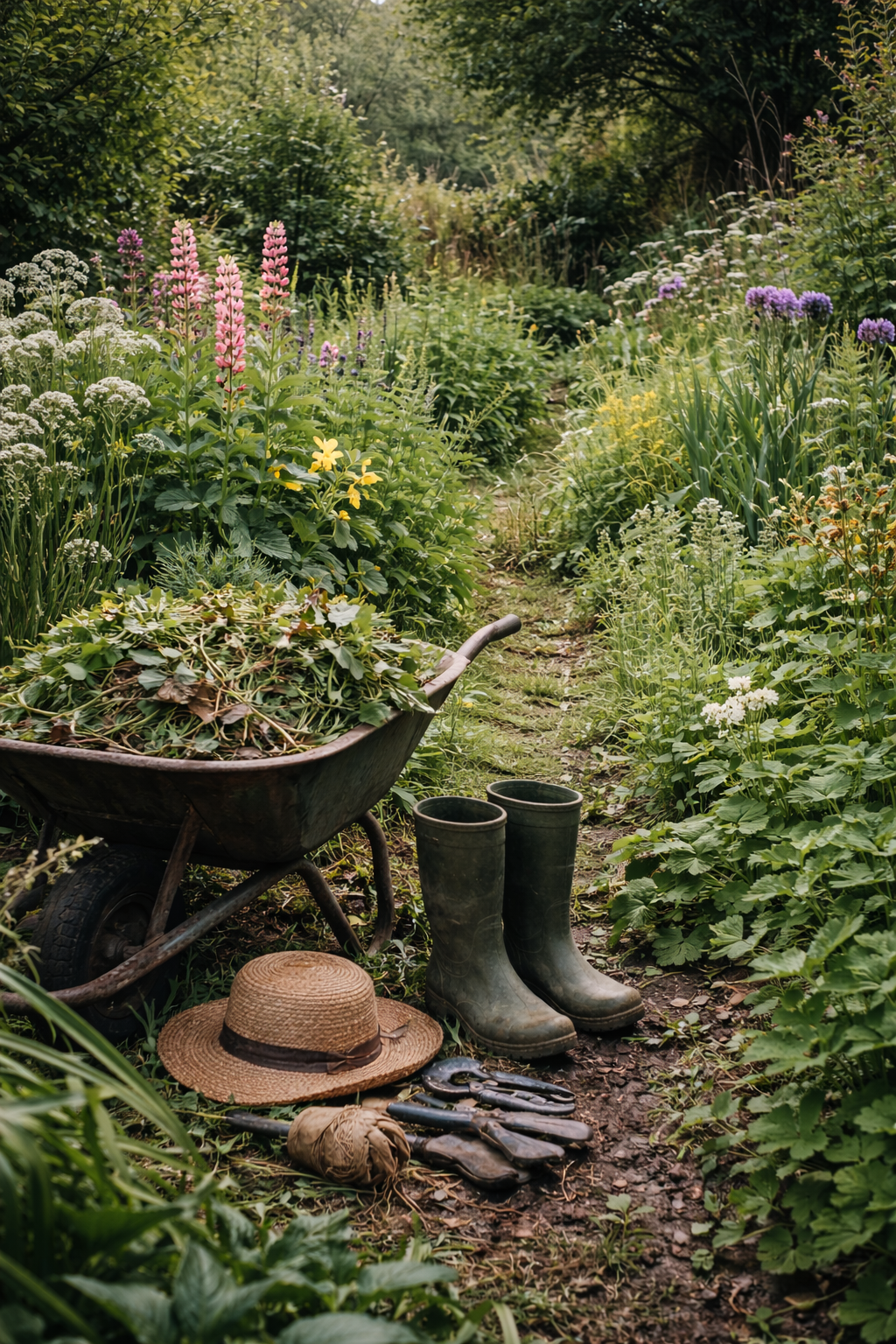
| Late spring overwhelm and the myth of keeping up Late spring is when gardening stops feeling optional. One week, the garden looks hesitant and half-awake. Next, everything moves at once. Shoots lengthen overnight. Weeds appear where there were none. Hedges thicken. Lawns surge. Beds that felt manageable suddenly don’t. This is the moment many gardeners feel they’re falling behind. The idea that you’re meant to “keep up” with a garden in late spring is one of the most persistent myths in gardening. It assumes growth happens in neat stages, that effort scales neatly with demand, and that attention can be evenly distributed. None of that is true. Late spring is not about control. It’s about volume. Plants respond to increasing daylight far more than to temperature. Once the days lengthen enough, growth accelerates whether you’re ready or not. It doesn’t check your calendar. It doesn’t wait for weekends. It doesn’t slow down because you’ve already cleared one bed. This is not poor planning. It’s seasonal biology. What overwhelms people isn’t the work itself, but the simultaneity of it. Everything asks for attention at once, and attention is limited. The garden doesn’t recognise priorities in the way humans do. It doesn’t care which job feels most urgent to you. Trying to meet all those demands evenly is what creates the sense of failure. Late spring gardening often becomes reactive. You chase what’s loudest. A patch of weeds gets tackled while something else runs away. You trim one area only to notice another has doubled in size. The work never feels finished because, for a few weeks, it isn’t. This doesn’t mean you’re doing it wrong. It means you’re gardening in real time. The myth of keeping up comes from the idea that gardens are meant to reach a stable, “done” state. Late spring exposes how unrealistic that idea is. Growth outpaces intervention by design. Plants that evolved to exploit short windows of opportunity do exactly that. Your role is not to match their speed. It’s to guide direction. One of the most useful shifts a gardener can make at this time of year is from completion to containment. You stop trying to finish jobs and start trying to prevent problems. You choose what must not get away rather than what looks untidy today. That distinction matters. Late spring rewards selective neglect. Some areas can wait without consequence. Others can’t. Learning the difference takes experience, not effort. Cutting everything back evenly feels productive, but often creates more work later. The gardeners who cope best in late spring are not the busiest. They are the most decisive. Another source of overwhelm is comparison. Late spring is when gardens start to look impressive from a distance. Growth hides gaps. Colour distracts from structure. Online images and neighbouring plots appear calm and abundant. What you don’t see is the imbalance. Something is always being ignored to keep the other thing looking good. No garden is fully maintained in late spring. It’s curated at best. There’s also a physical cost to this season that often gets overlooked. Late spring work is deceptively demanding. Repetitive bending, pulling, lifting, and carrying add up quickly. Days are longer, but bodies don’t automatically adjust to the increase in output expected of them. Pushing too hard here can lead to injury or exhaustion later, usually just as summer stress sets in. The belief that you should power through late spring sets people up to fail twice. A more sustainable approach is to accept that the garden will look uneven for a while. Some areas will be ahead. Others will lag. This is not neglect. It’s triage. You manage momentum rather than appearances. Late spring gardening is about restraint as much as action. Another overlooked truth is that some growth resolves itself. Self-seeding plants thin naturally. Vigorous perennials settle once light levels stabilise. Early weeds are often easier to remove later, when the soil is drier and the roots are clearer. Intervening at the first sign of movement is not always helpful. This doesn’t mean leaving everything alone. It means understanding which interventions matter now and which are driven by anxiety rather than need. The pressure to keep up often comes from treating every task as equally important. Late spring punishes that approach. Prioritisation is not optional. It’s the skill that keeps gardening enjoyable rather than overwhelming. You choose structure over detail. Access over aesthetics. Health over neatness. When gardeners stop trying to keep up, something changes. The garden feels less like a list of failures and more like a system in motion. Work becomes responsive rather than frantic. Decisions are made with the season, not against it. That shift is usually the difference between burnout and balance. Late spring is the busiest point in the gardening year, not because you’ve done something wrong, but because that’s when life accelerates fastest. Expecting calm during that surge is unrealistic. You are not meant to be on top of everything. The garden does not need perfection during peak growth. It needs guidance, patience, and a gardener who knows when to step back. The idea of keeping up suggests a race that doesn’t exist. Gardening isn’t about matching pace. It’s about staying engaged without being consumed. Late spring will always feel full. Accepting that is what makes it manageable. |
Unless stated, featured images are my own work, created independently or with the assistance of AI.
 Earthly Comforts