| Climate change rarely arrives with an announcement. It does not wait for legislation, headlines, or public consensus. Instead, it appears quietly, unevenly, and often inconveniently, showing itself first in places people are used to trusting as stable. By the time it is formally acknowledged, it has usually been present for years, shaping decisions, altering habits, and quietly raising risks. One of the earliest ways climate change shows up is through pattern disruption rather than outright extremes. Seasons begin to lose their predictability. Spring arrives in fragments. Winter hesitates, retreats, then returns. Summer stretches beyond its usual bounds. These shifts are subtle enough to be dismissed as “one of those years,” yet persistent enough that long-term observers start adjusting behaviour without fully naming the cause. People adapt long before they agree. Farmers alter planting dates. Gardeners change what they grow. Builders quietly revise material choices. Insurers adjust risk models. None of these actions requires a press release. They are practical responses to lived experience, often framed as common sense rather than climate adaptation. Another early signal is the growing mismatch between expectations and outcomes. Rain falls, but not when it is needed. Sunshine appears, but at the wrong moment. Infrastructure designed for “normal” conditions begins to feel overstressed, not because it is failing outright, but because it is being asked to perform outside its original assumptions. Flood drains cope less often. Heat lingers longer indoors. Roads soften, crack, or buckle under conditions they were never meant to endure. Climate change also reveals itself socially before it is acknowledged politically. Conversations shift. People start remarking on how things “used to be.” Complaints about the weather become more frequent and more emotionally charged. Anxiety appears, even when the language to explain it does not. There is a growing sense that something is off, but not yet a shared agreement on what to call it. In many cases, the first acknowledgement is economic rather than environmental. Costs creep up. Maintenance becomes more frequent. Insurance premiums rise quietly. Supply chains wobble. These changes are rarely attributed directly to climate change at first; they are framed as market pressures, staffing shortages, or logistical challenges. Yet climate instability often sits beneath them, acting as a multiplier rather than a single cause. Ecological signals tend to arrive early, though they are easy to overlook. Species appear out of place or out of season. Some plants thrive unexpectedly while others struggle without an obvious explanation. Pests linger longer. Pollinators arrive earlier or later than expected. These changes are gradual enough to be normalised, particularly by those who encounter them incrementally rather than all at once. Human memory plays a role in delaying acknowledgement. Each generation tends to treat its baseline as “normal,” even if that baseline has already shifted. When change happens slowly, people adjust expectations downward without realising it. What once would have been alarming becomes familiar. This phenomenon makes climate change particularly difficult to recognise in real time, even as its effects accumulate. Institutions are often slower to acknowledge change than individuals. Policies rely on historical data. Planning frameworks assume continuity. Official thresholds for action are designed to avoid false alarms, which means they are triggered late by design. By the time a change is formally recognised, communities may already be living with its consequences. There is also a psychological dimension to early climate signals. Many of the first signs are inconvenient rather than catastrophic. They require effort, expense, or discomfort, but not immediate evacuation or emergency response. This makes them easier to ignore, postpone, or explain away. People are generally skilled at tolerating gradual deterioration, especially when the alternative is confronting something that feels overwhelming. Importantly, early climate impacts are rarely evenly distributed. Some people feel them years before others. Coastal communities, outdoor workers, older housing stock, and lower-income households are often the first to experience disruption. Because these experiences are not universal, they are easier for wider society to discount or treat as isolated problems rather than systemic change. Climate change also shows up in language before it is officially named. Phrases like “unseasonal,” “unusual,” or “unpredictable” become common. Planning documents begin to include vague references to “resilience” or “future-proofing.” These linguistic shifts signal awareness without full acknowledgement, a way of preparing without fully committing to the implications. Acknowledgement tends to lag because it requires more than observation. It requires responsibility. Once climate change is named, questions of accountability, cost, and action follow. It is often easier to adapt quietly than to openly recognise a problem that demands collective response. As a result, societies frequently move into adaptation mode before they enter acknowledgement mode. Understanding how climate change manifests early matters because it shapes how we respond. If we only look for dramatic tipping points, we miss the slow signals that offer time to adjust thoughtfully. Early recognition allows for calmer, more deliberate choices rather than rushed reactions under pressure. Climate change does not begin with disaster. It begins with inconvenience, uncertainty, and quiet adjustment. It lives in the space between what we expect and what actually happens. By learning to notice those early signals, we give ourselves the chance to respond before acknowledgment becomes unavoidable, and before adaptation becomes crisis management. |
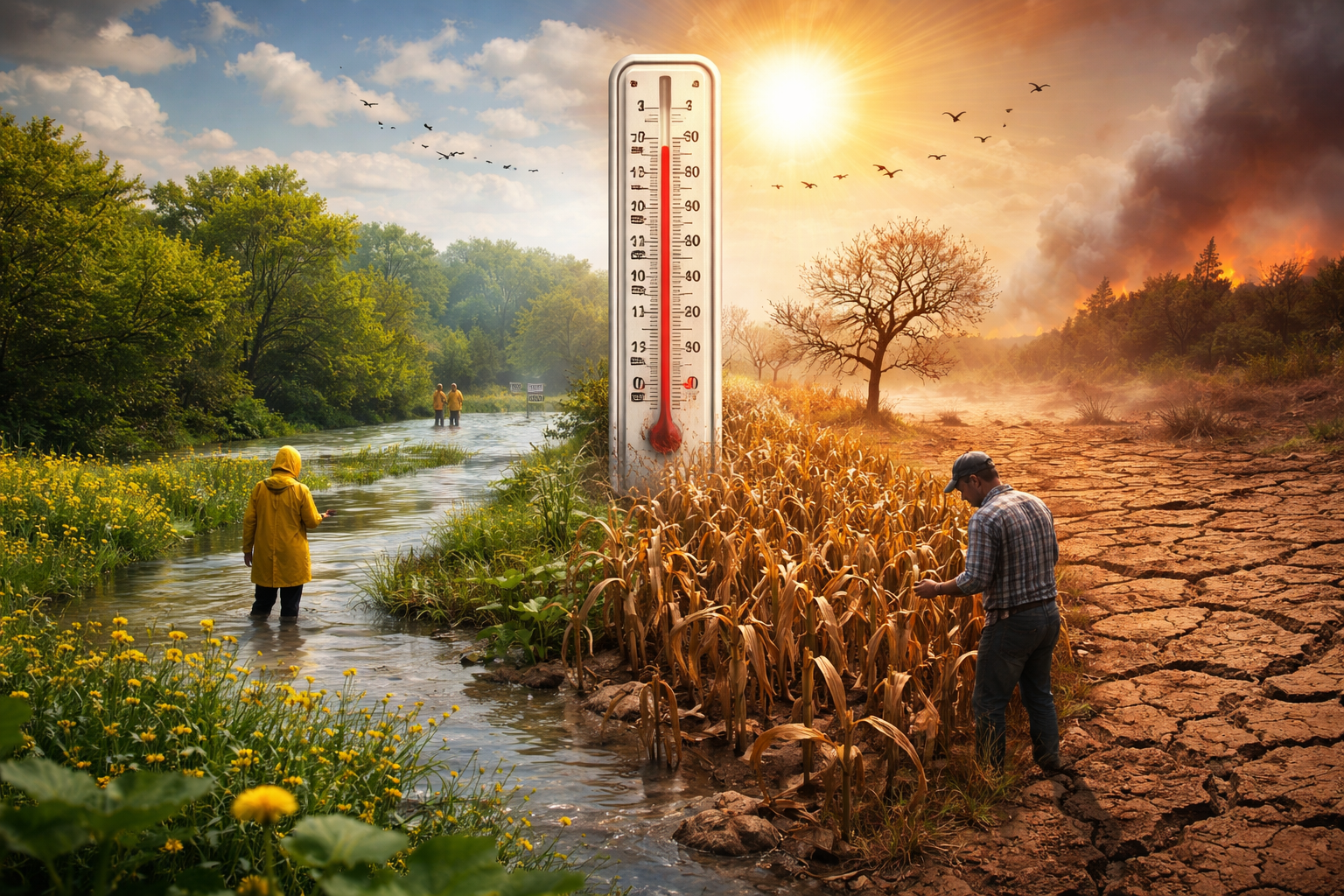
How climate change shows up before it’s acknowledged
 Earthly Comforts