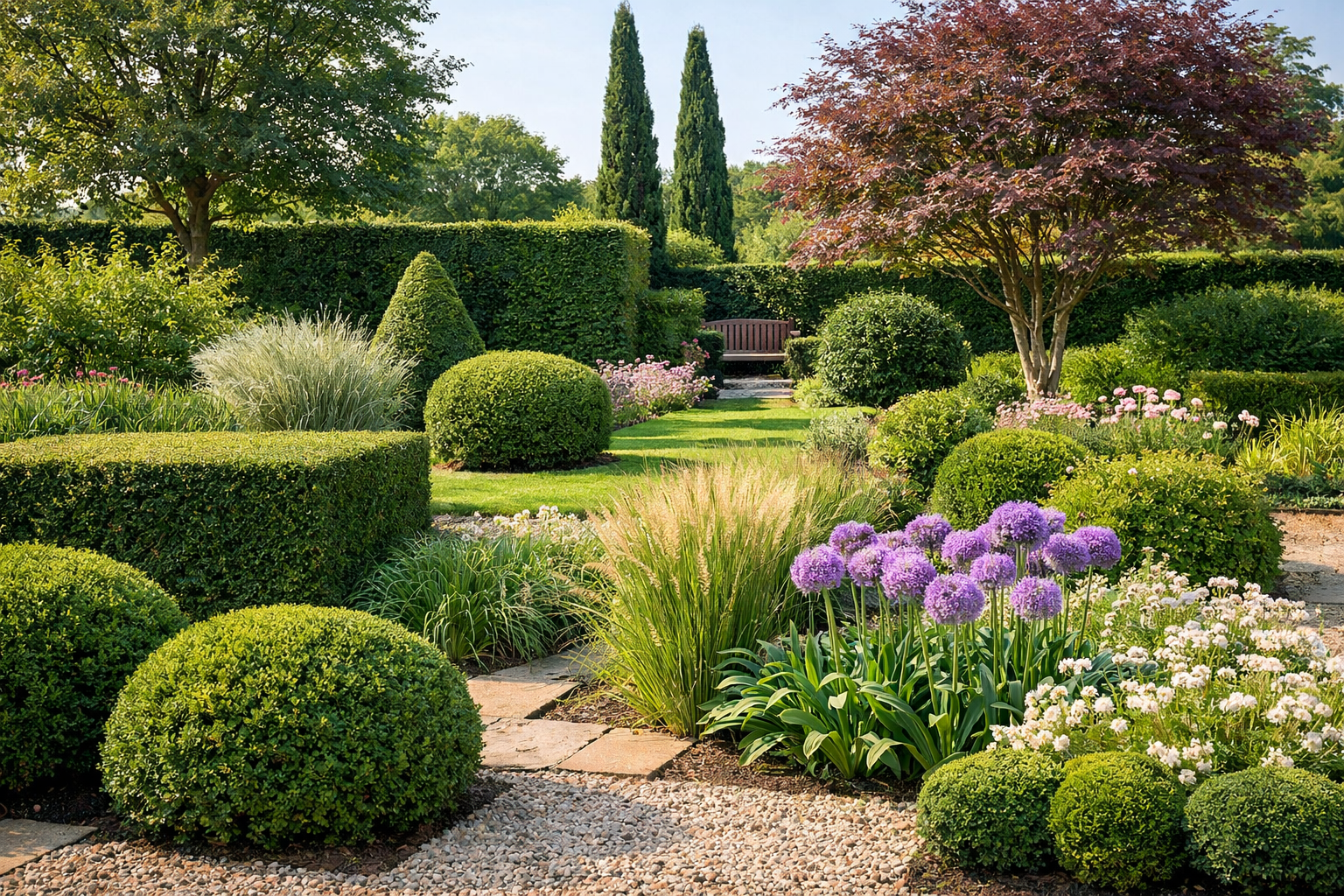
| The Quiet Backbone of a Beautiful Garden Structural planting is the unseen framework that gives a garden its shape, rhythm, and long-term appeal. While flowers and seasonal colour often steal the spotlight, it is structural planting that holds everything together, ensuring the garden looks intentional and balanced throughout the year. Understanding and using structure well is one of the biggest differences between a garden that feels fleeting and one that feels grounded, calm, and timeless. At its core, structural planting refers to plants chosen primarily for their form, permanence, and reliability rather than their fleeting blooms. These plants define the garden’s bones. They guide the eye, anchor borders, frame views, and provide continuity through the seasons. Without them, a garden can feel chaotic, empty in winter, or overly dependent on short-lived displays. Garden structure is about more than just evergreen shrubs. It includes trees, hedges, grasses, architectural perennials, and even the way plants are layered and repeated. Good structural planting creates a sense of order without feeling rigid, allowing softer planting to come and go around it. One of the key benefits of structural planting is year-round interest. Gardens that rely heavily on flowers can feel spectacular for a few weeks and then flat for the rest of the year. Structural plants hold their form through winter, offer texture when colour fades, and provide contrast for seasonal planting. Even deciduous plants can be structural if their branching, bark, or silhouette adds interest when leaves fall. Trees are often the most powerful structural elements in a garden. Even in small spaces, a single well-chosen tree can transform how the garden feels. Trees create vertical layers, provide shade, soften boundaries, and help a garden feel settled. The shape of a tree matters as much as its size: upright forms can lift the eye, while spreading canopies create shelter and enclosure. Shrubs form the backbone of borders and beds. When chosen for shape and reliability, they act as visual anchors that stop planting from feeling loose or messy. Rounded shrubs bring softness and repetition, while more upright or architectural forms add contrast. Evergreen shrubs offer consistency, but deciduous shrubs also play an important structural role when their form is strong and well-placed. Hedges and clipped forms are another layer of structure, though they don’t need to feel formal. A softly maintained hedge can define space, create privacy, or guide movement through a garden without feeling harsh. Even informal hedging plants provide a sense of boundary and cohesion that loose planting alone cannot achieve. Grasses and architectural perennials are often overlooked as structural plants, but many provide strong form for much of the year. Upright grasses add movement and vertical lines, while bold-leafed perennials create focal points and weight within planting schemes. When these plants are repeated thoughtfully, they become part of the garden’s underlying structure rather than just seasonal features. Structural planting also supports wildlife and soil health. Permanent plants stabilise soil, reduce erosion, and create microclimates that benefit both plants and animals. Shrubs and trees offer shelter, nesting opportunities, and food sources, while layered planting mimics natural ecosystems. A structurally sound garden is often healthier and more resilient. From a practical perspective, a well-structured garden makes maintenance easier. When the backbone of a garden is clear, everything else has a place. Seasonal planting can be added or reduced without the garden losing its shape. Pruning becomes more purposeful, and the garden is less likely to feel overgrown or neglected between visits. Designing with structure in mind starts by observing the space as a whole. Consider how the garden is viewed from the house, how people move through it, and how it feels in winter as well as summer. Structural plants should reinforce these experiences, not fight against them. Repetition is key: repeating forms, shapes, or plant types helps create a sense of rhythm and calm. It’s also important to think long-term. Structural plants are investments that grow and change over time. Choosing the right plant for the right place prevents future problems and allows the garden to mature gracefully. Overcrowding structural plants can cause stress later, while underplanting can leave the garden feeling sparse for years. Structural planting doesn’t mean sacrificing creativity or softness. In fact, it allows more freedom with seasonal planting, knowing there is a strong framework underneath. Once the bones are in place, colour, texture, and experimentation can come and go without undermining the garden’s overall harmony. In many ways, structural planting reflects a slower, more thoughtful approach to gardening. It values longevity over immediate impact and encourages gardeners to think in years rather than weeks. A structurally sound garden grows into itself, becoming more balanced and beautiful with time rather than demanding constant reinvention. Ultimately, structural planting is what makes a garden feel intentional, restful, and complete. It is the quiet backbone that supports everything else, allowing the garden to evolve while remaining rooted in a strong, enduring design. |
Structural Planting in Gardening
 Earthly Comforts