| Why We Can Live Somewhere for Years and Still See It for the First Time |
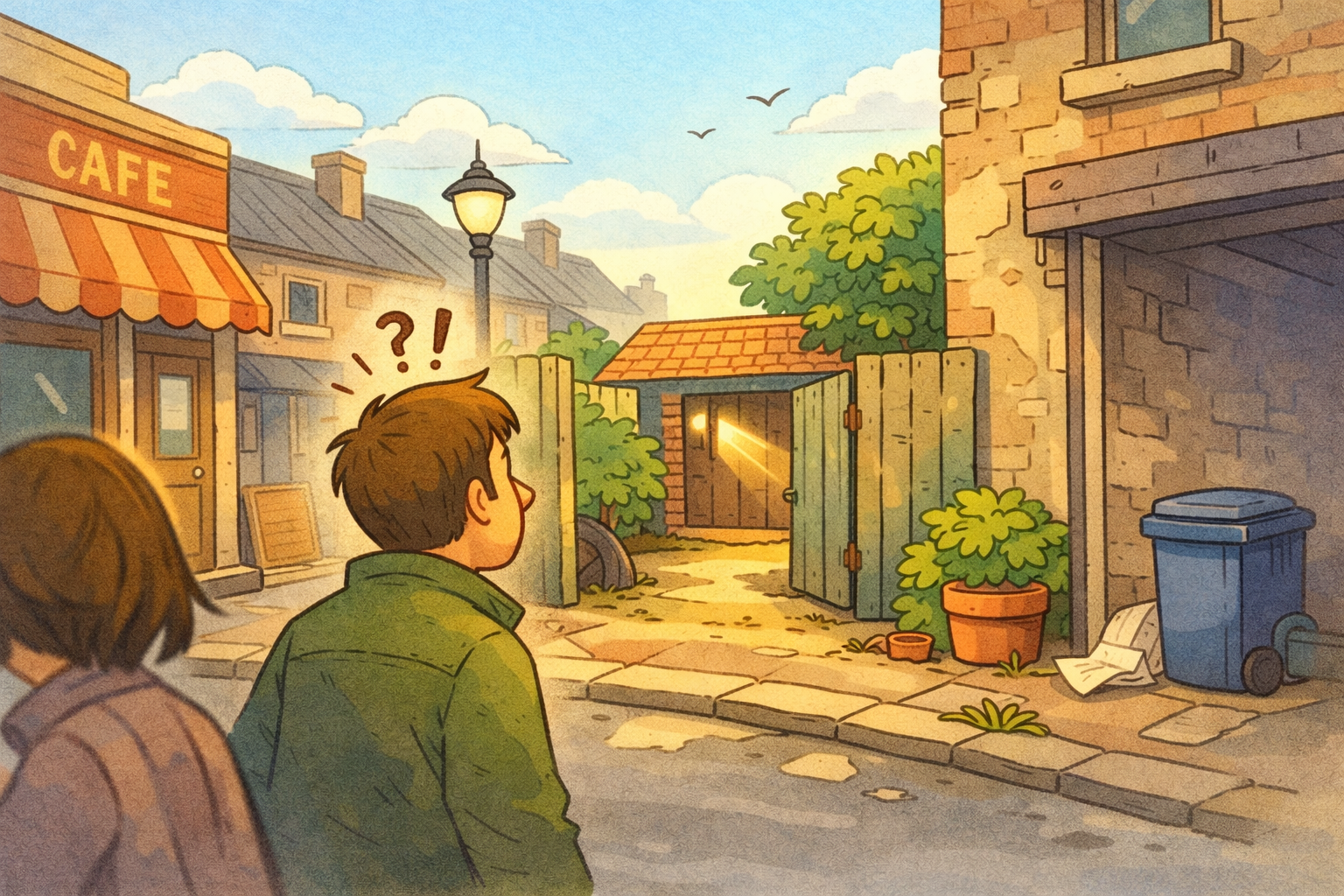
| It’s a small moment when it happens. You’re walking a familiar route — the same pavement you’ve taken for years — and something shifts. A gate you swear wasn’t there before. A building you can’t believe you’ve never noticed. A garage tucked behind hedging that suddenly feels obvious, almost embarrassing in its visibility. The unsettling part isn’t the discovery. It’s the realisation that the thing was always there. I’ve had this happen countless times, both in towns and gardens. Places I’ve worked in for years will suddenly reveal a detail I could have sworn was new. A change in light, a hedge cut back, a door left open — and suddenly the place rearranges itself in my mind. The landscape hasn’t changed, but my relationship to it has. We tend to assume seeing is passive. If something exists in our field of vision, we must be registering it. In reality, seeing is highly selective. We don’t experience the world as it is; we experience it as it’s been filtered through habit, purpose, and attention. Once a route becomes familiar, our brains compress it. The mind is economical. It turns lived spaces into shorthand. This street equals “walk to the shop.” That corner equals “turn left.” Anything that doesn’t interfere with the function gets edited out. Buildings become backdrops. Gates become edges. Details are flattened into usefulness. This is why novelty feels so vivid. When something changes — a tree removed, scaffolding erected, a garage door repainted — the spell breaks. The compressed map no longer matches reality, and suddenly your attention floods back in. You’re not noticing the new thing so much as noticing the place again. Gardening sharpens this awareness. A garden is never static, but most of its change is slow enough to be absorbed invisibly. Growth is incremental. Decline is gradual. Until it isn’t. A storm snaps a branch. A hedge is cut back harder than usual. A neighbour removes a fence. And suddenly the space feels unfamiliar, even though its bones are the same. One of the myths worth challenging here is the idea that attentiveness is a moral virtue — that not noticing means you don’t care. In truth, not noticing is often a sign of stability. Your mind has decided the environment is safe, predictable, and not in need of constant monitoring. That’s not neglect; it’s efficiency. The problem arises when efficiency turns into blindness. There’s a difference between not seeing and not being able to see. When we move too quickly through a place — physically or mentally — we reduce it to a corridor. Corridors are not meant to be examined. They are meant to be passed through. Many towns slowly become corridors for the people who live in them. What brings vision back is rarely dramatic. It’s usually something slight. A pause. A delay. Walking at a different time of day. Someone is stopping in front of you. Light falling differently. These minor disruptions create just enough friction to re-engage attention. I’ve noticed that when I’m working rather than passing through, places expand. Kneeling to weed reveals brickwork I’d never noticed standing up. Standing still long enough to prune brings details into focus that are invisible at walking pace. Attention changes scale. There’s also a psychological component. We often don’t see things until we’re ready to. A garage might go unnoticed until you’re suddenly interested in storage. A side building becomes visible only when you’re thinking about space differently. The object hasn’t changed; your needs have. This explains why newcomers often see places more clearly than long-term residents. They haven’t compressed the map yet. Everything is still up for interpretation. Long-term familiarity brings comfort, but it also brings editing. The town becomes a set of known quantities rather than a living environment. The trick isn’t to force constant awareness. That would be exhausting. The trick is to allow for re-seeing. To accept that noticing comes in waves, often prompted by change, disruption, or slowing down. When something reveals itself after years of invisibility, it’s tempting to feel foolish. How did I not see that? But that reaction misunderstands how perception works. You weren’t failing to observe. You were navigating. What matters is not that we miss things, but that we can still be surprised by them. Those places we think we know can still unfold. That familiarity doesn’t permanently close the door on curiosity. In a well-lived town — like a well-tended garden — there should always be something waiting to be seen for the first time. Not because it’s new, but because you are. |
| About our writing & imagery Most articles reflect our real gardening experience and reflection. Some use AI in drafting or research, but never for voice or authority. Featured images may show our photos, original AI-generated visuals, or, where stated, credited images shared by others. All content is shaped and edited by Earthly Comforts, expressing our own views. |
 Earthly Comforts