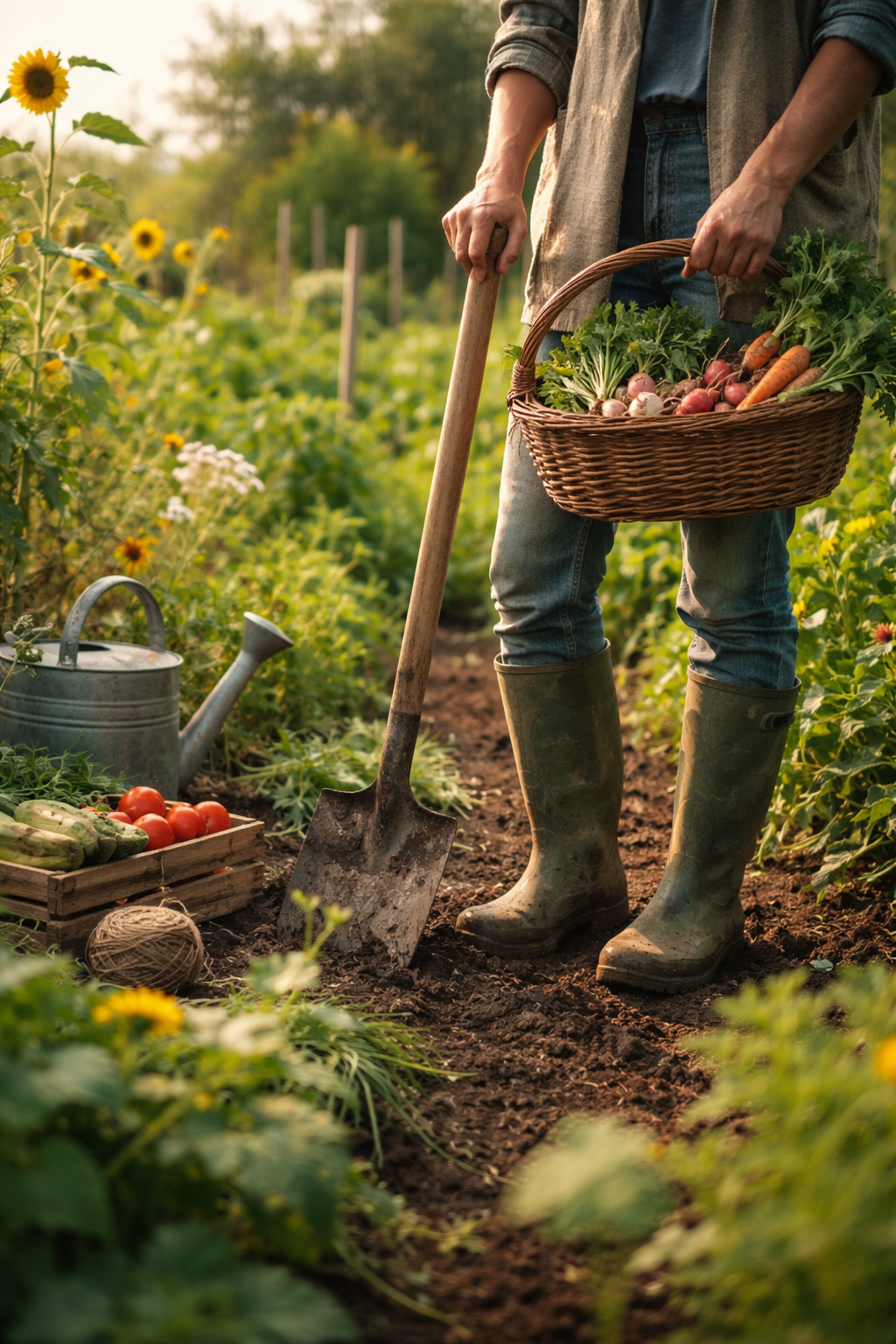
| There is a quiet kind of rebellion happening across gardens, balconies, allotments, and borrowed corners of land. It does not shout. It does not riot. It wears wellies, smells faintly of compost, and happens slowly, one seed at a time. In a world driven by speed, consumption, and convenience, gardening has become an unexpected act of resistance. To grow something deliberately, patiently, and with care runs counter to almost everything modern life rewards. Gardening refuses urgency. It rejects disposability. It insists that time, attention, and stewardship still matter. This is not nostalgia. It is not about going backwards. It is about opting out of systems that have become detached from soil, seasons, and consequence. Gardening today is political, whether we mean it to be or not. Modern life encourages us to outsource everything: food, care, waste, responsibility. Supermarkets promise strawberries in December. Lawns are expected to look perfect without thought for insects or soil health. Landscapes are designed for resale value rather than resilience. Gardening interrupts this flow. It asks awkward questions. Where did this come from? What lives here? What happens next? When you garden, you begin to see how fragile systems really are. Weather patterns matter. Soil condition matters. Pollinators matter. Water matters. You stop believing that things are endlessly replaceable because you’ve watched a plant struggle, recover, or fail depending on how it was treated weeks earlier. That awareness changes how you see everything else. Choosing to garden is choosing to engage with reality instead of convenience. There is also something quietly defiant about caring for a patch of land without extracting its maximum value. In economic terms, much of gardening makes little sense. It takes time. It doesn’t scale easily. It produces uneven results. Yet that is precisely the point. Gardening values sufficiency over surplus. It prioritises health over appearance. It rewards consistency rather than optimisation. In a culture obsessed with productivity, gardening is refreshingly unproductive. You cannot rush it. You cannot hack it. You cannot bully it into submission without consequences. The soil remembers. Plants respond honestly. The garden reflects your choices back to you with uncomfortable clarity. This honesty is radical. Gardening also reclaims physical effort in a world increasingly detached from the body. Digging, lifting, pruning, and weeding reconnect us with strength, fatigue, rhythm, and rest. The work is real, measurable, and immediately meaningful. You can see what you’ve done by the end of the day. That kind of tangible feedback is rare now, and deeply grounding. It is a rebellion against abstraction. Against endless screens. Against the idea that value only exists in data, growth curves, and metrics. Gardening puts you back in your body and back in relationship with place. There is rebellion, too, in choosing mess over control. Wildlife-friendly gardens are not tidy. They leave seed heads standing. They tolerate holes in leaves. They allow things to self-seed and wander. This runs against decades of messaging that equates order with worth. Gardening for nature accepts that beauty includes decay, unpredictability, and loss. Letting go of control in the garden teaches a broader lesson: not everything needs fixing. Some things need space. Some things need time. Some things need to be left alone. That mindset is quietly subversive. Gardening as rebellion is also deeply inclusive. You do not need permission. You do not need credentials. You can start with a single pot, a borrowed tool, a shared space. Gardening cuts across age, income, and background. It invites people into knowledge that is practical rather than theoretical, shared rather than owned. Seed swapping, plant sharing, composting, and informal advice networks build local resilience in ways no app can replicate. They create small, decentralised support systems. That matters in uncertain times. When you garden, you reduce dependence without isolating yourself. You become more rooted, not more removed. There is a quiet dignity in this kind of rebellion. It is not about purity or perfection. Most gardeners fail regularly. Crops bolt. Slugs win. Weather intervenes. The rebellion lies in continuing anyway. In learning. In adapting. In showing up for something that does not guarantee success. That persistence is powerful. Gardening also reframes success. A good garden is not flawless. It is alive. It responds. It evolves. Some years are generous. Others are sparse. You learn to work with cycles instead of against them. That lesson has implications far beyond the garden gate. It teaches resilience without hardness. Hope without denial. Effort without entitlement. In wellies, not armour. Perhaps that is why gardening feels increasingly relevant now. It offers a way to act meaningfully without burning out. To contribute without shouting. To care without grandstanding. It reminds us that small, repeated actions still shape the world. Every garden is a refusal to believe that damage is inevitable and repair is impossible. Every planted seed is a vote for continuity. Every compost heap is a rejection of waste as an endpoint. This is not about saving the world single-handedly. It is about refusing to be completely detached from it. So yes, gardening can be a form of rebellion. Not the loud kind. The enduring kind. The kind that smells of earth, bends with the seasons, and keeps going even when no one is watching. Pull on your wellies. That, too, is a statement. |
Gardening as Rebellion — in Wellies
 Earthly Comforts