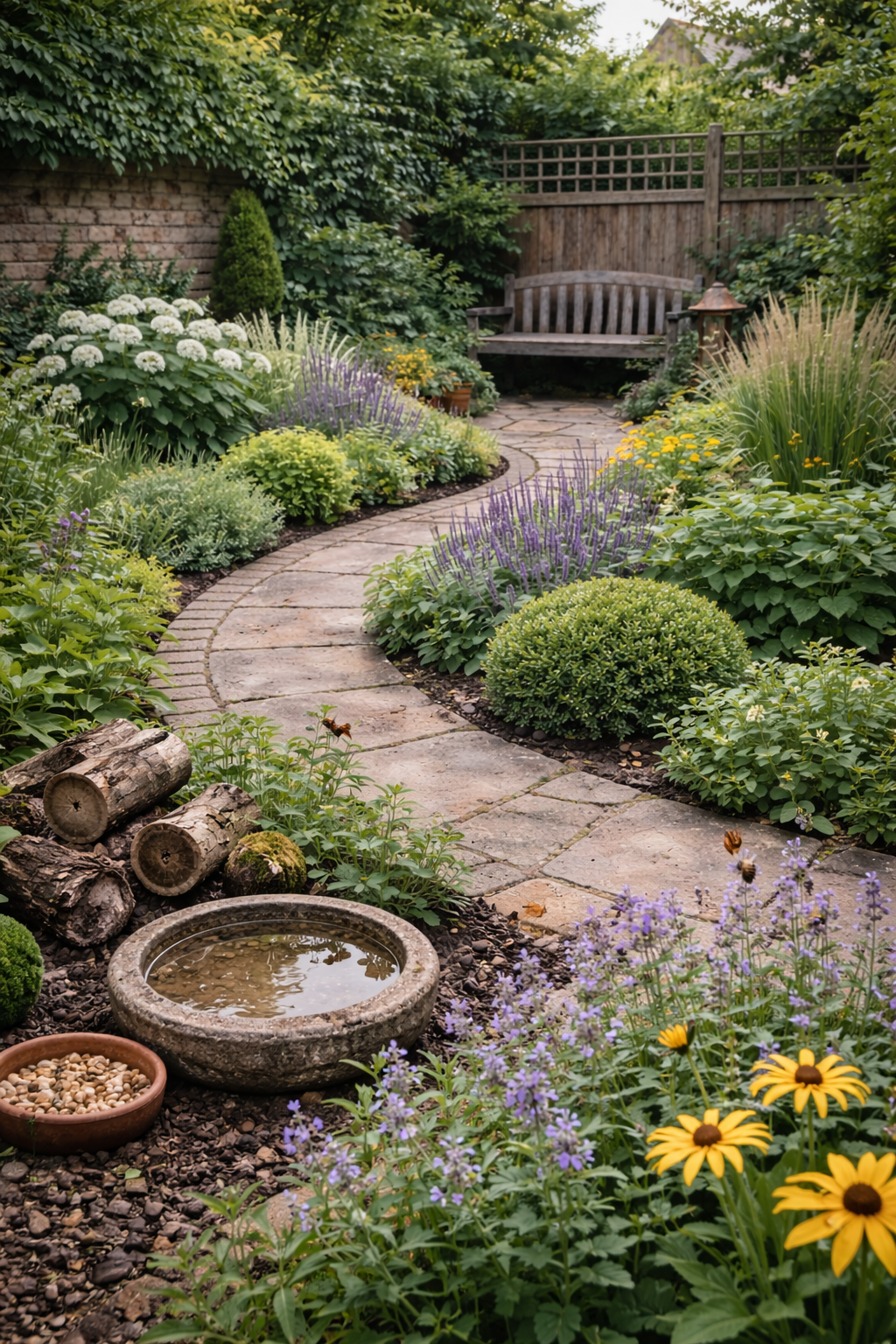
| Part 7 Wildlife Value in Small Spaces Wildlife gardening is often presented as an all-or-nothing choice. Either a garden is tightly controlled and “lifeless,” or it’s allowed to run wild in the name of nature. For many people with small gardens, neither option feels right. The truth is quieter than that. Small gardens can support wildlife very effectively — but only when that support is deliberate, contained, and compatible with the space itself. Wildlife doesn’t require chaos. One of the most persistent myths in gardening is that wildlife needs disorder. In reality, many birds, insects, and soil organisms benefit from consistency far more than neglect. Predictable food sources, stable shelter, and undisturbed soil matter more than visual wildness. In small gardens, especially, chaos often works against wildlife. Overcrowding reduces airflow, damp builds up, and plants struggle — which ultimately limits the habitat they can provide. A well-supported garden for wildlife is not messy. It’s intentional. Small gardens support wildlife through repetition. Wildlife responds to reliability. Repeated plant types that flower at predictable times provide dependable food sources. Insects learn where to return. Birds recognise safe feeding and shelter areas. Soil life benefits from stable conditions rather than constant disturbance. A small garden with fewer plant species, repeated thoughtfully, often supports more wildlife than one crammed with novelty. Consistency beats variety in compact spaces. Water, shelter, and soil matter more than scale. You don’t need a pond or a meadow to make a difference. In small gardens, wildlife value often comes from: A shallow water source kept clean and accessible. Dense planting at ground level for shelter Undisturbed soil and leaf litter in discreet areas Avoiding constant digging, lifting, and replacement These elements work quietly in the background, supporting insects, birds, and microorganisms without dominating the space. Wildlife needs continuity, not grand gestures. Over-intervention can undo good intentions. One of the quickest ways to reduce wildlife value is constant interference. Frequent tidying, heavy pruning, and repeated replanting break life cycles and remove shelter. Even well-meaning changes can be disruptive when they happen too often. Small gardens benefit more from being left alone than from being improved. Knowing when not to act is one of the most important skills in wildlife-friendly gardening. Wildlife-friendly doesn’t mean wildlife-led It’s important to say this clearly: a small garden still has to work for the person who lives with it. Paths must remain passable. Seating must stay usable. Maintenance must remain manageable. A garden that becomes stressful will eventually be stripped back — undoing any ecological gains along the way. Wildlife value in small spaces is strongest when it’s woven into a garden that’s calm, readable, and well cared for. Care is what allows nature to stay. Small gardens play a quiet but meaningful role. Individually, small gardens may seem insignificant. Collectively, they matter enormously. They form corridors between larger green spaces. They provide stepping stones for pollinators. They soften built environments and support life where little else can. A small garden done properly doesn’t try to replicate the countryside. It offers steadiness, shelter, and continuity — and that’s often exactly what wildlife needs most. In the next post, I’ll look at how repetition in planting brings both calm and resilience to small gardens, and why repeating what works is one of the most powerful tools available in compact spaces. Because supporting life doesn’t require letting go of care. It requires understanding what care really means. |
The Small Garden
 Earthly Comforts