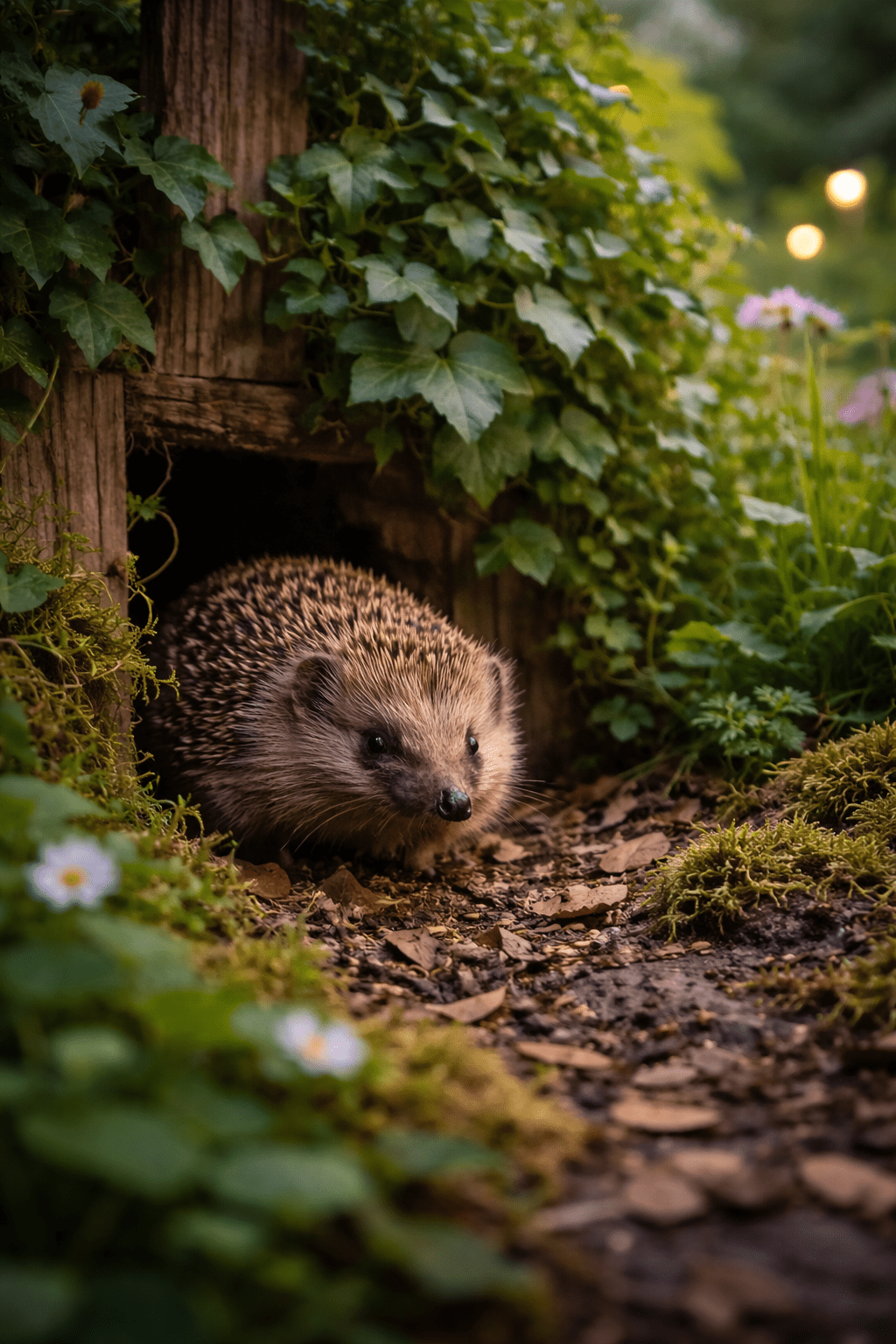
| Creating safe pathways and shelter in modern gardens There are a few garden encounters that stay with you as much as seeing a hedgehog. Often it happens at dusk, when the light softens, and the garden feels momentarily still. A quiet rustle beneath a hedge. A rounded shape moving with surprising purpose across a path. No drama. No display. Just the sense that something ancient and self-contained has passed briefly through your space. For many people, hedgehogs feel like a symbol of what gardens used to be — familiar, plentiful, quietly present. Yet today, their appearance is increasingly rare. Hedgehog numbers in the UK have declined sharply over recent decades, particularly in towns and villages where gardens once formed a connected network of safe passage. And yet, gardens remain one of the hedgehog’s last strongholds. Spring is a crucial moment in their year — a time of emergence, hunger, movement, and risk. Understanding what hedgehogs need at this point in the season helps us see our gardens not as isolated plots, but as part of a shared landscape that either allows them through — or quietly shuts them out. |
| Waking up after winter Hedgehogs hibernate through winter, lowering their body temperature and slowing their metabolism to survive months of scarcity. They do not wake suddenly or fully rested. Spring awakening is gradual and precarious. By March or April, rising temperatures and longer days begin to draw hedgehogs out of hibernation. But food remains limited, and many individuals emerge underweight, relying on early access to insects, worms, and beetles to regain lost condition. This makes early spring a vulnerable time. Hedgehogs are active when resources are scarce, and hazards are everywhere — from roads and fences to overly tidy gardens that offer little cover or food. A garden that feels quiet in early spring may be quietly essential. |
| Gardens as feeding grounds Hedgehogs are insectivores, feeding primarily on: Beetles Worms Caterpillars Slugs (though not exclusively, and not as pest-control machines) They forage at ground level, following scent trails and familiar routes night after night. Gardens with: Leaf litter Undisturbed soil Long grass Compost heaps Dense borders …tend to support far more invertebrate life than stripped-back spaces. Spring gardening often involves clearing and turning — removing exactly the things that hold food. When everything is cleared at once, hedgehogs must travel further, cross more boundaries, and take greater risks to meet basic needs. What looks like neglect to us can feel like abundance to them. |
| The problem with fences One of the biggest challenges hedgehogs face in modern gardens is fragmentation. They roam widely — often travelling a kilometre or more each night. But fences, walls, and tightly sealed boundaries can turn what was once a connected landscape into a maze of dead ends. A hedgehog encountering an unbroken fence does not turn around easily. It will pace along the base, searching for a way through, expending precious energy and increasing its exposure to danger. Small gaps at ground level — often called “hedgehog highways” — make a disproportionate difference. A simple opening between neighbouring gardens can restore access to feeding grounds, nesting sites, and safe routes. In this way, one garden alone is helpful. Several gardens working together are transformative. |
| Shelter: not elaborate, just available Hedgehogs do not need carefully designed structures to feel at home. They seek shelter that is: Dry Dark Quiet Undisturbed In spring, they may rest during the day in: Hedge bases Log piles Leaf heaps Under sheds or decking Dense shrubs Later in the year, these same places may become nesting or hibernation sites. The instinct to clear “old” material in spring — last year’s leaves, fallen branches, tucked-away piles — often removes shelter just as hedgehogs are resettling into active life. A single untouched corner can be worth more than an entire manicured lawn. |
| The hidden dangers of spring Spring is also when certain garden activities pose unseen risks. Strimming long grass, clearing dense undergrowth, or lighting bonfires without checking can have serious consequences for ground-dwelling animals. Hedgehogs rely on stillness and concealment, curling up tightly when threatened — a response that offers little protection against machinery. This is not about blame or fear. It is about recognising that gardens contain lives we may not see until it is too late. Slowing down, checking first, and working in stages rather than all at once allows wildlife to move away and adjust. |
| Why hedgehogs need quiet routes Hedgehogs are creatures of habit. They follow the same paths repeatedly — along hedge lines, fence edges, borders, and walls. These routes offer guidance, cover, and a sense of safety. Bright lighting, sudden changes, or blocked passages can disrupt these routines, forcing hedgehogs into more exposed spaces. In spring, when hedgehogs are travelling more frequently in search of food and mates, continuity matters. A garden that feels navigable — even if imperfect — becomes part of a much larger night-time map. |
| Rethinking the “perfect” garden Hedgehogs challenge a certain idea of what a garden should look like. They thrive where: Lawns aren’t scalped. Borders aren’t stripped bare. Leaves aren’t instantly removed. Corners are allowed to soften and blur They remind us that gardens are not static displays but living systems shaped by what we leave behind as much as by what we do. A garden can be cared for and still be kind. Managed and still be generous. |
| Presence without proof One of the reasons hedgehogs slip quietly out of our awareness is that they are largely nocturnal. You may share your garden with one for years without ever seeing it. Signs of their presence are subtle: Small gaps under fences are regularly used. Flattened grass paths Disturbed leaf litter A sense of movement rather than sight Not seeing a hedgehog does not mean your garden is unimportant. Often, it means it is safe enough not to require attention. |
| A spring responsibility, shared lightly. Spring gardening is full of energy and intention. It is when we reconnect with our outdoor spaces after winter. But it is also when many wild lives are most exposed. Hedgehogs do not ask for grand gestures. They ask for continuity. For access. For shelter that remains in place long enough to matter. When we think of gardens not as enclosed spaces but as shared ground — stitched together by small gaps, soft edges, and patient choices — we make room for lives that move quietly alongside our own. And sometimes, late in the evening, they remind us they are still here. |
 Earthly Comforts