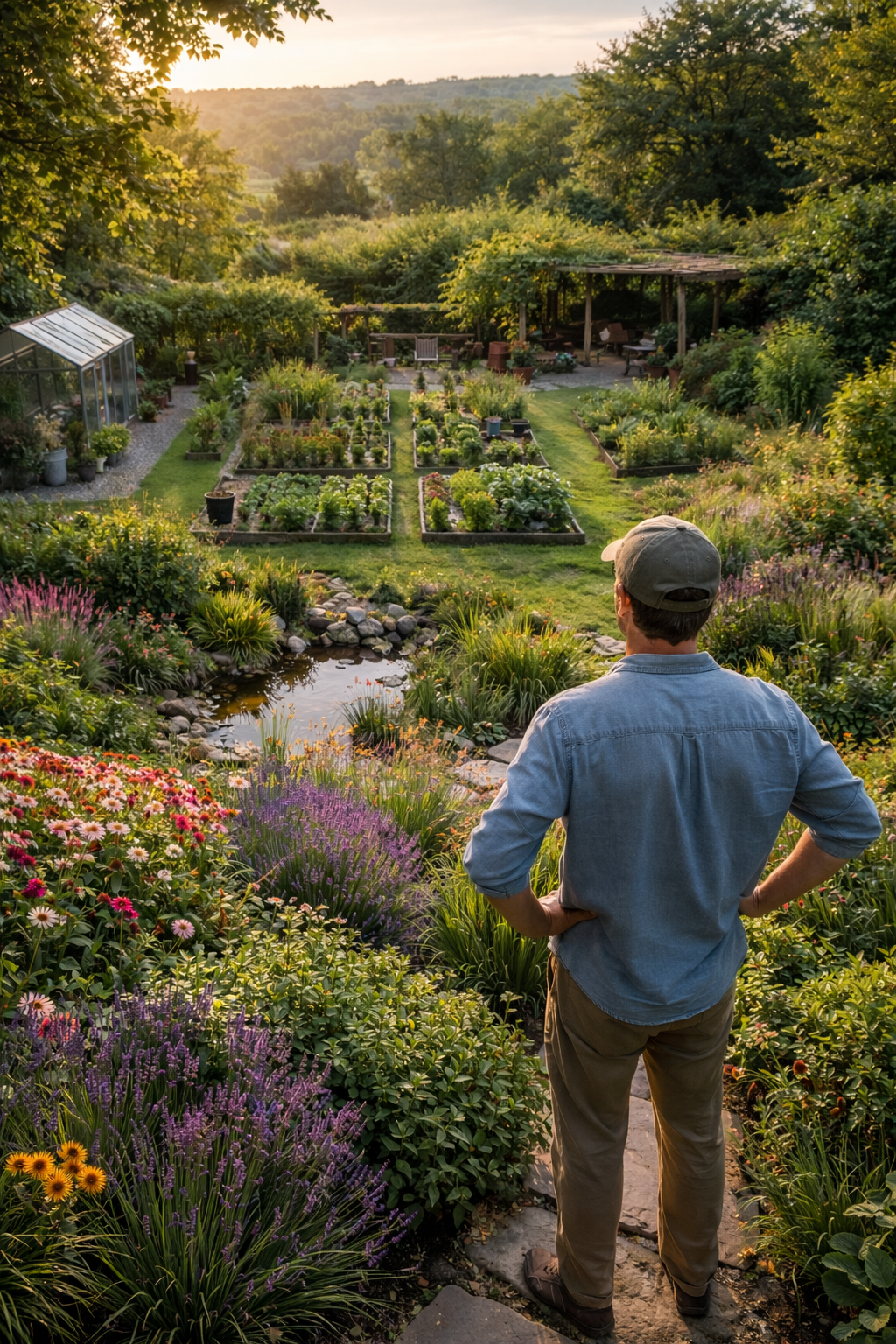
| Why the Bigger Picture Matters Modern gardening often feels busy. We’re told what to plant this month, what to prune next week, and which product fixes today’s problem. While that information has its place, it can quietly pull us into a short-term mindset. Zooming out in gardening means stepping back from the day-to-day tasks and seeing the garden as a whole system, unfolding over seasons and years rather than weekends. When you zoom out, the garden stops being a list of chores and starts becoming a living landscape. Lawns, borders, soil, wildlife, shade, water, and human use all interact. Understanding those relationships is often more powerful than any single technique, because it allows decisions to support the garden in the long term rather than constantly correcting it. Zooming out begins with time. Gardens don’t work on human schedules. Soil health builds slowly, plants mature at their own pace, and ecosystems stabilise through repetition, not quick fixes. A garden that looks “unfinished” this year may be quietly laying foundations for strength and resilience next year. When gardeners rush to force results, they often end up fighting the very processes that would have helped them. Soil is one of the first places where a wider view makes a difference. Rather than asking what feed a plant needs right now, zooming out asks how the soil functions overall. Is it compacted? Does it drain too fast or too slowly? Is it biologically active? Healthy soil supports plants automatically, reducing the need for intervention. Poor soil demands constant correction. Focusing on soil structure, organic matter, and disturbance levels shifts effort from endless maintenance to steady improvement. Plant choice also changes when viewed from a distance. Instead of selecting plants purely for colour or fashion, zooming out considers how they behave over time. Do they spread, self-seed, or dominate? Do they cope with drought, shade, or wind in this specific garden? A plant that struggles every year isn’t a failure of care; it’s often a mismatch of conditions. Choosing plants that naturally suit the site reduces work, water use, and stress for both the gardener and the garden. Maintenance looks different when you stop managing symptoms and start managing causes. Repeated weed problems often point to bare soil or disturbance. Regular pruning issues may indicate plants growing beyond their intended space. Moss in lawns might reflect compaction or shade rather than a need for treatment. Zooming out helps identify patterns, so effort can be directed where it truly changes outcomes. Wildlife is another area where perspective matters. Gardens don’t exist in isolation; they sit within a wider ecological network. Birds, insects, fungi, and microorganisms all respond to how gardens are managed. Leaving seed heads, tolerating some leaf litter, and allowing a little mess support beneficial life that quietly performs pest control, pollination, and soil improvement. A perfectly tidy garden may look controlled, but it often works harder and delivers less. Water use benefits greatly from zooming out. Rather than reacting to dry spells with constant watering, a broader approach focuses on soil moisture retention, mulch, plant placement, and shade. Gardens designed with water flow and storage in mind cope better with both drought and heavy rain. Over time, this reduces reliance on hoses and irrigation systems, saving effort and resources. Zooming out also applies to how people use their gardens. Gardens are not just displays; they are lived-in spaces. Paths, seating, play areas, working zones, and quiet corners all influence how a garden feels and functions. A beautiful border that blocks access or demands constant care may not serve the people using the space. A wider view balances beauty with usability, ensuring the garden supports daily life rather than complicating it. Seasonal thinking is central to this approach. Each season prepares the next. Autumn leaf fall feeds the soil. Winter rest protects the structure. Spring growth responds to groundwork laid months earlier. Summer abundance reflects past decisions more than present effort. When gardeners understand this flow, frustration decreases, and confidence grows. The garden becomes predictable in its rhythms, even when the weather isn’t. Zooming out doesn’t mean doing less; it means doing the right things at the right scale. It encourages observation before action and patience before change. Instead of asking “What do I need to do now?”, the better question becomes “What is this garden becoming?” That shift often leads to simpler, calmer, and more rewarding gardening. Ultimately, zooming out reconnects gardening with its deeper purpose. It becomes less about control and more about stewardship. Less about perfection and more about balance. Over time, gardens managed this way tend to look more settled, feel more alive, and demand less constant attention. The work doesn’t disappear; it becomes more meaningful because every action fits into a bigger picture that actually makes sense. |
Zooming Out in Gardening
 Earthly Comforts