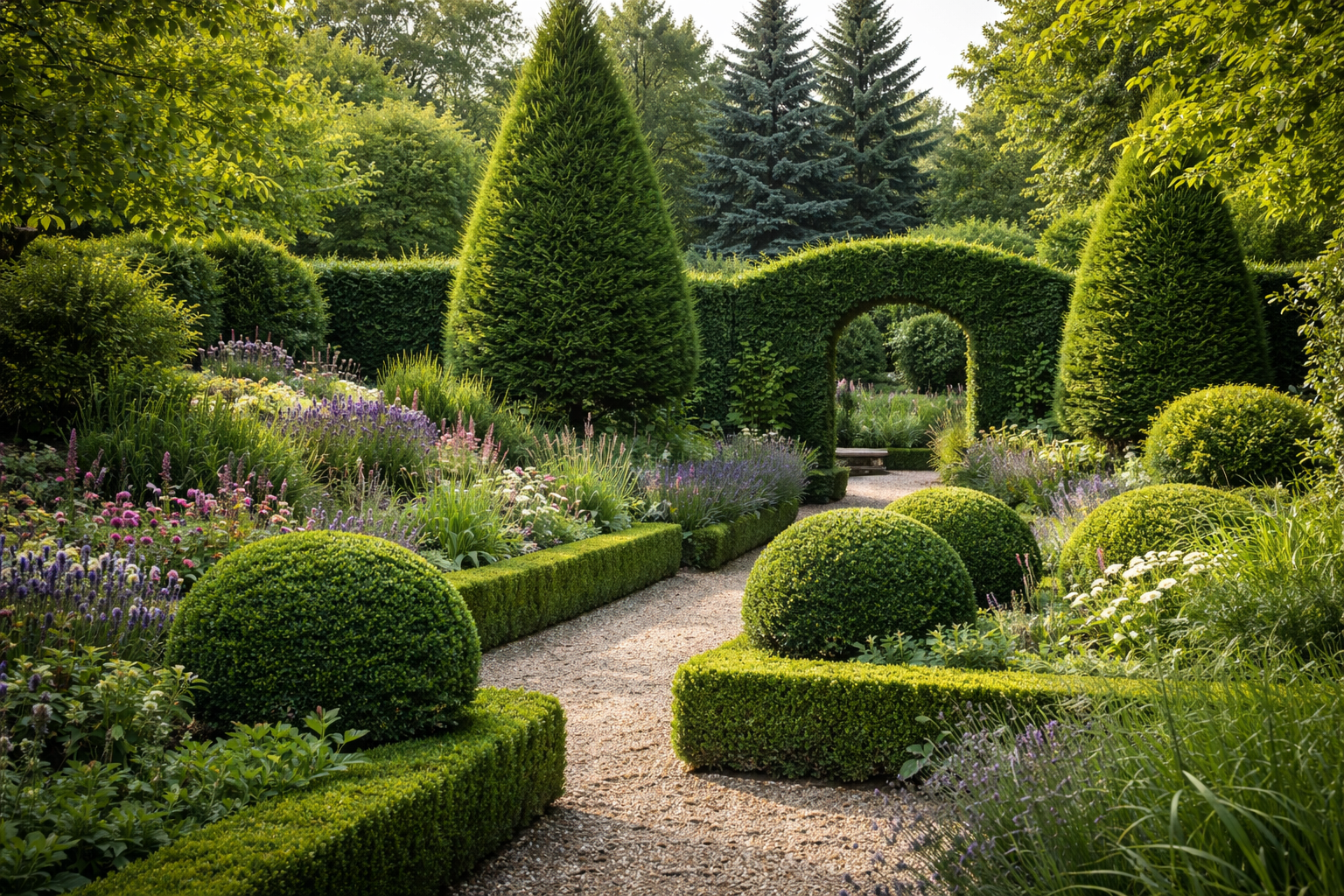
| Building Structure That Lasts Evergreen frameworks are the quiet backbone of a well-designed garden. While flowers steal the seasonal spotlight, evergreens provide the form, balance, and continuity that make a garden feel grounded year-round. They shape space, guide the eye, and give purpose to everything else that grows around them. Without a framework, even the most colourful planting can feel temporary or disjointed. An evergreen framework is the permanent structure created by plants that retain their foliage year-round. This structure can be formal or relaxed, bold or subtle, but its role is always the same: to give the garden bones. Hedges, clipped shrubs, evergreen trees, and low structural plants define boundaries, create rhythm, and hold the garden together when seasonal plants fade back. One of the greatest advantages of evergreen frameworks is year-round presence. In winter, when herbaceous borders die back and lawns slow down, evergreens ensure the garden still feels intentional rather than abandoned. They soften bare spaces, block harsh winds, and maintain visual interest when growth elsewhere pauses. This makes them especially valuable in small gardens, urban spaces, and gardens viewed daily from windows. Framework planting also brings clarity. Clear lines, shapes, and repeated forms help the eye understand the space. A simple hedge can define a boundary without fencing, while clipped shrubs can replace hard landscaping in softer, more wildlife-friendly ways. In informal gardens, loosely shaped evergreens still provide structure without rigidity, allowing seasonal planting to weave through them naturally. Evergreen frameworks are not about filling the garden with dense greenery. In fact, restraint is key. A few well-placed structural plants will do far more than many scattered ones. Positioning matters more than quantity. Think in terms of anchors: corners, boundaries, pathways, entrances, and focal points. These are the places where structure earns its keep. Hedges are one of the most familiar framework elements. They can be tall or low, clipped or relaxed, and serve many purposes beyond privacy. A hedge can frame a view, guide movement, reduce noise, or provide shelter for more delicate plants. Evergreen hedges offer consistency, while mixed hedges add texture and resilience without losing structure. Shrubs are equally important. Rounded, upright, or architectural shapes can be repeated throughout a garden to create a rhythmic effect. When these shapes remain through the seasons, they provide a dependable backdrop for changing planting schemes. This approach allows gardeners to experiment with seasonal colour without risking chaos, because the underlying structure keeps everything visually connected. Evergreen trees play a different but equally vital role. Used carefully, they establish height, scale, and long-term presence. In smaller gardens, a single well-chosen evergreen tree can act as a focal point, giving the garden a sense of maturity far earlier than seasonal planting alone. In larger spaces, groups of trees define rooms and sightlines. Framework planting also improves garden maintenance. When the structure is in place, the garden becomes easier to manage. Clear edges reduce creeping growth, permanent planting reduces the need for constant redesign, and seasonal plants can be swapped or adjusted without disrupting the whole space. This is especially useful for gardeners seeking calm, low-stress outdoor spaces rather than high-input displays. There is also a strong ecological benefit. Evergreen frameworks provide year-round shelter for birds, insects, and small mammals. They offer protection from predators, harsh weather, and human disturbance. Dense evergreen planting can act as a living refuge, especially in urban environments where natural cover is limited. When chosen thoughtfully, these plants support biodiversity without compromising aesthetics. Soil health benefits, too. Evergreen root systems stabilise soil, reduce erosion, and improve structure over time. Leaf drop, even from evergreens, contributes organic matter, while shaded soil remains cooler and more biologically active. A stable framework encourages healthier planting throughout the garden, not just within the evergreen areas themselves. Designing an evergreen framework is most effective when done early, even in existing gardens. Before adding new plants, it helps to step back and assess what already provides structure. Mature shrubs, boundary planting, and permanent features often form the beginnings of a framework that can be refined rather than replaced. Removing excess clutter often reveals structure that was already doing its job quietly. Scale is critical. Oversized evergreens can overwhelm a space, while undersized ones fail to anchor it. Growth rate, mature size, and maintenance needs should always be considered. A framework should feel settled and supportive, not demanding constant control. Slow-growing or naturally compact plants often make better long-term choices. Evergreen frameworks are not about perfection or formality. They are about intention. Whether the garden is modern, traditional, wildlife-focused, or minimalist, structure allows it to evolve without losing its identity. Seasonal planting becomes an enhancement rather than a necessity, and the garden remains welcoming throughout the year. Ultimately, an evergreen framework is an investment in longevity. It allows gardens to mature gracefully, adapt to changing tastes, and remain functional year-round. By focusing on structure first, gardeners create spaces that feel calm, balanced, and alive, even when nothing is in bloom. |
Evergreen Frameworks in Gardening
 Earthly Comforts